About Me

My photo
Montreal, Quebec, Canada
I am a Montreal-based actor, writer and comedian. When U.S. President John F. Kennedy was shot, I was three days old. I cried all day. My favourite books of all time are Moby Dick by Herman Melville, The Last Temptation by Nikos Kazantzakis and The Ewoks Fun Time Activity Book by Chirpa and Pamploo. I am a member of The Vestibules, On The Spot Improv and The Best Buy Battery Club. Except for the Battery Club, I've been at all this stuff for over 20 years. Enjoy my blog.

Friday, November 18, 2011

The 10 Best Things About The Year I Was 10


Self indulgent Birthday alert!


Self indulgent Birthday alert!


Last year, my birthday post consisted of The 10 Best Things About The Year I Was Born. The response was so good, I have decided to keep the tradition up by annually posting a 10 Best list for every decade of my life. When I was 10, that year was 1973.


This list is undoubtedly going to stir up a storm of controversy and heated discussions amongst the massive Internet fanbase for both me and the year 1973.  


I stand by my choices....


10. Montreal Canadiens win the Stanley Cup


I realize that putting any Canadiens Stanley Cup win at number 10 on any 10 best list is considered treason for anyone living in the greater Montreal area. Honestly, though, '73, was the last time I was actually following hockey closely. 


As was Canadian Law for all children under the age of 12 at that time, I collected hockey cards. Many of the names on roster from that year are still familiar to me: Ken Dryden, Serve Savard, Larry Robinson, Steve Shutt, Guy Lafleur, Frank and Pete Mahovlich and, of course, "the pocket rocket" Henri Richard. In fact, I could name the '73 line-up much better than I could name just about anybody on the current roster (um, is Carey Price still on the team?).


Most important to me though, for obvious reasons, was head coach Scotty Bowman.


In the 70's, Bowman led the Canadiens to six of the their total of 23 Stanley Cup victories. Four of those victories were won consecutively (76-79). It's also the highest number of wins for any decade in the club's history.


1973 was 2 of 6, though no one knew or predicted that then. I remember it very well. Well, kind of well, actually. Except for the Saturday night games, I never got to see the end of any hockey game, playoff or not. I usually had to go to bed sometime around the 2nd period. I would get the final score in the morning either from the radio or my dad (whichever one I got to first).  


I didn't even get to see all of the final game of that '73 series. And with the series going seven games, it was pretty obvious that the Habs could take the Cup that night. Such was the Law of Bedtime in my house.


For what it's worth, I am told that I am distantly related to Scotty Bowman. Some people have told me I kinda look like the guy as well.


So, if anyone out there is casting that biopic...


9. Live and Let Die


Not the movie, the song.


In 1973, Roger Moore, former star of the long running British TV series, The Saint, took over the iconic role of James Bond, secret agent 007. Live and Let Die was super loosely based on the Bond novel of the same name by Ian Fleming. 


Moore's reign as Bond would mark a decidedly arch turn toward camp and, at times, even outright slapstick in the 007 films.  It created a link in the public consciousness between Bond and silliness. That link became so strong that it would not fully be broken until the advent of Daniel Craig in the role of James Bond in Casino Royale, the series' 2006 reboot. 


Despite an overwhelming case of the sillies, Live and Let Die is still considered a fan favorite. To be fair, I did not see Live and Let Die in the theatres in '73. I was barely aware of it and only vaguely aware of James Bond's existence at the time. More than likely, I would not have been allowed to see the movie even if I had known about it. I would not see any of the Moore Bonds until I was much older. By that time, I considered the wackiness of, say, a chase that ends up crashing through a wedding with a lot of people comically screaming and running around, to be the exclusive domain of the those live action Disney comedies of the 70's. Such madcap mayhem, as far as I was concerned, belonged in movies like Herbie The Love Bug and The Strongest Man in the World and not in what should have been more serious Bond thrillers.


But I digress.


I remember hearing the song, Live and Let Die by Paul McCartney and Wings while listening to CKGM, Monteal's Top 40 radio station. I thought it was just about the coolest piece of music I'd ever heard in my life. It made for the perfect running around the house and jumping up and down on the couch while my mom wasn't looking soundtrack.


Live and Let Die was the highest charting Bond song up to that point in time. Later Bond title song hits were Carly Simon's Nobody Does it Better from The Spy Who Loved in 1975, Sheena Easton's For Your Eyes Only in 1981 and Duran Duran's A View to a Kill in 1985 (which also marked Moore's last appearance in the role). The McCartney composed title song marked a departure from the franchise's previous penchant for brassy big band style songs like Shirley Bassey's Goldfinger and Tom Jones' Thunderball. 


The story goes that after being approached by producers Albert R. Broccoli and Harry Saltzman to provide the theme for the next Bond film, McCartney went off on his own, wrote the song and then recorded it soon after. 


Later, at a meeting with the Bond producers, he played a tape of the finished song. Saltzman and Broccoli then reportedly said something to the effect of "Wow. Great demo! Let's get Shirley Bassey and the band that played on Goldfinger into the studio to record it for the opening titles." At which point, McCartney reportedly explained to them that they just heard was the title song exactly as it would appear in the movie. It was that or they don't get to use the song at all.


In the battle of Beatle vs Bond, Beatle won.


8. Schoolhouse Rock!


Schoolhouse Rock! was a very telling sign of its time. It marked perhaps the first time that education finally caught up with the generation gap of the 60's and 70's. Schoolhouse Rocks! clever combo of animation and pop songs managed to nail down that elusive concept of making learning fun. 

Schoolhouse Rock! was also significant in that it was a product born out of the world of advertising. The short snappy educational segments were the brainchild of one of Madison avenue's most successful ad agencies, McCaffrey and McCall.  Education was approached in the same way that an advertising campaign approaches selling soap. The advertising techniques were especially relevant when it came to getting that important information, like the times tables, say, right into the young viewer's heads for good. The short animated musical shorts  created jingles for learning math, grammar, history, science, etc. Instead of selling Juicy Fruit Gum or Lestoil, Schoolhouse Rock! sold reading, writing and arithmetic.

Schoolhouse Rock! began in 1973 as interstitials on the ABC network. They ran between cartoons and other kids shows on Saturday mornings. They quickly caught on with the kids, eventually attracting big name sponsors like Nabisco and General Mills. The Schoolhouse Rock! segments ran on ABC right up till 1985. They were then revived by ABC in the 90's. 

I own an album, "Schoolhouse Rock! Rocks" featuring cover versions of Schoolhouse Rocks! songs by various indie rock bands from the late 90's. It's very cool. Get it. 

The Schoolhouse Rocks! phenomenon continues today with DVD's, Blu-ray's, newly produced segments and even live concerts. Now that Disney owns ABC, Schoolhouse Rocks! is sure to remain a pop culture institution for years to come.

And let's face it, Schoolhouse Rocks! segments were and still are stunningly effective educational pieces. Who could ever forget what a conjunction is after you've heard "Conjuction Junction" two or three times? Or that a noun is "any person you can know, any place that you can go or anything that you can show.."?  Even today, whenever I follow American politics, my fundamental understanding of how the U.S. Legislative branch of government works still comes from "I'm just a Bill, sitting here on capitol hill...".

It's like, for one brief shining moment, advertising used its powers for good instead of evil.


7. The Six Million Dollar Man
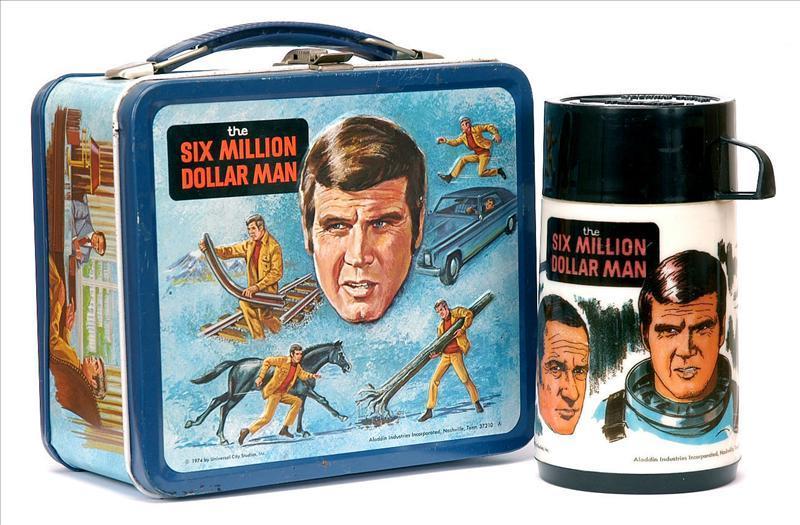


Doo-do-do-de-dee-de-do-do-da-do-da-do-de-de-dah!

Or something like that...

The Six Million Dollar man debuted in January of 1973. A mid-season replacement that caught on big time, The Six Million Dollar Man was an action adventure series centered around the exploits of a super powerful cyborg secret agent named Steve Austin (not to be confused with the 90's wrestler who borrowed his name). The role of Steve Austin  was played by a post-Big Valley, pre-Fall Guy Lee Majors. 

Austin was a former astronaut and an Air Force test pilot who lost both his legs, his right arm and his left eye in a plane crash. With the help of a highly advanced top secret government program, Austin's damaged legs, arm and eye are replaced by powerful mechanical prostheses or, using the term the series popularized, "bionic" (an actual scientific term but not used accurately in this context) parts. Hence where the super powerful cyborg secret agent part comes in. The title comes from the fact that, in 1973, it cost six million bucks to make the "world's first bionic man".  

Not only did The Six Million Dollar Man introduce the word "bionic" into the pop culture lexicon but it also introduced the phenomenon of millions of boys play fighting in slow motion in elementary school yards all across North America. 

The show is a quintessential old school action adventure series. It had a super strong guy beating up bad guys (though for Standards and Practices reasons, he tended to just throw them around a lot),  poor man's James Bond villains, jungle adventures, fast cars, helicopters, robots and even (in one now famous two part episode) Sasquatch (who, of course, turned out to be an alien robot).

After two very successful seasons The Six Million Dollar Man, spun off another extremely popular 70's action adventure series, The Bionic Woman. This time around, the super powerful cyborg secret agent was a woman. Jamie Summers' adventures tended to be of the Barbie career variety. A typical episode would see Ms. (yes, the were using that prefix by then) Summers go undercover as a nurse, flight attendant, etc.

As played by Lindsay Wagner, The Bionic Woman came along at just the right time in my life, developmentally speaking. It premiered when my interests were just shifting away from big strong guys to attractive but not too threatening women.


6. Roe v Wade


My first instinct was to not include this historical event on the list. 


True, the landmark US Supreme Court ruling that effectively made abortion legal in the United States did happen in 1973. However, such an emotional, important and controversial topic seemed a bit out of place on a list featuring the likes of the Six Million Dollar Man and Schoolhouse Rocks!  And wouldn't it come off a kinda flippant to place Roe v Wade at no. 6, between The Six Million Dollar Man and The Exorcist?  Plus, needless to day, the issue wasn't much on my radar at nine going on ten years old. 


Then I thought...hmmm...maybe if I focus on the bumper stickers Roe v Wade generated. One can still see many pro and con Roe v Wade slogans on the backs of cars just about anytime you visit the United States. The subject would fit into the "He Had on a Hat" paradigm a little easier that way too. The uniquely American fixation of political and social debate via car bumpers had always fascinated me anyway.


So I Googled Roe v Wade bumper stickers. What I found was, well rather stunning. In the results for a Google image search for Roe v Wad bumper stickers, there was about 1 pro-Choice slogan for every 10 pro-Life slogans. This went on for pages and pages. Then it hit me that I really have to write about Roe v Wade.

Um, actually, it really isn't...

I recently heard the claim that Google is, in fact, part of the liberal biased "lamestream" media that Fox News loves to pretend exists. If that's the case, Google musta really slacked off on this one. Clearly, the pro-Life movement is much better organized when it comes to tipping the search engines in their favour. Making sure that any given message dominates Google searches takes a concerted effort, especially given how much those Google geeks love to change search algorithms.


I mean, c'mon, whatever your beliefs on the subject, there's got to at least be debate. It's too important an issue for one side to just ride roughshod over. 


As far as the bumber sticker issue goes, well, I think this classic piece from The Onion's book, Our Dumb Century, does the topic more justice than I ever could....


From The Onion's "Our Dumb Century"


5. The Exorcist


I was way, way, way too young to see The Exorcist in the theatres when it first came out in 1973 (or even on its watered down network TV premiere a couple of years later). I remember finally seeing The Exorcist on TV many years later and kinda thinking "Pff! That's not scary". Fair enough, on the small screen with all the more gross and scary bits cut out and with the movie constantly being interrupted by commercials, yeah, it wasn't scary at all. 


I remember finally seeing the intact version on video in the early 90's. While it still did not scare me all that much, I did find it incredibly creeping and disturbing. Few movies have pulled off the craft of genuinely creepy and disturbing filmmaking in quite the same way. 


The Exorcist was based on the book of the same name by William Peter Blatty. Blatty not only adapted his novel for the screen but also reportedly had a great deal of say in the choice of the film's director and cast. The story goes that he held out for director William Friedkin based on the directors work on his previous 70's hit, The French Connection. The studio had a director named Mark Rydell in mind. I've seen at least two of Rydell's other films, The Cowboys and On Golden Pond and I can safely say that there is no way in hell that Rydell coulda pulled of The Exorcist (pun intended). Stanley Kubrick, not suprisingly, turned down the offer to direct both The Exorcist and, later, its sequel.


The original casting choices for The Exorcist were quite different as well. The original cast at one point was going to be Marlon Brando, Jack Nicholson, Jane Fonda  and -get this- that kid from the 60's sitcom, Family Affair, in the part of Regan, the little girl who gets possessed by Satan . That cast did not work out for various reasons. And a good thing too.


Those actors are all have powerful on-screen personas who would have undoubtedly overpowered the film itself (k, maybe not the kid from Family Affair). The cast they finally went with was Max von Sydow, Jason Miller, Ellen Burstyn and Linda Blair, all strong actors but not as well known or as dominant with their on-screen presence as the earlier casting choices. von Sydow had just arrived in Hollywood and was then famous only to college students and Swedish film goers.  Jason Miller was a playwright and actor not really all that well known outside of the New York theatre scene. Burstyn was a "name" but not a big one at the time. The movie was Linda Blair's second film.


The Exorcist was released on Boxing Day, 1973. It was not just a big hit but also the only horror movie to have ever won an Oscar for Best Picture. It was followed by two sequels and a prequel that had two radically different versions released a year apart. The classic horror film was introduced to a new generation of fans with the hit 2000 re-release of the slightly different "version you've never seen". 


Back in the day, The Exorcist was talked about everywhere and often referred to as "the scariest movie ever". It was very much on my radar. Having never the movie or even the trailers on TV, I was never scared by it. Though I do remember seeing a cover of the novel in the store. The cover merely showed a blurry picture of some kind of ethereal head. Didn't matter. Still scared the hell out of me.  


I could not look at the cover of that book for months.
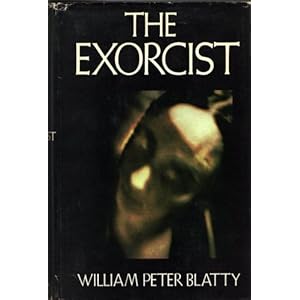

Pretty scary shit, huh?


This rare trailer was never shown in theatres as the studio felt it was "too disturbing". Good call.


4. The U.S. Withdraws from Vietnam 


In January 1973 in Paris, representatives of the U.S., North and South Vietnam and the Viet Cong signed a historic peace agreement. The agreement followed years of negotiations and more recently, a massive bombing campaign of the North Vietnamese capital city of Hanoi, ordered by US President Richard Nixon. After nine long years of war and the death of 58 000 American troops along with 1 and 3 million Vietnamese deaths, American military involvement in the controversial war was over.


When the news of the peace agreement broke on TV early one Saturday morning in January of 1973, I was incensed. 


They interrupted my Saturday Morning cartoons! 


Didn't they realize that I only had one chance a week to watch cartoons and that one chance was Saturday mornings? Back in the day before VCR's DVD releases, digital downloads, 24/7 cartoon channels and DVR's , you had to watch TV shows at the exact time when they actually aired on TV. The only time they aired shows aimed directly at children was for about a 4 hour period on Saturday mornings. The rest of the time, TV was mostly for grown-ups.


At the time, of course, I did not realize the historical importance of the situation. Nor did I realize that I'd one day own many of these shows that "only were on TV once" on DVD in the years to come.


The Vietnam War had lasted my entire life at that point in time, even longer if you count the presence of US military advisers as early as 1950 (they were there in order to help the French defend their colony). In the 60's, the US still had the draft. That meant that pretty much any guy over the age of 18 could be drafted and potentially sent to fight in the jungles of Vietnam. Imagine the difference a draft like that might make in public opinion towards the long running current wars in Iraq and Afghanistan. 


The other source of controversy surrounding the Vietnam War was powered by that same thing that brought me my Saturday Morning cartoons every week, TV.  The power and potential impact of TV news on warfare had not really been understood by anyone until Vietnam. As no official declaration of war existed, there was not as much restriction of information as they had, say, during World War II. Journalists had a fairly wide range of access during Vietnam. Another thing they didn't have in World War II were cameras that shot footage of combat that could then be shown on TV back in the US and around the world within a relatively short period of time. As a result, the horrors of modern warfare were, being seen in homes across North America on a nightly basis.  For perhaps the first time in history, just about everyone everywhere got a chance to see the real face of war.


Again, imagine what Iraq and Afghanistan would be like if we were regularly seeing images of naked napalmed Iraqi children running through the streets or of Afghan authorities executing civilians right out in the open. 


Vietnam was seen for what it was: a long, brutal, costly and, some would say, completely unnecessary war. Even as a kid,while being spared some of the more brutal images, I got the idea that the war was bad and that many people weren't happy about it (I just never made the connection between those boring old men talking in Paris interrupting my cartoons and the end of that war).


In the 80's and beyond, the image of the Vietnam War has been cleaned up some. Much of the popular perception of the war has been altered by political revisionism along with a well orchestrated PR campaign in the media. It was a negative blip in the popular consciousness of war that has, in may ways, been either covered up or forgotten.  


In some ways, the cartoons live on much better in the popular memory than does the true image of Vietnam. 


3. GI Joe: Secret of the Mummy's Tomb


I kind of covered GI Joe and his greater social and political context in last week's post. So, this week, let's focus on my all time fave Adventure Team set.


The Secret of the Mummy's Tomb was a big gamble for Hasbro, the company behind GI Joe. It was the first toy set of its kind to break the $12 price barrier. $12? What where they thinking?


That just about every boy on the continent would want one, most likely.  


The reason for the higher price was that, unlike most of the GI Joe "sold separately" sets,  this one came with its own 12 inch GI Joe Land Adventurer action figure. It also came with one of the coolest accessories ever, the six wheeled yellow ATV. ATV, cleverly enough stood for both All Terrain Vehicle and/or for Adventure Team Vehicle at the same time. The set also came with a comic detailing The Secret of the Mummy's Tomb adventure. Unlike the Joe's of the 80's that would follow, 70's GI Joe comics could not be sold on their own. They only came with the toy.


Most importantly, it came with the object of GI Joe's quest, a Mummy. The story of that particular archaeological adventure and the background behind it so fascinated me that I went right to the school library to look up everything I could on Mummies. It would be years before I learnt about lost civilizations in school. Much of the knowledge I have today on ancient Egyptian culture began with that little GI Joe-inspired research spree.


And I had a teacher who said that GI Joe was "worthless junk"....


2. Westworld


In 1973, best selling author Michael Crichton made his directorial debut. Based on his own screenplay, the film was called Westworld. It starred Richard Benjamin, James Brolin (Josh's dad)  and Yul Brynner.


Today Westworld might be called something of "high concept" premise.

In a futuristic amusement park named Delos, there are three resort worlds: Romanworld, Medievalworld and Westworld.  All are populated by androids that allow the park’s guests to indulge their wildest sex and violence fantasies without consequences.  Well, that is, without consequences until the androids malfunction.  


One particularly badass gun-slinging robot is played by Brynner. He wears almost the exact same wardrobe he wore in the classic Western, The Magnificent Seven.  Brynner’s android in black goes after guests Benjamin and Brolin with a vengeance. He forces Benjamin in particular into a nerve racking chase that leads through, and behind the scenes of, all three resort worlds.

The events that follow could best be described as The Terminator meets High Noon with a bit of Jurassic Park thrown in for good measure.  The last comparison is particularly apt. Twenty years after Westworld,writer-director Crichton would substitute android cowboys running amok in a theme park for cloned dinosaurs running amok in a theme park in a little novel and subsequent motion picture called Jurassic Park.

Westworld is a very effective low-key thriller.  Much of the pace of the film is closer to that of Russian director Andre Tarkovsky’s SF films Solaris or Stalker than to today’s Michael Bay action Sci-Fi Transformers-style pacing.  As is the case with most 70’s Sci-Fi, Westworld is also social commentary.  In this film, the underlying message is that violence, in any form, is never without consequences.  

All of that would have been lost on me at the time. I remember that I was dying to see Westworld when it first came out.  I think it was rated PG and it was showing, I believe, in theatre in downtown Montreal. Living in the suburban West Island of Montreal in '73,  it might as well have been in Delos itself.


1. Watergate


Mad Magazine satirizes the Watergate scandal via the popular movie The Sting.
Would Jon Stewart or Stephen Colbert handle Watergate any differently today?


In June of 1972, there was a break-in at the Democratic National Committee headquarters located in the Watergate Hotel and office complex in Washington DC. The burglary was ordered by and, in some cases, carried out by agents working for the committee to re-elect US President Richard Nixon. The ensuing cover-up of the break-in and scandal that followed would not only bring about the first ever resignation of a President of the United States but would also change public perceptions of politics and politicians forever.


One of those perceptions was mine. It was a shift in perceptions for me that consisted of no awareness of politics at all to some awareness of politics. Like Vietnam, Watergate was impossible to avoid in those days, even for a kid. If anything, the scandal may have seemed like an even bigger deal than it actually was. 


Beyond just the TV news and the newspapers, Watergate made its way into popular culture. Sonny and Cher, on their hit variety series, were dropping Nixon jokes all over the place,  Rich Little got "Tricky Dick" saying "I am not a crook" down pat and, most importantly, Mad Magazine ran parodies in pretty much every issue (or so it seemed) throughout 1973 and 1974.


Far being something I just skipped over to get to the Sergio Aragonnes margin cartoons or the latest Spy vs. Spy, I read and took in all of Mad's Watergate "coverage". And there was plenty of it too. Through their satirical bits, I came to an understanding, albeit a simple one, of the Watergate scandal. I got to know the names Spiro Agnew, John N. Mitchell, J.R. Haldeman, John Dean and (though I never got the reference) Deep Throat almost as well as I knew the members of The Avengers. Plus, who knew that you could so much comedic mileage out of reel-to-reel tapes?


There are surveys that say that most younger audiences today get all their news from shows like The Daily Show with Jon Stewart and The Colbert Report. In 1973, the same was true of Mad Magazine. From Watergate through to the election of Ronald Reagan, I got all or most of my information on US politics via Mad Magazine.


Looking back on it today, the satire is pretty simplistic, but, hey, I was 9. While I seem to remember that Alfred E.Newman was an equal opportunity offender, Mad Magazine today would probably be (and possibly is) considered by some to be part of the "lamestream" liberal bias media.


I have been to Washington DC three times. I have visited the Watergate Hotel and Office Complex all three times. 


They should offer tours and sell more T-shirts.


Next year: The Top 10 Things About The Year I was 20.


At this rate, I'll run out of Birthday post topics by the year 2016.


See you on the other side of 48!

Friday, November 11, 2011

Remembrance Day and....GI Joe?


Stick with me here on this one folks.

While putting Remembrance Day and a toy in the same sentence may seem frivolous and inappropriate to some, there is a very strong personal connection between the two for me. It is a connection that has created a love-hate relationship with extremely popular and fondly remembered line of action figures known as GI Joe.

Those of you who may have read my Remembrance Day blog last year, know about my grandfather who fought with the Canadian Expeditionary force at Vimy Ridge in World War I. I had a Great Uncle, Pvt. James Bowman (my father was named after him), who was gassed in the trenches of World War I. Having survived the war, he later died of complications from the gas, but not before a long and drawn out illness. I had another uncle who was killed in World War II during the Italian campaign of 1943. Yet another uncle of mine survived both Dieppe and D-Day but, I'm told, he was never really the same person after that.  My own father served in the Royal Canadian Air Force during World War II. The veterans were many in my family. So the  Remembrance Day tradition was a strong one. 11 AM every November 11 was a solemn and emotional moment in my house.

In 1971, at all of seven years old, I found myself very interested in a toy many of my friends at school had. That toy was called GI Joe. I was particularly interested in the talking astronaut figure. It was just about the coolest thing I'd ever seen in my life. There was just one problem. The overall military nature of GI Joe did not sit well with my WWII vet dad. My older brothers had already been denied playing with the toy a few years earlier for the same reasons.

I knew some other kids that were not allowed to play with GI Joe but for completely different reasons. In the early days, GI Joe's were thought of as "dolls". Back then, the whole concept of an  "action figure" (the coining of that term has got to be one of the greatest marketing triumphs of all time) had only been around for about 6 years. It still being a new and socially revolutionary concept at the time, many dads back in the day, to put it mildly, were uncomfortable with the idea of their boys playing with "dolls".  Though, as far as I know, my father was the sole  conscientious objector to GI Joe.

As luck would have it for my seven year old self, the GI Joe line had recently seen an interesting shift.

My dad circa 1940.
In the early 60's, Korean War veteran Ted Levine, who is largely credited with creating GI Joe, came up with the idea of a poseable figure that would be aimed at an entirely new market for such things, boys.  There was a great deal of skepticism at Hasbro, the company he was working for, that a "doll" for boys would never sell. In fact, some thought the idea could potentially be the biggest disaster in toy business history. So Levine then coined the term "action figure" and suggested that they use it exclusively in marketing GI Joe. They went pretty hard core on that idea too. Any retailer that used the word "doll" in reference to the figure was cut off from the line completely.

Even that was not enough. Hasbro felt that the toy needed to be masculine in the extreme in order to overcome the whole "doll" PR problem. Cowboys, athletes, knights, pirates and policemen were considered but finally everyone agreed that you just can't get more masculine than the military .

They borrowed the name GI Joe from a 1948 Robert Mitchum movie titled The Story of GI Joe (with no official permission, BTW, a copyright infringement that no one could get away with today). The term GI Joe itself was coined during WWII by legendary American war correspondent, Ernie Pyle.

The 1964 GI Joe "doll'.

Originally consisting of just four figures all named Joe (one each for the Army, the Air Force, the Navy and the Marines), the 12 inch "action figure" was a massive hit. It was the first toy in history to run TV ads outside of the Christmas season. The whole "action figure" vs "doll" thing (despite the objections of a few socially reactionary dads out there) did not hurt sales a bit. As was the case with a lot of pop culture aimed at kids from the 60's, the original Joe's seemed innocent enough but had some disturbing undertones. The talking GI Joe Marine, for instance, had the cold blooded line, "Enemy patrol sighted. Fix bayonets!".

By the late 60's those undertones became uncomfortable overtones. The war in Vietnam had escalated and thus had become incredibly controversial. The sales of GI Joe were greatly impacted. It's hard to believe today but all things military were very unpopular at the time, most especially when it came to toys for young kids. My dad was definitely an early adapter on that front.

Rather than cancel the line, Levine and the guys at Hasbro came up with a new concept for GI Joe: The Adventure Team. They dropped the military angle completely. Instead of army, air force and navy, there was now Land Adventurer, Air Adventurer and Sea Adventurer. It was, in fact, a very clever way of redressing the already existing army, air force, marines and navy uniforms and accessories. The new line of GI Joe's also came with groovy, fuzzy 70's "like like hair and beard".

My dad still took quite some convincing. These adventure guys seemed to have a pretty major military vibe going on and, worse still, they were still armed. Sure, their rifles were now supposedly loaded with tranquilizer darts but every member of the Adventure Team did still carry a side arm (for self defense purposes only, my dad and I finally agreed). Much to the chagrin of my older brothers, my dad finally relented.


With the Adventure Team, GI Joe was now a bunch of bearded guys who devoted their machismo energies to saving endangered species (though, usually dangerous ones like tigers and giant apes), recovering lost treasures and artifacts (usually from dangerous locales like shark infested waters or ancient Egyptian tombs during an earthquake) and launching daring rescue missions. GI Joe in the 70's never had a single human enemy.

The shift was just what GI Joe needed. The Adventure Team became the hottest selling toy of  the early to mid-70's, surpassing even the original 60's line. The new breed of bearded 12 inch men of adventure were, and still are, some of the most cherished toys of my childhood. I will still will grab the odd vintage Land Adventurer when a good price comes up on eBay.  Some members of the Adventure Team share my office even as I write this.


By the late 70's, and by the time I had grown out of them, the Adventure Team sales began to falter. They were being beat out by action figures based on the enormously popular TV series The Six Million Dollar Man and by a line of figures based on superheroes from both Marvel and DC Comics (made and marketed by the same company -egads!).

Before the 80's, there were no TV shows or comic books based on toys. Both Canadian and American broadcast regulations back then put limitations on the amount of advertising children could be exposed to. So what basically amounted to a weekly 30 minute ad for a toy was not allowed. Nor was it seen as an appropriate way to advertise to impressionable children. TV toy promotion was limited to 30 second appearances during breaks from other children's shows.

The only GI Joe comics at the time came with the toys themselves.


The toy industry, including Hasbro, was lobbying to change the regulations on advertising to children. Hasbro, in particular, argued that they were being clobbered by the competition. The competition being mainly companies that were producing licensed toys  based on TV shows and comics. They felt it was unfair that they were not allowed to produce TV shows based on their toys in order compete in that arena. Still, the rules held firm.

After several unsuccessful attempts to retool GI Joe, the line finally died out in 1978.

Action figures, though, were still going strong. Particularly well selling were a line of action figures made by Kenner based on the ground breaking hit movie Star Wars (which, then, BTW, was still just one movie). In order to save money on plastic prices (late 70's -oil crisis, kind of an issue), they reduced the standard action figure size from usual 12 or 8 inches to a relatively tiny 3 3/4 inches.

When the Reagan Administration came into power in the US in the early 80's, there was a great amount of deregulation in many different industries, not the least of which was the media. Many broadcast regulations in the US were discarded or changed. One of those regulations was the one that concerned the limit of promotional material that was allowed to appear in children's television programs. In other words, TV shows based on toys were now A-OK.

This worked out nicely for Hasbro, who had been looking for a viable way to relaunch one of their most successful products. They took advantage of the situation to introduce a whole new GI Joe line.

The GI Joe "Real American Hero" line launched in 1982. The line blazed the trail for a new era of toy marketing. The figures were launched in conjunction with a TV series (originally just a mini-series)  and a monthly comic book published by Marvel Comics. They also took their cue from the successful Star Wars series of figures and took advantage of the much-cheaper-to-mass-produce 3 3/4 inch format. By 1985, GI Joe was the top selling toy in the US, surpassing even sales records made by GI Joe in both the 60's and 70's.

The nature of GI Joe had shifted significantly by the 80's. Gone were the bearded adventurers of the 70's. Gone also was any sense, either amongst the general public or the toy companies, that military-themed toys were in any way inappropriate for young children. GI Joe was now unapologetically military in nature.

We were definitely living in a changed world.

In the 80's, the cold war started to heat up again. There was also a major swing back  to American jingoism at a level that had not been seen since the early 60's .

It was now also legal to cross-promote toys advertising with TV series and comic books in a manner unheard of in my childhood years. Along with GI Joe there were toy-based TV shows  for The Transformers, The Care Bears, He-Man and My Little Pony, to name a few.

I remember coming back home to my first apartment when I was a student at Concordia and turning on my little 15 inch CRT TV (with rabbit ears, natch). In a fuzzy, staticy picture off of one of the US border stations suddenly came this assault of action music, constant movement, explosions, uber-macho guys running around with guns, followed by a stars and stripes themed logo and the prominent words, "Real American Hero", next to the title "GI Joe".

I was so shocked and stunned, I spilled Kraft Dinner all over my crappy second hand couch.


I know that many of my younger friends don't get my animosity toward one of their most cherished and beloved childhood icons. To be clear, my reaction to the 80's GI Joe incarnation was not just about disliking the significant changes they made to my cherished and beloved childhood icons. No, my problems with the new Joe's consisted of much broader personal, social and political issues than just a plain old bit of geekery.

For adults at that time, the idea of TV shows that were basically 30 minute toy ads was something of repellent concept. The ethics of the new marketing concept were questionable. Parents and educators were up in arms over this new brazen approach to advertising to children. I remember 60 minutes doing a major segment on how and why the advertising for children regulations were changed. While I often feel that the media and such parental lobby groups are just a tad alarmist, I could see their point. The line between entertainment and advertising had become blurred. Younger children generally don't understand the persuasive nature of ads, least of all when they are disguised as a TV show.

Even as an young adult, the whole concept was a shock to my system. The 80's saw a new era of even more coordinated advertising and market strategies, not just to kids but to everyone. It was the first time the word "demographics" entered the lexicon. The baby boomers had stowed their idealism of the 60's. One of the catchphrases of the 80's was, as Michael Douglas in Oliver Stone's Wall Street said, "Greed is good.".

To be fair, I understand that a kid growing up at the time, though, would most likely have had no sense of any of these issues. They would not even know that things had ever been any different.

It's interesting to note that the Canadian regulations regarding such children's advertising activities as TV shows based on toys never changed. GI Joe, Transformers, My Little Pony et al ran only on American border stations. However, they were still on the toy store shelves here so the Canadian broadcast rules made little difference in the overall scheme of things. I guess the concession that the Canadian editions of the many of the "Real American Hero"  action figures had maple leafs on their uniforms where their US counterparts had the stars and stripes was supposed to make it all okay.

Then, of course, there was the overt militarism of the 80's Joe's. Again, I came from a family background of veterans who had either been killed, wounded or psychologically damaged in two world wars. The Vietnam War and the protests against it were on TV just about every day when I was kid. War was serious shit, even when I was a kid.

It wasn't the militarism in and of itself that was so much the issue for me, it was the age at which the militarism was aimed. And it wasn't even solely about the militarism, either. The 80's GI Joe seemed incredibly jingoistic to me. I mean, c'mon, they had a character named Sergeant Slaughter (albeit borrowed from the WWF). We were living in the time of Reagan, Mulroney and Thatcher. I saw stuff like the 80's GI Joe's,  The A-Team, Rambo and Top Gun as disturbing pop culture indicators of a sweeping ideological shift.

For me, the sum total of the new GI Joe's was just a little too disturbing.

I was a student in Communication Studies at Concordia University in Montreal in the early to mid-80's. One subject I studied was propaganda. So when the assignment came up to write a paper on some current propaganda, you'll never guess what I chose.

I watched about a month's worth of the daily installments of GI Joe series, frantically taking notes on the whole thing. I took this approach because something that really bugs me, both then and now, are critics, academics, pundits and so on criticizing or commenting on a TV show or movie that they have never even seen.

While I remember appreciating the writing  by some of my favourite Marvel comics writers like Gery Conway, Steve Gerber and Marv Wolfman, the show did not do much to dissuade my initial negative impressions (to be fair, I did not nor have I ever read all that much of the GI Joe comics). I found that the GI Joe TV series held much in common with the tenants of most war propaganda movies.

The good guys a classic war propaganda movie, for instance, are always extremely individualistic, often from multi-ethnic backgrounds. The bad guys, on the other hand, are usually a mass of faceless inhuman automatons with absolutely no individuality. The GI Joe team sure lived up to that point. They didn't even seem to have consistent uniforms. Even when they did, the uniforms were filled with individualistic variations like football jerseys, sunglasses, and cowboy hats. There were also Native Americans and Latino's on their team. The Cobra soldiers, on the other hand, all had exactly the same uniforms and all wore the exact same inhuman faceless masks.

In most war propaganda, the enemy was often shown as disjointed, bickering and generally not unified in their efforts. This was never more true than with bad guy characters of Cobra Commander, The Baroness and Destro. They were consistently arguing with each other within their obvious Axis Powers paradigm.

Each episode would end with one of the Joe characters appearing in front of some random kid about to climb an electrical fence, swallow household cleaners, swim in dangerous waters or do some other dumb risky thing. The Joe character would explain why the given activity is a bad idea (there were also the occasional social lessons), concluding that "Now you know and knowing is half the battle". It's like the whole segment was there to say "So there, upset parents and educators. Now will you get off our backs?".

As the professor who graded my paper asked, were the toys, the TV show and the comic books really propaganda? Were they pushing a particular political or ideological agenda? The answer is no. First and foremost, they were trying to make money. And, in the process, they invoked much of the popular zeitgeist of the time in which they were created.

Was the whole approach somewhat ethically reckless? In my opinion, yes.

Yikes!


The post -1982 GI Joes now almost totally dominate the brand. The new movies and the TV series revivals are all based those incarnations. Nobody but guys over 40 even know what the Adventure Team is. Google GI Joe and it's 9, count 'em 9, pages before you see any reference to anything pre-82. Walk into a comic book store and there are like 11 different GI Joe titles, all of them based on 80's and beyond incarnations. I mean, would it kill you to put out just one comic book or even a movie based on the GI Joe Adventure Team?


Now, GI Joe may seems like an odd and even inappropriate topic to discuss on Remembrance Day. I bring it all up to point out what the values that were to handed down to me by family background and the historical context of the time in which I grew up. The idea is of Remembrance Day is to remember the wars and those who fought them and those who have fallen. Most importantly, though, the underlying message of the Remembrance Day poppy is, to me, "never again".

I do believe that, sometimes, military force is necessary. Those times, in my opinion, should be exceedingly rare. Due to the flaws of our political systems and in our very nature, military force is a power that is all too often abused.

Now I know a bunch of people who grew up with those toys and they have not (to the best of my understanding) gone on to become war mongering fascists. And, if there's one thing I've learned from expressing my issues with the 80's GI Joe's to people who grew up them is that you never fuck with a geek's beloved childhood icons.

But war is always looming, especially in a post-911 world: Afghanistan, Iraq, Libya, the list goes on. We need to be cautious when it comes to culture of war (pop or otherwise). These days there is often a tacit agenda attached that culture.

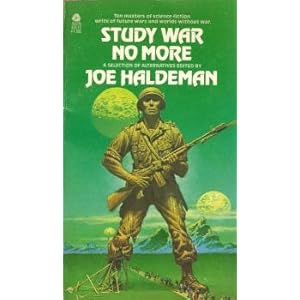
As DC comics (and I think The Bible) used to say, "Study war no more".

Wednesday, November 2, 2011

Casting Steven Soderberg's Bazooka Joe and His Gang


If you grew up between 1954 and 1981, you are no doubt familiar with Bazooka Joe and His Gang. They were the  comics that came with every package of Bazooka Joe bubble gum. The original antics of the eye patched youth and his rag tag group of streetwise kids were on the radar of just about every kid back in the day. Most of us know the Bazooka Joe characters inside out....well...okay...it's probably more like a kind of  passing familiarity bordering on dim memories.

Since 2009, rumours on the Internet have abounded concerning a potential big screen live action Bazooka Joe movie . With comic characters both major (Batman) and obscure (The Green Hornet) dominating the box office, just about every comic property in existence is finding its way to the big screen. So why should what is perhaps the tiniest come ever be an exception?

The best possible film adaptation would have to feature Golden Age Bazooka, '54-'81. None of this 80's and 90's rebooted retro-coned Bazooka Joe Universe, featuring Bazooka Joe as a time traveling rapper or any of that nonsense.We're talking Old School inner city Bowery Boys-esque Bazooka here, folks. So before Hollywood mucks it up I want to get this out there. Here is my ideal director (cinematic chameleon Steven Soderberg is perfect for the job-but more on that later) and dream cast for Bazooka Joe and His Gang, the movie.

Ryan Gosling as Bazooka Joe


Too often the casting of iconic roles in important reboots like Bazooka Joe are based solely on looks. In the case of Bazookas Joe this would be a mistake. There is more to the character of Joe than just his youthful looks, shock of blond hair and trademark eye patch.

Despite his happy-go-lucky, every man attitude, Joe has demons, lots of them. The guy completely lost the use of his right eye at a very young age. How does that emotional subtext inform Joe's behavior in three to four line blackout sketches?

You need an actor with the right chops to pull that kind of thing off. Canadian Ryan Gosling is that actor. Critically acclaimed for his work in such films as Lars and The Real Girl, Blue Valentine and Drive, Gosling has got the what it takes to pull off the depth of Joe's buried inner pain yet still maintain the levity necessary to bring dignity to some really bad punchlines.


Robert Pattinson as Mort


As I seem to recall, Bazooka Joe and His Gang was never quite as popular with the girls as it was with boys. So the Bazooka Joe movie would have to do what many comic-based films before it have done: play not just to the core audience of male fans but also be able to attract a viable female audience. Remember how many times in the recent Marvel Comics-based superhero movie, Thor, for instance, lead actor Chris Hemsworth had his shirt off?

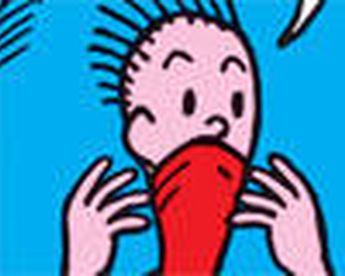
In that case, the Twilight move hunk Robert Patinson is a natural to play Joe's best friend, Mort. Mort is an interesting character too. He's guy whose face is covered 100% of the time with a turtleneck sweater and....oh...um...yeah....wait a sec...okay...um...maybe not.


Amanda Seyfried as Jane


Bazooka Joe and His Gang would be Amanda Seyfried's second crack at an iconic role. She has previously played Little Red Riding Hood in the 2011erotic fantasy thriller of the same name. If she can make that work, then she can certainly play the part of just about the only woman in Bazooka Joe's gang. 

Jane is Joe's longtime girlfriend (21 years, and that's just counting the original continuity) . She must love the guy a lot because she pretty much always got stuck playing straight man to Joe or one of  the other members of his eponymous gang. When Jane does get a punch line, it's usually one that's part of a group effort like the classic comic where Joe asks his gang, "Where was the Declaration of Independence signed?" and the entire gang replies together, "At the bottom!".

If anybody can breathe dignity and poise into the thankless role of a non-character like Jane, it's the woman who somehow ended up cast as "the unattractive girl" in the Megan Fox vehicle, Jennifer's Body.


Zach Galafianakis as Hungry Herman


As with many of the over weight characters from the 50's and 60's, Hungry Herman was about one thing and one thing only: eating. Pretty much every gag in some way had him wanting, trying to get or getting food. We saw little of his home life, his relationships or his job (or school?). It was like the guy was a food addict or something.

Then who better to play a character with that kind of an obsession than the guy who lit up a joint on live TV while appearing on HBO's Real Time with Bill Maher? Pot and hunger: one follows from the other, right?

If you've seen Mr. Galifianakis in the Hangover movies or in the HBO series, Bored to Death, then you know that the man has penchant for playing cryptically obsessed characters. They're guys' who, despite the obvious nature of their desires, still remain somewhat ambiguous in nature.

A great new spin on a one track character, I say.


He would have to lose the beard to satisfy the purists.


Leonardo DiCaprio as Pesty


It's never really made clear in the original comics but most Bazooka Joe historians and scholars agree that Pesty is more than likely Joe's little brother.

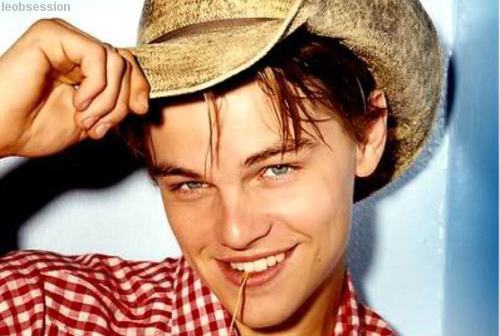
True, Leonardo Dicaprio is 16 years older than Ryan Gosling but he does have that ageless baby-face thing going for him. Having played characters as diverse as Howard Hughes, King Louis XIV and J.Edgar Hoover, Dicaprio could make the part his own.

And it that isn't reason enough for you then, well, it's a Bazooka Joe movie, eh?


Tom Hardy as Toughie


"I just had a fight with toughie. When it was all over, he crawled up to me on his hands and knees."
"What did he say?"
"Crawl out from under that bed you coward!"

Toughie was frequently the heavy in Bazooka Joe comics. He was usually the source of most of the conflict and dramatic tension throughout the 2 to 3 panels of the story.  Most of his storylines involved physical confrontation or the threat of physical confrontation with Joe or other members of his gang. Make no mistake, urban gang violence was indeed prevalent in the Bazooka Joe Universe.

The character of Toughie would have really have to be a toughie, when you think about it. The guy, just by himself, is consistently a major threat to a gang composed of anywhere from 4 to 7 members.

Tom Hardy is an actor who brought an incredible threatening physical presence to the title character of director Nicolas Winding Refn's film,  Bronson. Yet Hardy was also able to bring a degree of sympathy to the monstrous character. Such a nuanced portrayal of Toughie would certainly help to shake up the often staid narrative structure Bazooka Joe's 2 to 3 panel stories.

Hardy would be comfortable in a franchise film. He played Captain Picard's younger clone in the movie, Star Trek: Nemesis. He will be appearing as the Batman villain, Bane, in Christopher Nolan's upcoming The Dark Knight Rises. In 2012, he will taking over an iconic role first made famous by Mel Gibson in not one but two upcoming Mad Max sequels.


Anne Hathaway as Pat


Anybody remember Pat?

Me neither.

Nonetheless, if the reaction to the casting of Anne Hathaway as Catowman in the next Batman movie is anything to go by, Bazooka Joe fans everywhere will be outraged by the news of her appearance in the film. And I don't want to think about what's gonna happen the first time photos of Ms.Hathaway in her Pat costume surface on the internet.


Kall Penn as Tex


There's too many white people in this movie.


Obama administration to Bazooka Joe: it's a natural progression.


Nicholas Cage as Boastful Billy


Speaking as a writer, I admire the audacious simplicity of some of the Bazooka Joe character names. Case in point, Boastful Billy. With stories that are sometimes just one panel long, you don't have much time to flesh out and develop characters as you may in with, say, in stories that are seven or eight panels long. As soon you hear Joe or Mort say, "Here comes Boastful Billy", though, you know exactly what to expect.

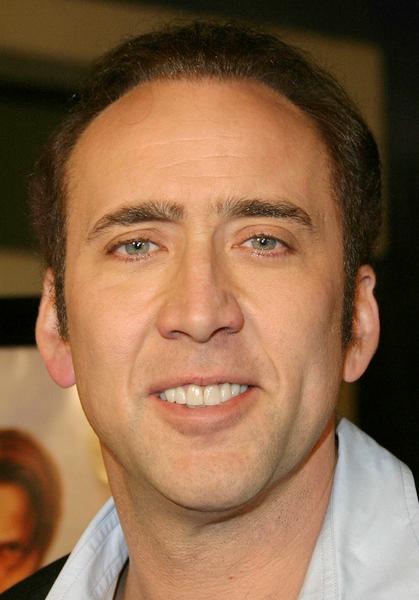
Lately, Nicolas Cage, it seems, has a hard time saying "No" to just about any role. I mean Season of the Witch and Sorcerer's Apprentice back to back, followed by a Ghost Rider sequel? How much debt are you in, again?

If there is one thing Cage can play, it's slightly deluded yet boastful characters (Vampire's Kiss, Honeymoon in Vegas, accepting the lead in the Wicker Man remake). Let's face it, the man is a very good actor who has done far too much slumming. He certainly could use the career prestige of a project like the Bazooka Joe and His Gang.


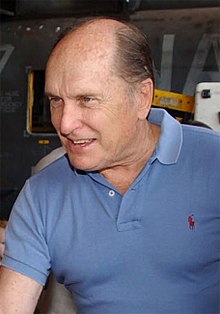
Robert Duvall as Joe's Dad


Apocalypse Now, The Godfather, The Great Santini, Tender Mercies: none of these roles, while all amazing performances, are anything like the part of Bazooka Joe's dad. Duvall hasn't really done all that much lighter fare, especially ones that feature so many puns along with awkward set-ups and punchlines.

Duvall ultimately would give us a glimpse into not just Joe's dad but into Joe himself. He is, after all, the guy who made Joe into the man he is today.  A name like Duval's would bring a certain degree of legitimacy to the project. With any luck, he'd pull a Marlon Brando and ask for like 11 million dollars for a two minute role.

And just think about how cool it would look in the credits and on the poster: 

"...and
Robert Duvall
as 
Bazooka Joe's dad"


Judy Dench as Joe's Mom


Because, quite frankly, Helen Mirren will turn this role down cold.


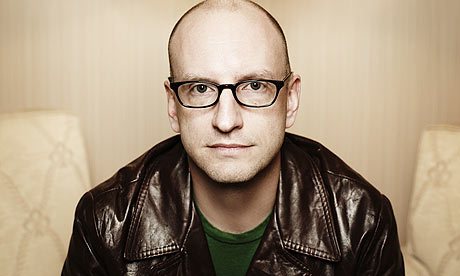
Director: Steven Soderberg


Steven Soderberg is probably the most versatile director working in both Hollywood and the independent film scene today. He has tackled many different kinds of films in different genres. He's taken on the big mainstream star driven blockbusters like Ocean's Eleven Trilogy and the recent Contagion. He's no stranger to indie character-driven films like Sex, Lies and Videotapes and Full Frontal. He's done art-house fare like the four hour subtitled biopic Che and narratively experimental Terence Stamp film, The Limey. He's helmed Oscar winning movies like Traffic and Erin Brokovich.  And Soderbergh is not afraid to take risks that sometimes don't payoff. Risk like, for instance, casting adult film star Sasha Grey in the lead role of The Girlfriend Experience. Soderberg is now breaking into franchise cinema as well. He'll be directing the upcoming Man From U.N.C.L.E. reboot starring Bradley Cooper.

With the possible exception of  Danny Boyle (Slumdog Millionaire, 28 Days Later, Trainspotting), Soderberg is one of the very few directors that is able to successfully reinvent himself from film to film.  He is the only auteur out there that could conceivably pull off a Bazooka Joe movie. After all, we are talking about a two hour movie consisting of a series of three to four line scenes ending a single punchline and no other narrative closure.

Work your magic Steve!


And I have one final request for the Bazooka Joe and His Gang movie. For the Canadian release of the film, every line of dialogue has to be repeated twice: once in each official language.