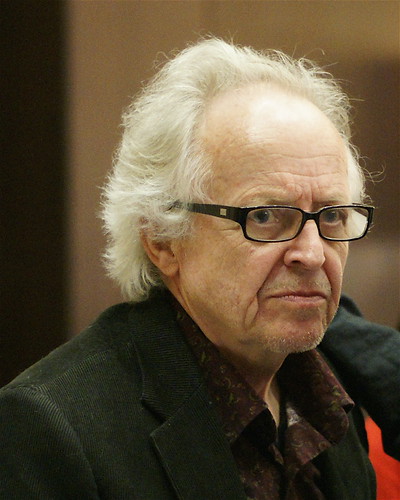
The Bowman Blog: trenchantly goofy musings from an actor, writer and all around pop culture geek.
About Me
- Terence Bowman
- Montreal, Quebec, Canada
- I am a Montreal-based actor, writer and comedian. When U.S. President John F. Kennedy was shot, I was three days old. I cried all day. My favourite books of all time are Moby Dick by Herman Melville, The Last Temptation by Nikos Kazantzakis and The Ewoks Fun Time Activity Book by Chirpa and Pamploo. I am a member of The Vestibules, On The Spot Improv and The Best Buy Battery Club. Except for the Battery Club, I've been at all this stuff for over 20 years. Enjoy my blog.
Monday, April 11, 2011
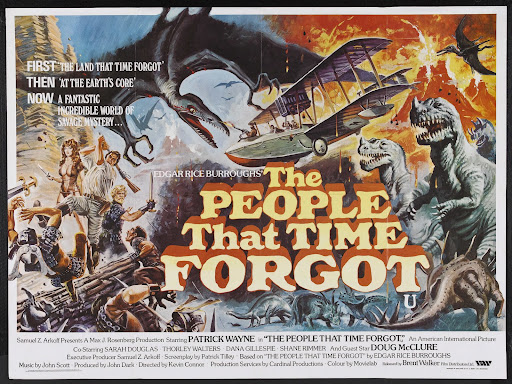
Biplane vs. Pterodactyl! My Weekly Goofy Movie Clip
This week's clip is a very cool yet at the same time pretty goofy scene from the 1977 film, The People That Time Forgot, sequel to 1975's The Land That Time Forgot. Both are based on the novels of the same name by Edgar Rice Burroughs.
The first is a classic dinosaur adventure movie from my youth. The second, not so much, except, of course, for this "awesome" opening scene...
As you can no doubt tell from the state-of-the-art visual effects, this film was released in the same year as the original Star Wars.
That's Patrick Wayne, John Wayne's son, piloting the biplane. The Duke lived just long enough to see his son's work in this classic film.
Check back here for more Goofy Movie Clips each week.
Same Bat Time.
Same Bat Blog
Friday, April 8, 2011
TV's Shameless Anti-Heroes
Let's get a little more specific.
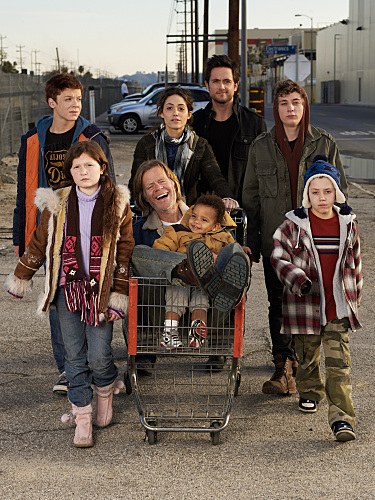
The Showtime series Shameless recently recently wrapped it's run on The Movie Network in Canada. By the time episode 12 rolled around I was a huge, if somewhat initially reluctant, fan. Based on the British series of the same name, Shameless is a show that is unapologetic towards (or, shameless, if you wanna get all clever about it)about alcoholics, criminals, nymphomaniacs, irresponsible parents, bullies, cheaters, assholes, con artists and other generally morally reprehensible people.
This is where the counter intuitive part comes in.
On Shameless, all of the above manage to come off not only as sympathetic characters but also has just plain likable people. The audience is oddly yet quickly and easily lured into both the humour and the drama of the lives of people who might otherwise be dismissed as lowlifes.
Contradictions like that are becoming commonplace on the TV landscape of the 21st century. This is most especially true in the land of cable TV series. The anti-hero is an age old literary concept and this is not the first time that we've seen a pop culture fascination with the idea.
Back in 70's, for instance, actors like Clint Eastwood, Jack Nicholson and Gene Hackman were typically playing characters that helped bring the concept back into vogue. However, the protagonists of current and recent shows like Shameless, Mad Men, The Shield, Big Love, Nurse Jackie, Damages, Dexter, The Wire, Battlestar Galactica, Deadwood, Boardwalk Empire, Weeds, In Treatment, Californication, and Breaking Bad are taking the anti-hero to a whole new level and on a much wider scale too.
From the time of my earliest memories of TV up to as recently as the mid to late 90's, it was unthinkable that you'd ever see a time when some of the best and most popular shows on TV would lead characters that were mob bosses, drug dealers, serial killers, alcoholics, polygamists and corrupt cops. Even in the early naissance of the trend, when HBO first started running series like OZ and The Sopranos, such shows were the exception in TV and not the rule (yes, even on cable at the time).
Make no mistake, the cable networks and their struggle to pull audiences away from the bigger over-the-air networks are squarely behind the small screen revolution. If you're looking for edgy TV, look no further than HBO, Showtime, AMC, FX, USA and similar networks that, sadly, have little or no availability in Canada. These rogue players in the TV industry operate, not unlike the anti-heroes that populate their programming, outside the constraining traditional rules and regulations that the Big Four (five if you count CW) US Broadcast networks. Networks like ABC, CBS, NBC, Fox and (to be nice) The CW are stuck with the pesky little detail of broadcasting on public airwaves. If that's your address then you've got all kinds restrictions imposed both from within and without of the network structure.
Fox ran into similar problems when they attempted to mold 24's Jack Bauer into an anti-hero. The fact that the character of the maverick CIA Counter Terrorism agent and his use of extreme, anti-heroic methods like torture were demonized by the left and lionized by the right is clear evidence that said attempt failed spectacularly.
Once again, it's those darn pesky Standard and Practices Departments that every broadcast network must have that get in the way of makin' some good TV (not like I'm talking from any kind of personal experiences I may have had in the TV biz or anything like that).
In the case of Shameless, we are not dealing with anything so dramatically important as police corruption, counter terrorism or people lost on an island. The show follows the story of a majorly dysfunctional working class family living in Chicago's South side (a neighborhood, BTW, that has a notorious history of crime and gang violence). The lead character is Frank Gallagher, a father of five kids who makes no attempt to support them, has no job, lives off of fraudulent disability claims and is, in his own words, a raging alcoholic. Frank's wife took off more than a year ago, leaving six kids to, in essence, raise themselves. The kids are often seen pooling their money from after school jobs in order to cover silly little indulgences like the electricity bill and taxes.
As I watched the first episode of Shameless, I remember thinking "Oh, man, no way am I ever going to get into this". My initial impression was that this was just going to be yet another cable series trying to be edgy with dumb sex jokes, scatological references, mean spirited humour and totally unlikeable characters. It was not long, however, before Shameless' mysterious charms took hold. There is something incredibly engaging about a world that is so completely disordered that it throws its moral compass out the window. It's an incredible feat that a typical episode of Shameless can have you rooting for the criminal and siding with the completely irresponsible alcoholic.
It is a feat that rests squarely on the shoulders of the show's creators, writers, directors and an incredible cast. In particular the performances of Emmy Rossum (as the family's oldest and, oddly, most responsible member), Justin Chatwin (her mysterious love interest), Emma Kenney (who nails some of the best lines ever written for a 10 year old ) and one of the finest actors working today, William H. Macy.
Shameless is worth watching just for Macy alone.
There are many really good actors out there who could play the role of the show's patriarchal drunk but there are very few that could make that guy as likable as Macy does.
That type of appeal is what's kinda really at the heart of Shameless. It's an approach that is only successfully achieved through humour. Shameless has plenty of humour. Dark humour. Humour so dark, in fact, that it often covertly slips into drama. The series has an uncanny ability to cross in and out of the territories of comedy and drama without ever having to show its passport.
I'm sure the British series that Shameless is based on did all this stuff first but their TV has always been something of a different animal. I am currently in the process of seeking out the UK hit (which is now in its ninth season!).
There was another acclaimed and high rated series out there in cable land that I was ready to turn off during the first episode as well.
It's called Dexter.
My initial opinion of a series with a serial killer protagonist was that it would never work. That opinion was backed up by the first episode which, for me, fell directly into the category of "This is pretty frakin' sick, man.". I gave the show a second chance with the next episode. Turns out, that's all it took. Five seasons and who knows how many dismembered corpses later, and I'm all like "Yay! Serial killer! Go!".
Another key to Dexter's success is that the show has some of the very best thriller writing currently seen on TV.
If the bad guys are good then the good guys are bad.
Nowhere is this more true than in FX's ground-breaking police thriller, The Shield. The gritty series was created by Shawn Ryan a producer who cut his teeth on the Buffy The Vampire Slayer spin-off Angel (pun intended!). As previously mentioned, Ryan created and currently produces Fox's The Chicago Code, a series that, while not quite as edgy as The Shield, is probably making the guy much more money.
In the Shield, Michael Chiklis plays corrupt LA cop Vince Mackey. Sandwiched between his dad roles in The Commish and No Ordinary Family, Chiklis took home his first Emmy award for bringing Mackey to life.
And why the hell not? The guy's amazing.
Chikilis lost weight and put on muscle for the role as a means of completely reinventing his nice TV dad image into that of a majorly bad ass cop. Unlike Shameless' Frank Galagher or Dexter, the character of Mackey does not have quite so many redeeming or sympathetic qualities. He's a cop that is hard edged and downright rotten to the core.
Joe Friday and Steve McGarrett must be turning over in their fictional graves.
The writers do suggest a reason for Mackey's corruption that is not totally selfish. He has an autistic son which, in the American health care and social support system, is something that can get a tad pricey on a cop's salary. A direct line is never drawn between the two in any of the scripts. In a rare moment of restraint for American TV, the audience is allowed to make that connection all on their own. While I have great sympathy for anybody who may be in such a situation, I'm pretty sure that shooting people in the head is still bad.
Anti-heroes do not reside exclusively in the world of cops and killers. Nor for that matter are they strictly the denizens of contemporary culture. Case in point is AMC's sublime Mad Men.
I was first attracted to Mad Men by the time period in which the series takes place. That time period being the early 1960's, the world I was born into. It soon became apparent, however, that there was much more to the show than just that. Nonetheless, they do capture the period amazingly. The sets, costumes and look of the show is beautifully faithful to the era as is the writing and the performances. It's the best replication of the time that I have ever laid eyes on.
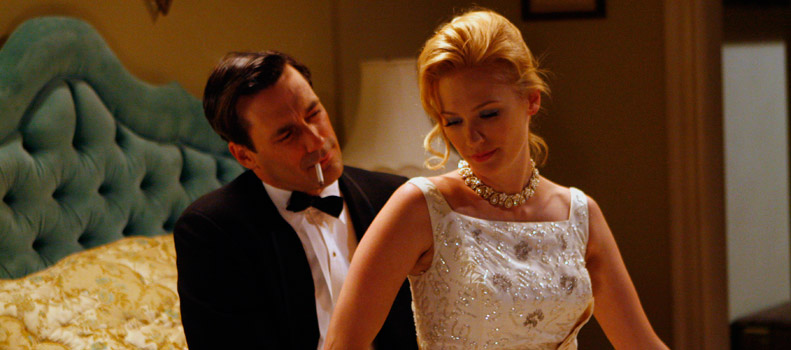
The common denominator between Mad Men and the other shows in this blog are in the characters, particularly that of the anti-heroic male lead of the show, Don Draper. Don Draper is an alcoholic (though a billion times more subtle about it than the guy on Shameless) and is emotionally cold and distant from just about everybody in his life. He also has a chronic case of serial infidelity (a trait that is only very very slightly offset by his incredible taste in women). Draper is expertly brought to life by the amazing Jon Hamm. Hamm endows Draper with a quiet and largely concealed humanity. Hamm's Draper is yet another guy that we really shouldn't like but yet do anyway.
The other thing that impresses me no end about Jon Hamm is that he pursued a career as an actor without changing his last name.
One of the characters on the show that Draper is particularly cold to is his wife, Betty Draper. She too has plenty of problems of her own (besides her terrible husband). She is emotionally repressed, controlling, close-minded and pretty darn cold and distant herself. Betty Draper is nicely underplayed by the Grace Kellyesque January Jones. Mrs.Draper (no Ms yet in those days) is the polar opposite of the TV mom's of the era from shows like Leave it to Beaver and Father Knows Best. Her approach to parenting is almost that of an anti-June Cleaver.
But Betty Draper is far from TV's only or most intriguing female anti-hero.
That honour goes the high powered New York attorney Patty Hewes on the FX series, Damages.
Hewes is played by Glenn Close in what is possibly the single best role of her career. Hewes runs one of the biggest and most prestigious law firms in NYC. In Close's hands, Hewes is powerful, direct, ruthless, firm, supremely confident and almost always in control of everything that goes on around here. Hewes is one of those strong woman who is very successful in male dominated field type of characters. In this case, though, the male dominated field often consists of hired assassins, extortion, corruption and, every once in a while, cold blooded murder. A strong woman, yes, but you'd no more want your daughter adopting Hewes as a role model than you would want your son looking up to Tony Soprano.
Thanks to Close and a solid writer's room, you really do feel for Hewes, even and especially in, her darker moments. Technically, Hewes is really more of the antagonist of the story to Ellen Parsons, the protagonist. Parsons is the up and coming young lawyer, played by Rose Byrne, who often finds herself on the wrong side of Hewes. Part of the brilliance of Damages is that the line between good and bad people is frequently and routinely blurred.
All this is just the tip of iceberg.
There are many more anti-heroes and shows that I have not touched on. There's Bryan Cranston nailing the role of a high school science teacher turned crystal meth dealer on Breaking Bad. There's the dense and complexly plotted The Wire where the cops and the drug dealers are merely different sides of the same coin. There's the David Mamet-on-horseback Western, Deadwood. And, while we're on genre revisionism, there's also Battlestar Galactica, the ground-breaking science fiction series that saw evil alien clones bent on destroying humanity slowly, over the arc of the series, become just like humanity. The list goes on and on but my blog does not.
With these shows and their anti-heroes, TV has shifted from it's reassurance and predictability of the past. About the only thing reassuring and predictable in this new wave of American anti-hero shows is that you know they are going to go to some really dark places and, quite possibly, leave you there.
The other thing these shows have significantly changed is the amount the ease and speed with which one can shut down anybody attempting to make that tired old trite observation that "there is nothing good on TV these days. It's all crap."
| You've come a long way, baby. |
Friday, April 1, 2011
The Best Movies of All Time by Genre
One question that I have always had a hard time answering is "What's the best movie of all time?". Picking just one out of all the great cinematic achievements in the history of film is a task too daunting to even consider.
I loved it when The American Film Institute came out with a list of The Greatest Films of All Time ranked by Genre. Great idea. Once you break films down by genres it really takes the task of making the selections of the Best Movies of All Time right down to size.
In that spirit, here is my humble list of the The Best Movies of All Time by genre...
Best Western
Young Guns
(1988, d: Christopher Cain)
There are a number of directors who are considered to be the cornerstone film makers of the Western genre. Their names are synonymous with the spirit of the genre itself. They have defined, explored, redefined and made the genre great. Among those auteurs are John Ford, Sam Peckinpah, Howard Hawkes, Sergio Leone, John Sturges, Anthony Mann, Clint Eastwood and, of course, the one name that no such list could be complete without, Christopher Cain, director of the Western that stood the genre on its head, Young Guns.
Young Guns is, without a doubt, a milestone. It was a film that was made at a time when Hollywood considered the Western a dead genre. The only other Westerns produced in the 1980's were Lawrence Kasdan's Silverado and Clint Eastwood's Pale Rider. They are two abysmal films that mark the Western at its absolute lowest level of complete creative and artistic bankruptcy.
Young Guns saved the genre and paved the way for the only two Oscar winning Western movies (the vastly inferior Dance With Wolves and Clint Eastwood's much overrated Unforgiven).
Cain's 1988 Western is about a group of characters rather than the traditional single lone hero previously quintessential to the genre. It improves upon a vision first put on the screen by John Sturges in The Magnificent Seven. That, in turn, was a film which was itself based on Akira Kurosawa's Seven Samurai. There is direct link between Kurosawa and Young Guns. The often made favorable comparisons to Kurosawa is something that director Cain earns beautifully.
Cain shows great knowledge and insight into the genre, single-handedly creating a vision of the Western as one of heroes vs villains. Young Guns is a Western film that takes place in the unique setting of vast empty deserts, open plains and small frontier towns.
Cain certainly knows good solid actors when he sees them. Midway through Young Guns, the brilliant Lou Diamond Phillips performs one of the finest film monologues I have ever seen. Cain's innovative direction raises the performances of Emilio Estevez, Charlie Sheen and Kiefer Sutherland to the level of performances made by John Wayne, Roy Rogers and Gary Cooper.
Young Guns is a Western that will be remembered and cherished for generations to come.
Best Chick Flick
300
(2007, dir: Zack Synder)
300 does not make it to the top of Chick Flick genre (as it has unfortunately become known) just on the strength of Gerard Butler and his 299 companions' incredible abs. The abs may help but that visual treat is not what is at the heart of 300's appeal to its target female audience.
Like many of the classic so-called "Chick Flicks", 300 is a period piece. 300 is also filled with many scenes of great emotional warmth and humour. As sensitive as Gerald Butler's delicate portrayal of the tender yet powerful King Leonidas is, let's face it, this is a movie that is really about the incredible woman in Leonidas's life, Queen Gorgo of Sparta.
Lena Headey (previously seen on the thankfully short lived TV series Terminator:The Sarah Connor Chronicles) is perfectly cast as Gorgo. The relatively unknown English actress turned heads in Hollywood when she beat out Julianne Moore, Rene Zellewegar and Sandra Bullock for the coveted role. Once landing the part, Headley wisely lobbied to expand the role of Queen Gorgo from her one scene in the original (graphic) novel on which the movie is based to making her the centerpiece of the film version of 300.
300 follows the story of Gorgo as she must contend with taking over Leonidas' role as leader of Sparta while her husband is away dealing with foreign difficulties. The film follows the trial and tribulations of Gorgo's challenge to live and work as an essentially single mother in a world that was very much -at the time- almost completely male dominated. Gorgo has one particularly clever solution to the problem of one her husband's former rivals when he becomes a little too overly amorous. I'm not going to give anything away but let's just say it involves the very clever use of a seemingly innocent looking dagger.
The secondary story of 300 follows Leonidas as he deals with a competing group of Persians while visiting the nearby resort town of Thermopylae. The King employs a unique approach to conflict resolution management that marks one of the weaker and less significant parts of this otherwise great Chick Flick.
Best Historical Epic
More American Graffiti
(1979 dir: Bill L. Norton)
Many readers out there may be shocked that movies like Ben Hur, Lawrence of Arabia and Gandhi did not make into the number one spot in this category.
Let's make no mistake about it: William Wyler, David Lean and Sir Richard Attenborough are all fine filmmakers. There is one truth, however, about their work that few film critics or film academics ever point out : all of their movies are really long and dull.
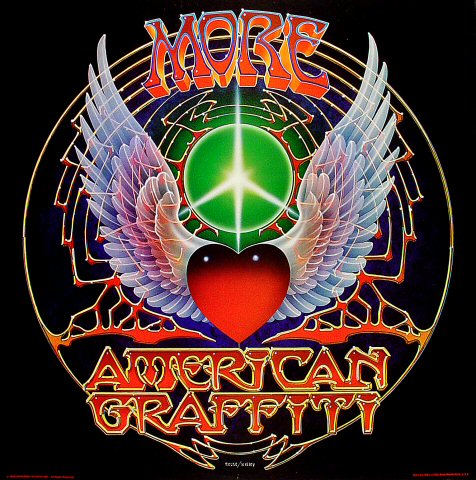
In More American Graffiti, writer and director Bill L. Norton takes a mere 110 minutes to cover the tumultuous events that marked the social and political changes of the 1960's. The film depicts the Haight Ashbury drug scene, political campus activism , the birth of the woman's movement, psychedelia and the war in Vietnam.
C'mon, really, David Lean, do you actually need three and a half hours to tell the sweepingly epic story of an Arab revolt during World War I ? Is it necessary to devote roughly the same amount of screen time to the story of guy who wins a chariot race, there, Willam Wyler? Here's an idea for your, Sir Richard: Indian Independence in 90 minutes or less.
Look, I'm just cutting out the niceties and saying what everyone is thinking.
More American Grafiti is, sadly, the lesser known sequel to George Lucas' first hit film, American Graffiti. It is a sequel that follows, among other things, the story of the Vietnam War. The beloved character of Toad from the original film has a far more interesting story and character development in this film as we follow his exploits during a war that defined an era.
More American Graffiti has scenes of Vietnam (some of which were shot by Lucas himself) that are amongst those of the very best films about the war: Apocalypse Now, The Deer Hunter, First Blood and Platoon.
Best Action Movie
On Deadly Ground
(1994, dir: Steven Seagal)
Long before being unfairly harassed by the FBI, Steven Seagal was one of the biggest box office action movie stars in the entire world. Unfortunately, thanks to the US government's baseless and unfair investigations, Seagal has now been force to retreat to making a modest living in the field of direct-to-DVD home entertainment.
Master and Commander: The Far Side of The World is loosely based on Patrick O’Brian’s landmark series of books. O’Brian is often mentioned in the same breath as Arthur C. Clarke, Edgar Rice Burroughs and Orson Scott Card as the master and commander of the literary SF genre in his own right.
Master and Commander: The Far Side of The World has some amazing battle scenes. They are scenes that are reminiscent of the classic battles in Starship Troopers and the original Buck Rogers motion picture, which are generally considered the greatest science fiction battles scenes ever.
The sequences that deal with the turbulent weather the HMS Surprise encounters on its voyages are, according to meteorological experts, the most accurate on-screen depictions of what great storms in the middle of vast bodies of water would most likely look like.
The evil nemeses of the film are The French. The French are a wonderful creation. The concept of an alien race that speaks a different language, has a different culture and even different cuisine is just plain brilliant. Weir definitely gets a lot of mileage out the villainous French.
Master and Commander also achieves at least one moment of true science fiction. It happens during a part of the story when the ship, somewhere in the South Pacific quadrant of the system, discovers a largely uncharted world known as the Galapagos Islands. The lizards, birds, bugs and other fantastical creatures encountered during the scenes that take place in this strange Galapagos land contain the film's finest special effects. Using a combination of stop motion animation, CGI, and animatronic prosthesis, the visual FX team manages to bring to life creatures that look, act and move like real animals.
Many bloggers, internet commentators and critics have complained that much of the writing in Master and Commander: The Far Side of The World relies too heavily on pseudo scientific techno-babble. Jargon like “mainsail”, “topsail”, “flying gib” and “masthead” are thrown around a great deal in the film. Such terminology is indeed hard to follow at times, if, in fact, that dialogue means anything at all. Nonehtheless, the so-called techno-babble jargon does invent a sense of verisimilitude towards an imagined reality that is central to the success of the movie.
Other critics, bloggers and internet commentators have challenged the scientific accuracy of Master and Commander: The Far Side of the World as well. One of the main bones of contention is the questionable notion that ships of the size, mass and weight of those depicted on screen would be at all able to achieve buoyancy on water. Another source of skepticism involves the far fetched manner in which the ships seem to be propelled by wind through the use of a technology know as "sails".
Oh c'mon, guys, that kinda nitpicking is beside the point. When dealing with a movie as entertaining as Master and Commander: The Far Side of the World, why get bogged down on stuff like that? Does anyone question the scientific accuracy of the Flux Capacitor or the Death Star?
It’s just a movie. Chill.
Some other honourable mentions for the Best Movies Ever by genre include...
Best Horror Movie
Monster's Ball
(2001, dir: Marc Foresteter)
Best Romantic Comedy
The Love God?
(1969, dir: Nat Hiken)
Best Musical
Sister Act 2
(1992, dir: Emile Ardolino)
Best Superhero Movie
Fearless Frank
(1967, dir: Philip Kaufman)
Best Sequel
Godfather III
(1990, dir: Francis Ford Coppola)
Best Movie Based on a TV Show
M*A*S*H
(1970, dir: Robert Altman)
Best Documentary
Zelig
(1983, dir: Woody Allen)
Best War Movie
The Green Berets
(1968, dir: Ray Kellogg, John Wayne, Mervyn LeRoy)
Best Christmas Movie
Beneath The Planet of the Apes
(1970, dir: Ted Post)
So there you have it folks. I'd be very surprised if any readers of this blog had any disagreements or issues with my choices. It's certainly a pretty hard list to argue with, that's for sure.
Until next time, gang, have a great first day of April!
I loved it when The American Film Institute came out with a list of The Greatest Films of All Time ranked by Genre. Great idea. Once you break films down by genres it really takes the task of making the selections of the Best Movies of All Time right down to size.
In that spirit, here is my humble list of the The Best Movies of All Time by genre...
Best Western
Young Guns
(1988, d: Christopher Cain)
There are a number of directors who are considered to be the cornerstone film makers of the Western genre. Their names are synonymous with the spirit of the genre itself. They have defined, explored, redefined and made the genre great. Among those auteurs are John Ford, Sam Peckinpah, Howard Hawkes, Sergio Leone, John Sturges, Anthony Mann, Clint Eastwood and, of course, the one name that no such list could be complete without, Christopher Cain, director of the Western that stood the genre on its head, Young Guns.
Young Guns is, without a doubt, a milestone. It was a film that was made at a time when Hollywood considered the Western a dead genre. The only other Westerns produced in the 1980's were Lawrence Kasdan's Silverado and Clint Eastwood's Pale Rider. They are two abysmal films that mark the Western at its absolute lowest level of complete creative and artistic bankruptcy.
Young Guns saved the genre and paved the way for the only two Oscar winning Western movies (the vastly inferior Dance With Wolves and Clint Eastwood's much overrated Unforgiven).
Cain's 1988 Western is about a group of characters rather than the traditional single lone hero previously quintessential to the genre. It improves upon a vision first put on the screen by John Sturges in The Magnificent Seven. That, in turn, was a film which was itself based on Akira Kurosawa's Seven Samurai. There is direct link between Kurosawa and Young Guns. The often made favorable comparisons to Kurosawa is something that director Cain earns beautifully.
Cain shows great knowledge and insight into the genre, single-handedly creating a vision of the Western as one of heroes vs villains. Young Guns is a Western film that takes place in the unique setting of vast empty deserts, open plains and small frontier towns.
Cain certainly knows good solid actors when he sees them. Midway through Young Guns, the brilliant Lou Diamond Phillips performs one of the finest film monologues I have ever seen. Cain's innovative direction raises the performances of Emilio Estevez, Charlie Sheen and Kiefer Sutherland to the level of performances made by John Wayne, Roy Rogers and Gary Cooper.
Young Guns is a Western that will be remembered and cherished for generations to come.
Best Chick Flick
300
(2007, dir: Zack Synder)
300 does not make it to the top of Chick Flick genre (as it has unfortunately become known) just on the strength of Gerard Butler and his 299 companions' incredible abs. The abs may help but that visual treat is not what is at the heart of 300's appeal to its target female audience.
Like many of the classic so-called "Chick Flicks", 300 is a period piece. 300 is also filled with many scenes of great emotional warmth and humour. As sensitive as Gerald Butler's delicate portrayal of the tender yet powerful King Leonidas is, let's face it, this is a movie that is really about the incredible woman in Leonidas's life, Queen Gorgo of Sparta.
Lena Headey (previously seen on the thankfully short lived TV series Terminator:The Sarah Connor Chronicles) is perfectly cast as Gorgo. The relatively unknown English actress turned heads in Hollywood when she beat out Julianne Moore, Rene Zellewegar and Sandra Bullock for the coveted role. Once landing the part, Headley wisely lobbied to expand the role of Queen Gorgo from her one scene in the original (graphic) novel on which the movie is based to making her the centerpiece of the film version of 300.
300 follows the story of Gorgo as she must contend with taking over Leonidas' role as leader of Sparta while her husband is away dealing with foreign difficulties. The film follows the trial and tribulations of Gorgo's challenge to live and work as an essentially single mother in a world that was very much -at the time- almost completely male dominated. Gorgo has one particularly clever solution to the problem of one her husband's former rivals when he becomes a little too overly amorous. I'm not going to give anything away but let's just say it involves the very clever use of a seemingly innocent looking dagger.
The secondary story of 300 follows Leonidas as he deals with a competing group of Persians while visiting the nearby resort town of Thermopylae. The King employs a unique approach to conflict resolution management that marks one of the weaker and less significant parts of this otherwise great Chick Flick.
Best Historical Epic
More American Graffiti
(1979 dir: Bill L. Norton)
Many readers out there may be shocked that movies like Ben Hur, Lawrence of Arabia and Gandhi did not make into the number one spot in this category.
Let's make no mistake about it: William Wyler, David Lean and Sir Richard Attenborough are all fine filmmakers. There is one truth, however, about their work that few film critics or film academics ever point out : all of their movies are really long and dull.
In More American Graffiti, writer and director Bill L. Norton takes a mere 110 minutes to cover the tumultuous events that marked the social and political changes of the 1960's. The film depicts the Haight Ashbury drug scene, political campus activism , the birth of the woman's movement, psychedelia and the war in Vietnam.
C'mon, really, David Lean, do you actually need three and a half hours to tell the sweepingly epic story of an Arab revolt during World War I ? Is it necessary to devote roughly the same amount of screen time to the story of guy who wins a chariot race, there, Willam Wyler? Here's an idea for your, Sir Richard: Indian Independence in 90 minutes or less.
Look, I'm just cutting out the niceties and saying what everyone is thinking.
More American Grafiti is, sadly, the lesser known sequel to George Lucas' first hit film, American Graffiti. It is a sequel that follows, among other things, the story of the Vietnam War. The beloved character of Toad from the original film has a far more interesting story and character development in this film as we follow his exploits during a war that defined an era.
More American Graffiti has scenes of Vietnam (some of which were shot by Lucas himself) that are amongst those of the very best films about the war: Apocalypse Now, The Deer Hunter, First Blood and Platoon.
Best Action Movie
On Deadly Ground
(1994, dir: Steven Seagal)
In the heyday of Seagal's massive commercial success, he made one little film called On Deadly Ground. It was a time when Seagal's career was following the arc that a younger Clint Eastwood's career followed two decades earlier. Indeed, Seagal followed the inevitable evolution of his career from major motion picture star to major motion picture director. This great 1994 film marked the man's directorial debut.
On Deadly Ground is not your typical action movie fare. Not by a long shot. To be sure, though, the film does have some absolutely stunning and impeccably directed action scenes. Seagal proves himself to be not unlike James Cameron and Hal Needham in his mastery of both film technique and emotional substance.
With extremely subtle and almost subversive direction, Seagal is able to work an environmentalist sub-text into the film. On the surface, On Deadly Ground may seem like a standard action film about a greedy oil company CEO (Michael Caine in his most overlooked yet arguably best performance) attempting to drill for oil on land owned by the Inuit. On another level, though, the film has almost undetectable undertones of messages about corporate greed, aboriginal rights and (though it took me multiple viewings to catch it) pro-environmental protection statements. When it comes to On Deadly Ground, I am grateful for the three years I spent studying film theory and criticism at Concordia University.
On Deadly Ground ends with Seagal making that one elusive thing in film that all fine actors seek: a career-defining speech. Take a look at Seagal's closing monologue and see if you can pick up on some of its more nuanced meanings....
Best Science Fiction Film
Master and Commander: The Far Side of The World
(2003, dir: Peter Weir)
Master and Commander is the best science fiction adventure flick to ever hit the big screen. Director Peter Weir creates an exciting sense of adventure, exploration, and character development in a film that follows the captain and crew of a legendary ship of an organization known as the British Navy. In the film, the ship and its crew plunge headlong towards the vast deep reaches of the far side of the world.
It must be pointed out, though, that some elements of Master and Commander: The Far Side of The World are derivative of other films in the SF genre. Most notable among said films is, of course, the Star Trek movies. Captain Jack Aubrey is clearly Captain James T. Kirk in different dress. Aubrey's ship, The HMS Surprise is a vessel not unlike The USS Enterprise. The character of Dr. Stephen Maturin is a wry combination of the friendship and loyalty displayed in both the characters of Mr. Spock and Dr. "Bones" McCoy. Even Russell Crowe’s wonderful interpretation of the character of Aubrey owes much to the ground breaking performances of William Shatner.
Such similarities are not necessarily bad, however. If you are creating surrealist art, is it wrong to be influenced by Rene Magritte? If you’re studying early childhood development, is it wrong to owe a debt of gratitude to Jean Piaget? Is there anything wrong with a vaccine researcher building on the work of Jonas E. Salk?
Greatness stands on the shoulders of giants.
It must be pointed out, though, that some elements of Master and Commander: The Far Side of The World are derivative of other films in the SF genre. Most notable among said films is, of course, the Star Trek movies. Captain Jack Aubrey is clearly Captain James T. Kirk in different dress. Aubrey's ship, The HMS Surprise is a vessel not unlike The USS Enterprise. The character of Dr. Stephen Maturin is a wry combination of the friendship and loyalty displayed in both the characters of Mr. Spock and Dr. "Bones" McCoy. Even Russell Crowe’s wonderful interpretation of the character of Aubrey owes much to the ground breaking performances of William Shatner.
Such similarities are not necessarily bad, however. If you are creating surrealist art, is it wrong to be influenced by Rene Magritte? If you’re studying early childhood development, is it wrong to owe a debt of gratitude to Jean Piaget? Is there anything wrong with a vaccine researcher building on the work of Jonas E. Salk?
Greatness stands on the shoulders of giants.
Master and Commander: The Far Side of The World is loosely based on Patrick O’Brian’s landmark series of books. O’Brian is often mentioned in the same breath as Arthur C. Clarke, Edgar Rice Burroughs and Orson Scott Card as the master and commander of the literary SF genre in his own right.
Master and Commander: The Far Side of The World has some amazing battle scenes. They are scenes that are reminiscent of the classic battles in Starship Troopers and the original Buck Rogers motion picture, which are generally considered the greatest science fiction battles scenes ever.
The sequences that deal with the turbulent weather the HMS Surprise encounters on its voyages are, according to meteorological experts, the most accurate on-screen depictions of what great storms in the middle of vast bodies of water would most likely look like.
The evil nemeses of the film are The French. The French are a wonderful creation. The concept of an alien race that speaks a different language, has a different culture and even different cuisine is just plain brilliant. Weir definitely gets a lot of mileage out the villainous French.
Master and Commander also achieves at least one moment of true science fiction. It happens during a part of the story when the ship, somewhere in the South Pacific quadrant of the system, discovers a largely uncharted world known as the Galapagos Islands. The lizards, birds, bugs and other fantastical creatures encountered during the scenes that take place in this strange Galapagos land contain the film's finest special effects. Using a combination of stop motion animation, CGI, and animatronic prosthesis, the visual FX team manages to bring to life creatures that look, act and move like real animals.
Many bloggers, internet commentators and critics have complained that much of the writing in Master and Commander: The Far Side of The World relies too heavily on pseudo scientific techno-babble. Jargon like “mainsail”, “topsail”, “flying gib” and “masthead” are thrown around a great deal in the film. Such terminology is indeed hard to follow at times, if, in fact, that dialogue means anything at all. Nonehtheless, the so-called techno-babble jargon does invent a sense of verisimilitude towards an imagined reality that is central to the success of the movie.
Other critics, bloggers and internet commentators have challenged the scientific accuracy of Master and Commander: The Far Side of the World as well. One of the main bones of contention is the questionable notion that ships of the size, mass and weight of those depicted on screen would be at all able to achieve buoyancy on water. Another source of skepticism involves the far fetched manner in which the ships seem to be propelled by wind through the use of a technology know as "sails".
Oh c'mon, guys, that kinda nitpicking is beside the point. When dealing with a movie as entertaining as Master and Commander: The Far Side of the World, why get bogged down on stuff like that? Does anyone question the scientific accuracy of the Flux Capacitor or the Death Star?
It’s just a movie. Chill.
Some other honourable mentions for the Best Movies Ever by genre include...
Best Horror Movie
Monster's Ball
(2001, dir: Marc Foresteter)
Best Romantic Comedy
The Love God?
(1969, dir: Nat Hiken)
Best Musical
Sister Act 2
(1992, dir: Emile Ardolino)
Best Superhero Movie
Fearless Frank
(1967, dir: Philip Kaufman)
Best Sequel
Godfather III
(1990, dir: Francis Ford Coppola)
Best Movie Based on a TV Show
M*A*S*H
(1970, dir: Robert Altman)
Best Documentary
Zelig
(1983, dir: Woody Allen)
Best War Movie
The Green Berets
(1968, dir: Ray Kellogg, John Wayne, Mervyn LeRoy)
Best Christmas Movie
Beneath The Planet of the Apes
(1970, dir: Ted Post)
| The movie is even more exciting than the cover of the Blu-ray disc would have you believe |
So there you have it folks. I'd be very surprised if any readers of this blog had any disagreements or issues with my choices. It's certainly a pretty hard list to argue with, that's for sure.
Until next time, gang, have a great first day of April!
Wednesday, March 23, 2011
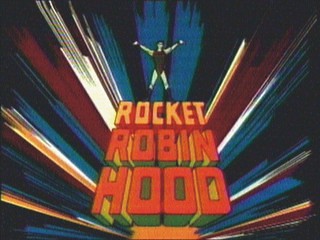
Casting The Live Action Rocket Robin Hood Movie
I remember at the end of each episode of the classic Canadian animated series Rocket Robin Hood, there was this short vignette. It claimed that Rocket Robin Hood would be appearing in an all new movie coming to a theatre near me soon. I spent about a year of my early childhood religiously checking my local newspaper listings for news of this alleged Rocket Robin Hood movie. After that, I got a little more cynical about ever seeing something as awesome as a Rocket Robin Hood movie in my lifetime. I came to the conclusion that the vignette was, to use my Dad's favourite phrase at the time, "total malarkey".
However, the idea of a Rocket Robin Hood feature film has stayed with me all these years. And now with movies like Transformers and The A-Team perpetually ruling the box office grosses, it is clear that retro is in....again.
The time is right for the fabled Rocket Robin Hood movie.
In live action.
Rocket Robin Hood The Motion Picture has the potential to be that rarest of things: the English Canadian blockbuster. The entire film could probably be shot in front a green screen. Today's digital effects could easily duplicate the limited animation look of the classic Canadian animated series. Rocket Robin Hood The Motion Picture would be ideal as a purely Canadian movie. It should be 100% Canuck and not just because almost no one in the US seems to have heard of the show (apparently it did do well in syndication in the US in the 60's but thanks to our Cancon regulations, the series had much stronger rerun staying power in the Great White North), but because there are few pop culture icons as quintessentially Canadian as Rocket Robin Hood.
It's a property that is multi-generational in its appeal. The cartoon that has been running on Canadian TV pretty much non-stop for the last 50 years.
I also strongly feel that such a project should stay Canadian. That the cast and crew should be made up of people who still, for the most part, live and work in Canada in the Canadian film industry. So your Jim Carreys, your William Shatners, your Seth Rogans, your Pamela Andersons, your Keifer Sutherlands, your Rachel McAdams' and most definitely your Keanu Reeves' need not apply.
In the hopes that some high powered Canadian film producers are reading this (if I'm lucky maybe both of them are), here is my dream cast for the middle range budget Canadian live action blockbuster, Rocket Robin Hood The Motion Picture.
Also remember to hire yours truly to direct the film, write the script and act in it, K?
Paul Gross as Rocket Robin Hood
It's a natural.
There is no other Canadian leading man that could pull off the role of Rocket Robin Hood.....well...actually....there is no other Canadian leading man. Period.
| . |
Nonetheless, Gross would be able to nail just that right combination of tongue in cheek parody and semi-serious melodrama necessary for the part. If anyone out there is in doubt about the guy's acting chops, take a look at him in the outstanding Canadian TV series, Slings and Arrows.
Plus think about all those close ups on those great eyes of his during the lengthier bits of dialogue...
Tahmoh Penikett as Little John
Okay. So Helo from Battlestar Galactica and Ballard from Dollhouse is borderline on the purely Canadian angle. He has been on two big US/International TV series but, to the best of my knowledge, he still lives and works in Vancouver.
Mr. Penikett's certainly has got the bod for the role. He's also got the BSG and Joss Whedon geek street cred that's helpful in selling a film of this nature.
He doesn't seem to be working a lot lately so a big canuck movie might be the extra boost Mr. Penikett's career could use.
Mr. Penikett will, of course, need a bit of electro-quaterstaff training and let's hope he likes squirrels.
Remy Girard as Friar Tuck
A name like Remy Girard is key to breaking the often impassible Quebec box office barrier that all English Canadian films must face. He'd have to be cast anyway. If the film shoots in Montreal, then I'm pretty sure there's a Telefilm regulation that states that Mr.Girard must appear in any film shot in the metropolitan area.
People I know who have worked with Mr. Girard tell me he can literally play anything. A portly futuristic man of the intergalactic cloth should be no problem then.
Go watch The Barbarian Invasions again and this time picture Girard bouncing bad guys off of his stomach.
Sarah Polley as Maid Marian
On the plus side, the role of Maid Marion in the original Rocket Robin Hood cartoon is almost nonexistent. It would be easy to beef up the part by working in Maid Marion's involvement with the New Space Democratic Party and other causes important to Ms Polley. Really, when you think about it, the Robin Hood myth (rockets or no) is all about combating poverty. Plus if there's any police brutality going on the year 3000, it's definitely being perpetrated by the Sheriff of KNOTT's burly guards.Ms.Polley might also be looking to raise some cash for her next directing project. So a film that could possibly be even better than her excellent Away From Her might end up being a nice byproduct of Rocket Robin Hood The Motion Picture.
Eric Peterson as The Sheriff of KNOTT
His continual presence on uneven Canadian television notwithstanding, Eric Peterson is a great actor. I've had the pleasure of seeing Mr.Peterson live in such plays as Rock n' Roll and Billy Bishop Goes To War. As always, the stage roles display his talents to much better advantage than, say, your average episode of Street Legal.
He also showed off some of the best timing and comedic acting I've ever seen on Corner Gas (and yes, I'm one of those people that actually really liked the show...but I think that's another blog).
The Sheiff of KNOTT (National Outer-space Terrestrial Territories) is a scheming weaselly little guy that everybody loves to see defeated in the most comedic and humiliating way possible.
Tailor made for Eric Peterson, that is.
Colm Feore as Prince John
No Canadian project of this magnitude could be complete without the participation of Colm Feore. One of Canada's very best actors, I have yet to see Mr.Feore in a role that he couldn't elevate directly off the page. This is particularly true of some of the -shall we say?- lesser Canadian films he's done.
If you've seen him in the Vin Diesel vehicle The Chronicles of Riddick then you've got a pretty good idea of what Mr.Feore could do with a role as juicy as that of Prince John.
If Feore were to throw in a couple of Trudeau mannerisms while playing the villain of Rocket Robin Hood, he'd bring the house down in just about any cinema in Canada, especially out West.
With the Quebecois blockbuster status of Bon Cop, Bad Cop, Feore would more than likely add that extra juice to the box office revenues in La Belle Province.
Just as an aside, I remember Prince John's vignette had a line about, "...his plan to destroy and conquer the solar system". Oh, come on, Prince John! Anybody can conquer a solar system after they've already destroyed it. A half way decent evil genius tyrant has to at least conquer a solar system and then destroy it. Pfff! Wimp.
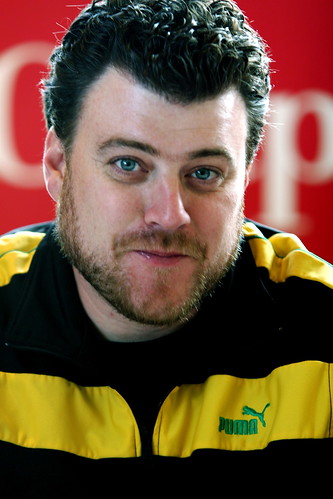
Rob Wells as Will Scarlet
Will Scarlet may be a bit of a stretch from Rick, the boozing, pothead, dim witted slacker of Trailer Park Boys.
But c'mon, Rob Wells in an actor, after all. He should be able to play another character. I have seen him in things other than Trailer Park Boys. Actually, come to think of it, I've never seen him play a totally different character (this is also true of his role in the upcoming intriguingly cheezily titled Canadian film, Hobo With a Shotgun).
That said, I'm sure the guy is dying to break out of the type casting mold he's been stuck in. Now that he's got the entire Trailer Park Boys series and two movies under his belt, Wells should be prime to move on.
Another important pertinent point is that Mr. Wells has a beard and so does Will Scarlet.
Will Scarlet is also kinda of a bit of a goofy character, as you can see in the clip below.
Those lines would be putty in Mr.Wells' hands, I'm sure.
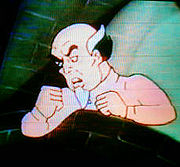
Colin Mochrie as Infinata from Dementia 5
Including Dementia 5 is a must for Rocket Robin Hood The Motion Picture. I see it as a smaller part of the overall story. Some place Robin and Little John must get through in order to get a thing that'll lead them to another thing that'll help them stop some kind of a thing that Prince John is trying to do that's bad.
You know, kinda thing...
I always found Infinata to be at bit too heavy handed and (as a small child) too scary for Rocket Robin Hood. Casting Canada's improv king in the role would lighten things up just enough to make the master of Dementia 5 a bit more humourous while still being a viable threat to our heroes. Colin Mochrie has got just the right kinda face for the part. The make-up and wardrobe teams could do some really neat stuff with Mr.Mochrie as a starting point.
Take a look at this classic sequence.
Proof positive that even the people making Canadian Saturday morning cartoons were on drugs in the 60's. In fact, Ralph Bakshi (the man who later be responsible for bringing R.Crumb's Fritz The Cat to animated life on the big screen) directed this episode. That explains quite a bit. Seriously.
My fave sequence here is when Robin and John discover that the secret to escaping Dementia 5 is to close their eyes. Were the writers stealing from Frank L. Baum or something?
Imagine what Mr.Mochire could do with the scene where Infinata starts freaking out saying, "No. No. Don't close your eyes! You can't do that!". It'd be a thing of comedic genius.
Plus there's a good chance Mochrie's Infinata scenes would end up being arbitrarily cut into the next Spider-Man movie.
Terence Bowman as All of The Guards
Couldn't resist.
I'd have to hit the workouts a little harder than I already do just to pull off the physique of these guys. It would be worth it though. All of the guards look exactly the same. Through the magic of CGI, I'd be all over the movie. My personal theory on that, BTW, is that like the Old Republic in Star Wars, The Sheriff of KNOTT has put together an army of clones to do his dirty work.
There would be no lines to learn which would come in handy while I'm also writing and directing the film.
It was hard to find a decent picture of these glorified henchmen anywhere. So take a look at this clip. Just imagine me an' Remy nailing this scene.
I can't wait till we shoot that flying ass first into the camera stunt. That one'll take some practice.
Now Rocket Robin Hood The Motion Picture has its writer, director and cast.
What's left?
Well, a massively important element to the overall entertainment value of Rocket Robin Hood is, of course, the music. Not only is there that unforgettable theme song but the show is full of all kinds of little musical interludes. The interlude ballads are virtually always explaining how Prince John and The Sheriff of KNOTT are pure evil and vile and how Robin and his merry men are pure goodness and virtue.
If you wanna make some serious cash off of this project, the most obvious choice for a Canadian musician to interpret all of the classic Rocket Robin Hood tunes would be, undoubtedly, Justin Beiber.
Forget that....please.
Issues of taste aside, the kid's bound to be back to being a nobody getting beaten up in high school by the time Rocket Robin Hood The Motion Picture is actually made.
Other choices might include Avril Lavigne, Sam Roberts, Shania Twain, The Tragically Hip, Arcade Fire, Simple Plan, Nickelback, The Barenaked Ladies, Alanis Morissette or the even more dreaded than Beiber choice of Celine Dion.
Seriously, though, could you see any of those people really doing justice to this?
As far as I'm concerned there is only Canadian recording artist whose musical style could both respect and at the same time breathe new life into the classic balladeering of Rocket Robin Hood. As an added bonus, she's already got experience in family friendly entertainment:
No doubt about it. Feist's our girl. Now that I'm thinking about it, Feist should put out an entire album of covers of classic Canadian kid's TV show music.
Rocket Robin Hood The Motion Picture is just about ready to go.
So everybody out there write to your local office of Telefilm, the CRTC, the CABLE fund and your MP. Lobby heavily to get what will be The Greatest Canadian Movie Ever Made off the ground and into space.
In other words, raise a shout throughout the land for Rocket Robin Hood.
Finally, I'd just like to give a big shout out to my pal and former Star Trek: On Stage co-star, Andre, for planting this whole silly idea in my head.
So long for now, from an astro-glen on a star...
Thursday, March 17, 2011
Leprechaun 4: In Space
| One small step for man...One giant leap of terror |
I must not have been the only viewer to muse so. Lo and behold, when the fourth film was released, it was indeed entitled Leprechaun 4: In Space.
An evil Leprechaun at large in the vast reaches of the cosmos. The mind reels at the very concept alone. It is a concept that is rich with narrative, thematic and cinematographic potential.
Leprechaun 4: In Space far exceeded my expectations.
The film opens with a group of Space Marines landing on a remote planet in an unspecified part of the galaxy. While less erudite critics might site an homage to the early films of James Cameron, the more obvious homage is to Stanley Kubrick's Full Metal Jacket and Oliver Stone's Platoon. This, of course, points to the beauty of Brian Trenchard-Smith's direction. Like all great cinema, Leprechaun 4: In Space accommodates multiple interpretations.
The evil Leprechaun of the film's title awaits the Marines. Trenchard-Smith brilliantly tears a page from the David Lynch book of filmmaking and offers no explanation as to how the Leprechaun managed to make his way from Las Vegas in the 20th century (as seen at the end of the epic Leprechaun 3) to a planet hundreds of light years from Earth and seemingly hundreds of years into the future. Also like Lynch, Trenchard-Smith displays a curious fixation with little people.
The Leprechaun is played by Warick Davis, once again reprising his classic role. Davis originated the role of Wicket, the Ewok, in George Lucas' now largely forgotten Star Wars series of films . Davis has also been seen in such obscure art house fare as Harry Potter and the Deathly Hallows, The Chronicles of Narnia, The Hitchhiker's Guide to the Galaxy and Willow. Davis makes some extraordinarily bold acting choices in the role. Most actors would consider the lilt of the Irish brogue de rigueur for the mischievous green hobgoblin. Davis, however, goes the entirely uncharted and unexpected route of endowing the Leprechaun with not an Irish accent but an English accent. The Irish intonations only escape Davis' mouth intermittently. The actor is clearly attempting to make a political commentary on the long unresolved situation in Northern Ireland.
As the Space Marines stumble upon the Leprechaun and his cache of gold, the Leprechaun quickly dispatches one of their lot with an emerald green lightsaber. It's rather an esoteric reference but it works for the film.
Later, the surviving battle fatigued Marines return to their ship. However, it soon becomes clear that their diminutive nemesis has stowed away within the very body of one of the Marines. Using his mastery of the dark arts, the Leprechaun has embedded himself in the man's penis. He bursts forth from the confines of the Marine's crotch during a sexual encounter gone horribly wrong; killing the poor man instantly. The Marine is allegorically destroyed by the phallocentrism of his own masculine aura. A wry jest indeed.
What follows is a complex narrative structure that uses many clever and completely unpredictable plot twists that deconstructs and redefines the essence of the evil Leprechaun oeuvre. The diverse story elements culminate in a climax that Trenchard-Smith renders with both originality and complete believability. Yet there is also a note of an ambiguous sense of closure as we watch parts of the destroyed emerald goblin float through space.
A large part of the events unfold in the unremittingly dark and expressionistic bowels of an immense space ship that conjures up an image of both humanity and cultural icons dwarfed by the ever growing presence of technological determinism. Not since Andrey Tarkovskiy's Solaris has the emptiness of space and the looming presence of technology so succinctly represented the metaphysical state of the human condition.
A stand-out performance in the uniformly stolid cast is that of Debra Dunning in the role of Pvt. Delores Costello. Dunning is an actor I had the pleasure of working with at a large corporate event in Orlando, Florida in 2002. As was the case then, Dunning invests great sensitivity, warmth, and humour into the role.
Leprechaun 4: In Space is not for everybody. It's thematic depth and arcane references may be lost on some audiences. While others may balk at its audacious ability to trivialize violence, sex, horror and death.
Proceed at your own peril.
Happy St. Patrick's Day everyone!
Friday, March 11, 2011
How The Western Went Post Apocalyptic
The Hollywood genre of the Western has had its apocalypse. Some time long ago it all but vanished from the great cinema screens of yore. There was a time, the old ones say, that The Western was a genre that dominated the Great Box Office Wars of the 20th century. A time when at least one western movie was broadcast each day back in The Time of Only 4 Channels on Television. A time when The Cowboy Role was a rite of passage for every male movie star. A time when the presence of the mythological cowboy dominated the fantasy world of every young boy and not just the ones who are really really into Toy Story.
All of that is gone now.
Little of the genre still stands today. The Western can only be seen occasionally in The Museum that is known as Cable Movie Networks. It is only spoken of by The Old Ones, overheard in a coffee shops and bars debating the merits of someone called The Duke over someone called Gary Cooper. Sometimes The Western will attempt to emerge from the sacred ground in which it is buried. A 3:10 to Yuma or an Alpaloosa will stick its head out of the sand. Even when well received, these films do not stay out in the light for long. People like Clint Eastwood and Kevin Kostner have attempted, with varying degrees of success, to keep the genre alive. The Western even manages a small but stable existence in Direct To DVD Valley and in Animated Comedy Gulch.
The genre met its apocalypse some time 30 or 40 years ago. Back in the 70's The Western experienced The Great Deconstruction. The myths of violence and racism that kept the genre alive for so long were challenged and taken apart by men like Sergio Leone and Eastwood. Once the public had glimpsed behind the curtain of The Western, it could do nothing but collapse into itself.
The Western does still thrive. Some of its elements escaped to live and flourish in movies like Lethal Weapon and Die Hard. Today The Western is present in action movies that star the likes of Jason Statham,or just about any other action movie that centers around the struggles of one exceptionally powerful hero to overcome the powers of darkness.
Today, the Western also very much survives in a Post Apocalyptic world.
Literally.
The Post Apocalyptic Sci-Fi action movie is a genre that is still with us today and it is a place where the genre of The Western has laid down its stakes.
I'm gonna ditch the post apocalyptic movie mythospeak narration now, k?
The genre of the Post Apocalyptic Western is quintessentially displayed in the 2010 film, The Book of Eli. The movie stars Denzel Washington, Gary Oldman and Mila Kunis. It was directed by the Hughes Brothers of Menace II Society and From Hell fame. Not far into the movie there is a scene where Eli, the amazingly skilled loner swordsman who roams the vast post apocalyptic wasteland that was once the USA, is hassled by a gang of bad guys in run down old saloon. As Eli starts taking he baddies out with lightening speed and skill, it suddenly becomes very clear that we are looking at a Western.
The Book of Eli has many of the points that 9 out of 10 film academics agree makes a Western: the heroic loner with incredible fighting skills, the struggle to establish civilization out of lawless primordial chaos and the mentoring of the next generation's heroic loner with incredible fighting skills who will carry on said fight to maintain law and order.
Eli, played by Denzel Washington, is the heroic loner. As alluded to earlier, Eli's skills are not with a gun, the traditional Western weapon of choice, but rather with a sword. It is a choice of weapon that suggests overtones of Akira Kurosawa's amazing Samurai take on the Western, Yojimbo (later remade as A Fistful of Dollars starring Clint Eastwood) and its follow up Sanjuro (also later remade as For a Few Dollars More with Eastwood).
The struggle to establish, or re-establish in this case, civilization is against the powerful post apocalyptic warlord Carnegie, played by Gary Oldman. Carnegie wants to re-establish civilization so that he can he can rule over it. The next generation of the heroic loner whom Eli reluctantly mentors (mentoring is always reluctant in these films) is Solara, played by the wonderful yet underrated Mila Kunis. An African-American frontier lawman mentoring a woman to uphold the law of the west? Tremors are being reported around D.W. Griffith's grave as we speak.
The Book of Eli takes place thirty years after an unspecified, possibility religious, war has all but laid waste to the USA and, presumably, the rest of the world. Eli has in his possession a certain mythical book that will help reshape the world into a civilized moral order once again. The powerful Carnegie wants the book as well. He sees it as a means to power and conquest.
If you're like me watching the movie early on, you have no doubt figured out that book is The Bible. To be fair, it's not like the film is trying to keep that a mystery or anything. Personally, I'd make my post apocalyptic Western the other way around: it's the bad guy who has The Bible and the good guy wants to get it away from him so as to prevent more future social, political and cultural strife. I think that's my inner John Lennon speaking.
The Book of Eli is an engaging and well directed movie. The cinematography in combination with some amazing CGI creates a post apocalyptic landscape unlike any we have seen before.
A great cast really helps too.
The Book of Eli is certainly not cinema's first post-apocalyptic Western. It's a genre that at least goes back to the 70's....
Yul Brynner was born in Russia, starred in Broadway musicals and was famous for playing Egyptian Pharaohs and Asian Kings. Brynner is, at best, an unlikely choice to play a gunslinging cowboy in the old American West. Nonetheless, his career in the 60's and 70's was largely defined by the Western. He starred in the popular Hollywood remake of Akira Kursawa's classic film The Seven Samurai, The Magnificent Seven and its sequel. He also appeared in the popular yet now largely forgotten Spaghetti Western trilogy, Sabata, as well as a number of other Westerns. In the 70's, Brynner crossed over Western Sci-fi hybrid territory in Michael Chrichton's forgotten classic, Westworld. He stayed in that mold a little longer to appear in the 1975 action Sci-Fi film, The Ultimate Warrior: an early example of the Post Apocalyptic Western genre.
The Ultimate Warrior takes place in a post global pandemic New York City in the year 2012 (start packing that bottled water and those canned goods now, folks, we're just 9 months away). The crammed claustrophobic urban spaces of a burned out NYC is not exactly the wide open Western plains of The Searchers or Stagecoach. But wherever there is a world where civilization has broken down and lawlessness reigns, the Code of the West stands firmly in place.
A group of nice, peaceful survivors has set up a small fortified area in NYC. The group is led by Max Von Sydow (who, at the time, was still busy vying for The Most Diversified Actor's Resume of All Time Award by turning up movies like this, The Exorcist, Three Days of the Condor, Flash Gordon and Strange Brew). It seems that Von Sydow and his crew have come up with seeds for crops that able to grow in the post plague-infested world of one year from now.
A group of ruthless bad guys (led by the guy who played Falcon Eddy and Conan The Barbarian's dad) are keen to get the seeds for themselves. This gang of bad guys are very clear on the function of the villains in the narrative structure of The Western.
Enter Yul Brynner, the silent shirtless powerful stranger in the classic Western loner hero mold or, as the title of this film prefers to call him, The Ultimate Warrior.
Take a look at this scene and tell me that we don't have some classic Western archetypes happening here.
The Ultimate Warrior is a more entertaining than you might expect. It features a suspenseful game of cat and mouse and some extremely well shot and edited fight scenes. Along the way, Brynner gets plenty of opportunities to show off his ideal-for-the-pre-Schwarzenegger-generation physique.
The Ultimate Warrior has an absolutely unforgettable climatic fight scene that, really, makes the film. It's also a scene that is eerily similar to the quintessential post apocalyptic Western that would follow just four years later. We're talking about a movie that would forever define the genre and at the same time set off a majorly successful action movie trilogy...
The next film was unconfusingly titled Mad Max: Beyond Thunderdome.
There is a ray of hope for the series.
George Miller has decided to abandon movies like Happy Feet 2, the Babe franchise and the long rumoured Justice League movie to make another entry into the Mad Max series. Miller was supposed to start shooting not one but two new Mad Max movies back-to-back this month. The recent floods in Australia, however, have pushed the production start date back TO 2012. Most likely, we will not see Mad Max: Fury Road until at least 2013.
After all, isn't the Post Apocalyptic Western all about redemption, salvation and rebirth?
All of that is gone now.
Little of the genre still stands today. The Western can only be seen occasionally in The Museum that is known as Cable Movie Networks. It is only spoken of by The Old Ones, overheard in a coffee shops and bars debating the merits of someone called The Duke over someone called Gary Cooper. Sometimes The Western will attempt to emerge from the sacred ground in which it is buried. A 3:10 to Yuma or an Alpaloosa will stick its head out of the sand. Even when well received, these films do not stay out in the light for long. People like Clint Eastwood and Kevin Kostner have attempted, with varying degrees of success, to keep the genre alive. The Western even manages a small but stable existence in Direct To DVD Valley and in Animated Comedy Gulch.
The genre met its apocalypse some time 30 or 40 years ago. Back in the 70's The Western experienced The Great Deconstruction. The myths of violence and racism that kept the genre alive for so long were challenged and taken apart by men like Sergio Leone and Eastwood. Once the public had glimpsed behind the curtain of The Western, it could do nothing but collapse into itself.
The Western does still thrive. Some of its elements escaped to live and flourish in movies like Lethal Weapon and Die Hard. Today The Western is present in action movies that star the likes of Jason Statham,or just about any other action movie that centers around the struggles of one exceptionally powerful hero to overcome the powers of darkness.
Today, the Western also very much survives in a Post Apocalyptic world.
Literally.
The Post Apocalyptic Sci-Fi action movie is a genre that is still with us today and it is a place where the genre of The Western has laid down its stakes.
I'm gonna ditch the post apocalyptic movie mythospeak narration now, k?
The genre of the Post Apocalyptic Western is quintessentially displayed in the 2010 film, The Book of Eli. The movie stars Denzel Washington, Gary Oldman and Mila Kunis. It was directed by the Hughes Brothers of Menace II Society and From Hell fame. Not far into the movie there is a scene where Eli, the amazingly skilled loner swordsman who roams the vast post apocalyptic wasteland that was once the USA, is hassled by a gang of bad guys in run down old saloon. As Eli starts taking he baddies out with lightening speed and skill, it suddenly becomes very clear that we are looking at a Western.
The Book of Eli has many of the points that 9 out of 10 film academics agree makes a Western: the heroic loner with incredible fighting skills, the struggle to establish civilization out of lawless primordial chaos and the mentoring of the next generation's heroic loner with incredible fighting skills who will carry on said fight to maintain law and order.
Eli, played by Denzel Washington, is the heroic loner. As alluded to earlier, Eli's skills are not with a gun, the traditional Western weapon of choice, but rather with a sword. It is a choice of weapon that suggests overtones of Akira Kurosawa's amazing Samurai take on the Western, Yojimbo (later remade as A Fistful of Dollars starring Clint Eastwood) and its follow up Sanjuro (also later remade as For a Few Dollars More with Eastwood).
The struggle to establish, or re-establish in this case, civilization is against the powerful post apocalyptic warlord Carnegie, played by Gary Oldman. Carnegie wants to re-establish civilization so that he can he can rule over it. The next generation of the heroic loner whom Eli reluctantly mentors (mentoring is always reluctant in these films) is Solara, played by the wonderful yet underrated Mila Kunis. An African-American frontier lawman mentoring a woman to uphold the law of the west? Tremors are being reported around D.W. Griffith's grave as we speak.
The Book of Eli takes place thirty years after an unspecified, possibility religious, war has all but laid waste to the USA and, presumably, the rest of the world. Eli has in his possession a certain mythical book that will help reshape the world into a civilized moral order once again. The powerful Carnegie wants the book as well. He sees it as a means to power and conquest.
If you're like me watching the movie early on, you have no doubt figured out that book is The Bible. To be fair, it's not like the film is trying to keep that a mystery or anything. Personally, I'd make my post apocalyptic Western the other way around: it's the bad guy who has The Bible and the good guy wants to get it away from him so as to prevent more future social, political and cultural strife. I think that's my inner John Lennon speaking.
The Book of Eli is an engaging and well directed movie. The cinematography in combination with some amazing CGI creates a post apocalyptic landscape unlike any we have seen before.
A great cast really helps too.
The Book of Eli is certainly not cinema's first post-apocalyptic Western. It's a genre that at least goes back to the 70's....
Yul Brynner was born in Russia, starred in Broadway musicals and was famous for playing Egyptian Pharaohs and Asian Kings. Brynner is, at best, an unlikely choice to play a gunslinging cowboy in the old American West. Nonetheless, his career in the 60's and 70's was largely defined by the Western. He starred in the popular Hollywood remake of Akira Kursawa's classic film The Seven Samurai, The Magnificent Seven and its sequel. He also appeared in the popular yet now largely forgotten Spaghetti Western trilogy, Sabata, as well as a number of other Westerns. In the 70's, Brynner crossed over Western Sci-fi hybrid territory in Michael Chrichton's forgotten classic, Westworld. He stayed in that mold a little longer to appear in the 1975 action Sci-Fi film, The Ultimate Warrior: an early example of the Post Apocalyptic Western genre.
The Ultimate Warrior takes place in a post global pandemic New York City in the year 2012 (start packing that bottled water and those canned goods now, folks, we're just 9 months away). The crammed claustrophobic urban spaces of a burned out NYC is not exactly the wide open Western plains of The Searchers or Stagecoach. But wherever there is a world where civilization has broken down and lawlessness reigns, the Code of the West stands firmly in place.
A group of nice, peaceful survivors has set up a small fortified area in NYC. The group is led by Max Von Sydow (who, at the time, was still busy vying for The Most Diversified Actor's Resume of All Time Award by turning up movies like this, The Exorcist, Three Days of the Condor, Flash Gordon and Strange Brew). It seems that Von Sydow and his crew have come up with seeds for crops that able to grow in the post plague-infested world of one year from now.
A group of ruthless bad guys (led by the guy who played Falcon Eddy and Conan The Barbarian's dad) are keen to get the seeds for themselves. This gang of bad guys are very clear on the function of the villains in the narrative structure of The Western.
Enter Yul Brynner, the silent shirtless powerful stranger in the classic Western loner hero mold or, as the title of this film prefers to call him, The Ultimate Warrior.
Take a look at this scene and tell me that we don't have some classic Western archetypes happening here.
The Ultimate Warrior is a more entertaining than you might expect. It features a suspenseful game of cat and mouse and some extremely well shot and edited fight scenes. Along the way, Brynner gets plenty of opportunities to show off his ideal-for-the-pre-Schwarzenegger-generation physique.
The Ultimate Warrior has an absolutely unforgettable climatic fight scene that, really, makes the film. It's also a scene that is eerily similar to the quintessential post apocalyptic Western that would follow just four years later. We're talking about a movie that would forever define the genre and at the same time set off a majorly successful action movie trilogy...
Despite the genre's many successors and predecessors, Australian director George Miller pretty much defined the Post Apocalyptic Western with these three films...well...at least in the first two anyway...
The fist film, Mad Max, introduced a young and (at the time) sane Mel Gibson to the world. It takes place in a world where some kind of ambiguous disaster had brought civilization to its knees.
Mad Max is a classic Western story. It's got all those necessary elements: a lawless frontier, ruthless bad guys and the loner lawman trying to settle down and fit it to the society he has always stayed aloof from in order to protect it. Throw in Max's young son, who represents the oft repeated Western theme of the male hero bloodline and we got us a Western, fellas.
Max also exists in a cinematic era that is post Sergio Leone, Sam Peckinpah and all those 70's exploitation movies that Quentin Tarantino seems to have grown up on. The bad guy's treatment of innocent people in general and women, in particular, displays some of the most sadistically psychotic behavior this side of Straw Dogs.
Almost all of the action in Mad Max takes place out on the road where motorcycles and cars have replaced horses and stagecoaches. Many of the incredible car stunts were -amazingly- shot on remote Australian highways that the production had no permission to film on, let alone permission to perform the extremely dangerous stunts on.
The movie also boast that Ultimate Warrior like climax that the makers of the Saw movies openly admit to being an influence on their later torture porn series of horror films (notice how I'm carefully not giving anything away here).
Mad Max was a big hit in Australia and internationally but it did not do so well in North America on its initial release. This is most likely on account of the fact that Mel's Aussie accented voice in the film was re-dubbed for US audiences by Lyle Waggoner. Yes. Lyle Wagonner from Wonder Woman and The Carol Burnett Show.
Mad Max's failure to see the kind of US box office success it saw Down Under is the reason why Mad Max 2 is still, to this day, better known on this continent as The Road Warrior.
Mad Max 2: The Road Warrior (as it is now always listed on the program grids) picks up the story some time after the end of Mad Max. The Road Warrior ramps up the high octane highway action of the first film big time.
Gibson's Max has now almost permanently settled into the western heroic loner character. The first few scenes of Max and the Gyro Captain are practically right out of The Good, The Bad and The Ugly. Of course, it's not long before Max comes across good peace loving people who are limited in their ability to defend themselves.
It seems that there is this gang of super sickos with Mohawks, loin clothes and hockey masks that are determined to take away the nice people's gasoline by force. There ain't much gar around, you see, and everybody needs the stuff in order to carry on with their high speed car chases and stunts.
The larger budget benefits The Road Warrior greatly. Every stuntman in the Australian stuntman's union was reportedly booked on MM2. Miller certainly put them through their paces. There are some stunning stunts in The Road Warrior.
Once the action hits the road, Miller's camera never stops moving. The film also boasts one of the greatest action movie scores ever. The movie was scored (oddly enough- like the first Mad Max) by Brian May of Queen. Why didn't this guy score more movies?
At the heart of MM2:TRW is Max's journey back from the abyss. This Post Apocalyptic western drifts into the classic Western Shane territory. Max slowly and reluctantly regains his humanity. His budding paternal relationship with the boomerang slinging feral child is the restoration of the heroic bloodline. That bloodline, of course, was (SPOILER ALERT) lost with the death of Max's young son at the end of the first film.
The Road Warrior ends, needles to say, with the good guys victorious. The victory comes at a cost. Like John Wayne at the end of The Searchers, Max stands alone in the barren desert; forever separated from the society he risked his life to protect.
Pretty hackneyed stuff, these Westerns, huh?
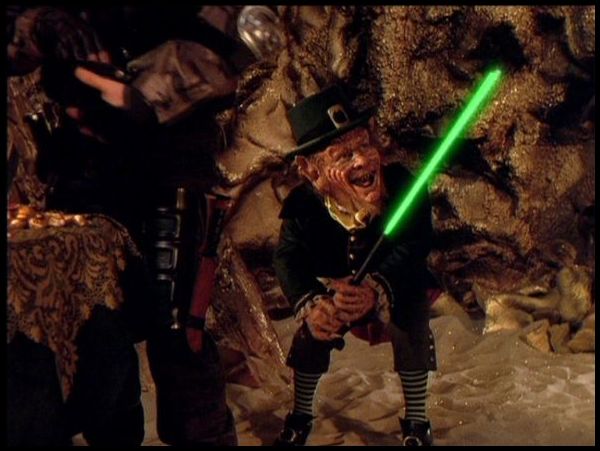
The next film was unconfusingly titled Mad Max: Beyond Thunderdome.
I remember when this highly anticipated third entry into the series first came out. It's rare that sequels pull off a consistently good trilogy and Mad Max: Beyond Thunderdome is no exception. Back in '85, me and some of my pals watched the first two Max films on video and then went to the theatre right afterwords to see MMBT on its opening day. I highly recommend doing this if you want to be sure that Beyond Thunderdome delivers maximum disappointment.
The gladiatorial style fight scene in the Thunderdome of the film's title is the best part of the movie. Actually, correction: the fight scene in the Thunderdome IS the movie (I have friends who still quote the line, "Two men enter. One man leaves." on a regular basis). The whole film pretty much falls apart after the Thunderdome.
That said, where do I start?
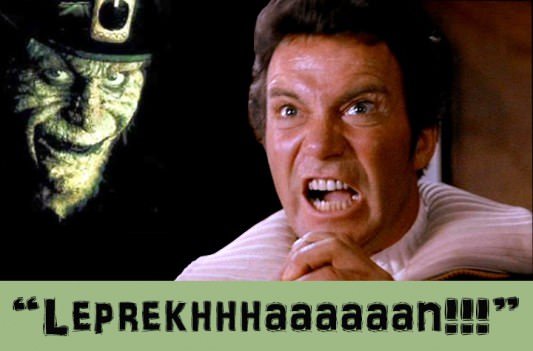
Firstly, there is a huge premise shift in the world that these films take place in. There are frequent references to a nuclear war with lines like "Where were you when the Big One dropped?". There was never any reference to a nuclear war in the other two films. Such references were specifically avoided, in fact. It could be that the "Big One" was dropped between movies but that makes no sense because no one in the this third installment talks about the Big One dropping as being a recent thing. It is also inconsistent with the series' pre-established internal logic.
However, that's super picky stuff next to Beyond Thunderdome's bigger issues. One such problem is the sudden change in tone of the series. In what was previously a nihilistic, violent, Peckinpahesque series of films, we are now treated to scenes of cartoon-like wacky mayhem. There is a scene where one of the Mohawk loin cloth-wearing thugs comes flying out a massive explosion with a slightly blackened face (not unlike every cartoon you've ever seen in your life). He then lets out his best 70's live action Disney movie "Wwwwaaaahhhhh!".
I'm sorry but at what point did Herbie The Love Bug join The Interceptors and the souped-up Mack Trucks on the post apocalyptic highways of Australia? It's too bad that Dean Jones wasn't available to replace Mel Gibson as Mad Max. And why not recast Tina Turner's role with Suzanne Pleshette while you're at it?
The biggest problem by far with Mad Max Beyond Thunderdome is the lack of any kind of engaging coherent narrative.
Maximum disappointment ensured.
There is a ray of hope for the series.
George Miller has decided to abandon movies like Happy Feet 2, the Babe franchise and the long rumoured Justice League movie to make another entry into the Mad Max series. Miller was supposed to start shooting not one but two new Mad Max movies back-to-back this month. The recent floods in Australia, however, have pushed the production start date back TO 2012. Most likely, we will not see Mad Max: Fury Road until at least 2013.
While it certainly would have been interesting to catch up with a 60ish year old and now insane Max, Mel Gibson turned down returning the to the franchise that made him a star. I guess the movie didn't have enough insert joke about potential antisemitic plot line here in it for him.
Max will now be played by Tom Hardy of Inception fame. Hopefully, with the invigoration of a new leading man, Miller will be able to forget the family-friendly-make-tons-more-money approach of Beyond Thunderdome and get the series back to basics.
Subscribe to:
Posts (Atom)