

This Friday, one of science fiction and fantasy writer Edgar Rice Burroughs' most popular characters is finally making his big screen debut. And, no, of course, I'm not talking about that yelling guy in the loin cloth who hangs out with apes. I'm talking about Burroughs' other most popular character, John Carter of Mars
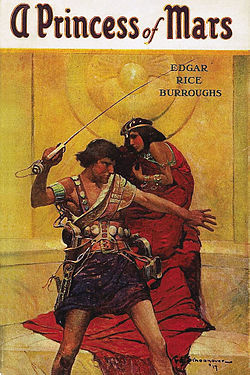
Burroughs, however, has not had a great history when it comes to motion pictures. While often financially successful, big screen adaptations of his work have largely been B-movie fare, often aimed at younger and less discriminating audiences. Some of the Burroughs' movies have risen above their lower echelon cinematic status but not many. You could call it the Edgar Rice Burroughs movie curse.
The upcoming movie, John Carter, is an adaptation of A Princess of Mars, the first in a series of books featuring Burroughs' second most famous character after Tarzan, the aforementioned John Carter of Mars. The new film is directed by avowed John Carter fan Andrew Stanton (Wall-E, Finding Nemo, Monsters Inc.) under the auspices of the Walt Disney Studios. The new movie may change the tides of Burroughs-based films. However, the historical odds are not in the blockbuster's favour.

published work.
Just months after that, Burroughs second published piece also began appearing in serialized pulp magazine form. It was entitled Tarzan of the Apes. Later published as a complete novel, the book would not only go on to become one of Burroughs best selling works but it would also introduce what is arguably the most popular fictional character of the 20th century. 2012 marks the centenary of the debut of both Tarzan and Carter.
A Princess of Mars is the first of eleven Carter novels written by Burroughs between 1912 and 1948 (though the eleventh book was published posthumously in 1964). John Carter is an American Civil War veteran who, while searching for gold in a mysterious cave in Arizona, finds himself ethereally transported to the planet Mars. It's similar to the out-of-body adventure premises used in The Matrix and Avatar (only Burroughs did it 90 or so years before both of them). Due to the super human powers Mars' gravity affords him, Carter is able to leap great distances and has great physical strength. He quickly becomes a key player in an epic fantasy adventure as different Martian races battle over the fate of the future of Mars (or Barsoom, as it is known to its inhabitants).
A classic tenant of Burroughs' work is the rugged Anglo Saxon adventurer stranded in some form or other of a lost or alien world. These heroes are well educated, cultured men with the hearts of warriors. Invariably, these men somehow rescue and ultimately transform the primitive cultures of their strange, adopted lands (and slay a few monsters along the way for good measure). In this case, the hero is John Carter and the lost world is Mars.
According to Burroughs' IMDB page, there are 68 movies based on his work. Only 6 of those movies are non-Tarzan adaptations. There's about 10 on that list that are actually good movies and only one or two that do not fall into the category of B-movies.Burroughs himself, though, was no stranger to the movies, most especially when it came to the eponymous hero of his most famous book. Well, at least initially, anyway.
As the heroic man raised by apes known as Tarzan became increasingly popular, Burroughs had a radical new idea. His plan was to have Tarzan appear in every place possible on the newly emerging pop culture landscape: books, movies, a comic strip, radio series, merchandise, you name it. Experienced business people at the time advised him that this was a bad idea. The conventional wisdom of the day was that all these products would compete against each other and thus none of them would be profitable. Burroughs went ahead with plan anyway. It worked. All things Tarzan were extremely successful.
The next time you're in the drugstore looking at Dora The Explorer dental floss, you now know that you have Edgar Rice Burroughs to thank for it.

The movie business, though, would, like it has done to so many others, betray Burroughs. In 1932, Tarzan the Ape Man, the first "talkie" take on Burroughs' creation, debuted. The film's producers cast former Olympic Swimming Gold Medalist Johnny Weissmuller as Tarzan.
In the pages of Burroughs' books (as opposed to many of the well known film and TV versions) Tarzan is a British nobleman lost in the jungle as baby and raised by apes; once discovered by Europeans, Tarzan returns to civilization. He becomes well educated, articulate, intelligent, and can speak several languages. Tarzan was the noble savage who became the ultimate protector of the primordial jungles of Africa.
As he was established by Weissmuller in the long running series of movies, Tarzan spoke only in broken pidgin English. While certainly not stupid, he is depicted as a very simplistic and childlike being. Tarzan is not a British nobleman (his origins mostly remain unknown) and he never returns to civilization to be educated. A significant departure from the literary Tarzan, in other words.
Burroughs became increasingly frustrated by the latest Hollywood take on the character and its growing popularity. He was bothered by the dwindling amount of creative control and input he had toward his best known brand. The author finally attempted to take Tarzan back, albeit in movie serial form.
The 1933 serial, Tarzan The Fearless, featured another Olympic Swimmer, Buster Crabbe (who would go on to play Flash Gordon), as Tarzan. In this serial, the pidgin English issue was sidestepped by having Tarzan never speak more than one syllable at a time. The serial did little to sway the public away from, or change their attitudes towards, the Weissmuller Tarzan.
In 1935, Burroughs tried again. He used his own production company to make another more authentic serial, The New Adventures of Tarzan. The serial featured an articulate intelligent Tarzan played by the incredibly athletic Herman Brix (he later worked under the stage name Bruce Bennett). However, MGM, the studio that was producing the Weissmuller Tarzan features, fearing too much potential confusion, campaigned against the serial. They threatened theatres that showed the serial would be denied the opportunity to play the much more lucrative MGM Tarzan films. From there on in, Burroughs' only involvement with the big screen Tarzan would be cashing royalty cheques.
In the mainstream, "Me Tarzan, you Jane" would pretty much define the character. That did not change until the 1959 "reboot", Tarzan's Greatest Adventure. By that time, unfortunately, Burroughs had already been in his grave for 9 years. The Tarzan movies from then on and the 1960's TV series would continue to feature well spoken and intelligent takes on Tarzan. It did little good towards changing Tarzan's image. You need only to read Mad magazine or watch the Carol Burnett Show to realize that the Weissmuller Tarzan mold remained dominant in the pop culture consciousness well into the 70's and 80's.
There are handful of good Tarzan movies. Disney's animated feature of the late 90's is probably the most faithful adaptation of Burroughs' original novel out there. It is to a point, anyway. The Tarzan books are not exactly known for their musical numbers. Even at their best, the movie Tarzans rarely bear more than a passing resemblance to the character of Burroughs' 26 Tarzan novels.
The movie adaptations of Burroughs' non-Tarzan novels have fared even worse.
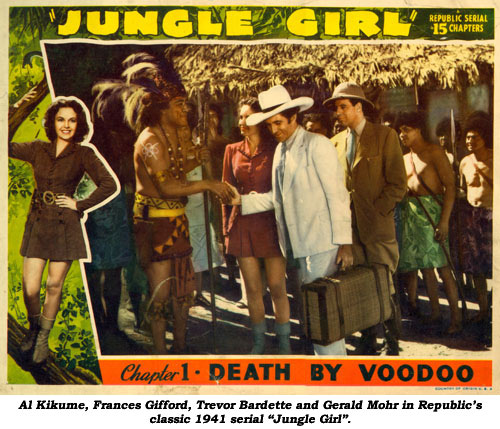
It was not until 1975 that another non-Tarzan Burroughs' novel would make it to movie screens. The Land That Time Forgot was based on the first novel of the author's Caspek trilogy, first published in 1918. Following in the footsteps of Sir Arthur Conan Doyle's successful novel The Lost World, The Land That Time Forgot was about a lost remote island somewhere near Antarctica. The island, a closed tropical ecosystem, is inhabited by dinosaurs, other prehistoric creatures and a wide array animals, both real and fictional. Those animals include Neanderthals, hominids and homo sapiens.The island, known as Caspek to its primitive inhabitants, contains its own unique system of evolution through metamorphosis.
It is discovered by a submarine with a mixed American, British and German crew . The novel takes place in 1916, the height of the First World War, so the presence of sworn enemies on the same sub is, well, kind of a long story. Better to read the book...or you can just watch the movie.
The mid 70's film adaptation was produced the British company Amicus Productions. It was distributed in North America by American International, a studio known for B-movies, AI (as it was known) largely supplied the drive-in movie circuit in the 60's and 70's. The screenplay, as adapted by Burroughs aficionado and noted British SF and Fantasy author, Michael Moorcock, incorporates elements from all three of the Caspek novels. No stop motion animation (the preferred means of bringing dinosaurs and other big monsters to the screen back in the day) was used. All of the dinosaurs seen on screen are either models or puppets. The overall effect is, well, pretty dated. The acting is the stuff of classic B-grade action adventure fare all the way, most especially in the case TV Western veteran Doug McClure in in the lead role. The movie has all the earmarks of an old-fashioned Saturday matinee adventure. On that level, The Land That Time Forgot is a very entertaining movie.
The film is well (if somewhat cheesily) handled by director Kevin Connor. Moorcock does a nice job of making Burroughs' fantastical and arcane concepts succinct, eloquent and easy to grasp, even for a younger audience. The movie is unmistakably aimed primarily at kids. And kids are probably the audience that made it one of the biggest sleeper hits of '75. The Land That Time Forgot still stands today as one of the better Edgar Rice Burroughs film adaptations (Tarzan movies included).
The same cannot be said of it sequel, The People That Time Forgot, which came out in 1977. Loosely based on the second Caspek novel of the same name, the film only incorporates a few key elements of the book. It is an aimless sequel; convoluted and a lot less watchable than its predecessor. Watching the special effects of the movie's opening biplane meets Pterodactyl scene (inspired by a similar but more interesting scene in the book), it is almost impossible to believe that The People That Time Forgot was released in the same year as the original Star Wars.

At The Earth's Core even takes a turn toward intentional (though not much funnier) comedy almost every time co-star Cushing is on screen. Playing against his usual heavy Hammer horror or Grand Moff Tarkin type, Cushing plays Professor Perry as an essentially silly and fidgety old man. Slapstick comedy even turns up in At The Earth's Core. In the final scene, the giant drill tunnels back to the Earth's surface. It ends up surfacing right in the middle of the White House front lawn. The wacky scene is of the drill suddenly popping up out of nowhere is complete with Keystone style cops running away in frantically comedic terror.
Some of the other non-Tarzan Burroughs movies belong to a movie studio known as The Asylum. The Asylum is responsible for direct-to-DVD monster fare like Mega Shark vs Giant Octopus and Mega Shark vs Crocosaurus. They are essentially the Netflix era's version of B-movie makers for the drive-in circuit of days gone by. The Asylum has plenty of experience in the limited budget CGI monster department.
In 2009, The Asylum made the second screen adaptation of Burroughs' The Land That Time Forgot. This time around the script is a very loose adaptation of Burroughs' book. The story is updated to the 21st century. The island is now situated in the Bermuda Triangle, on which a group of American tourists and their guide are shipwrecked.
The island somehow exists in its own version of a time vortex. Along with dinosaurs, there are stranded air and sea travelers from different time periods . Most prominent among them, the crew of a German submarine from World War II. There's a little tiny bit of something sort of loosely based on Burroughs poking through there. In the true tradition of The Asylum's notoriously limited production values, our heroes are stranded on an island of what amounts to two Tyrannosaurs and a few pterodactyls, only one which is seen up close. Well, at least that's a dinosaur population that's realistic in terms of what the ecosystem of one small island could most likely support. Even by the cheesy standards set by other Asylum movies, the 2009 Land That Time Forgot is not great. It probably goes without saying that even the '75 version is a much better movie.
A big budget John Carter movie had been bouncing around in Hollywood development hell since the days of the early Weissmuller Tarzan films. Names attached to the project over the years have included Looney Tunes animator Bob Clampett, stop motion animation master Ray Harryhausen, Die Hard and Predator director John McTiernan, comic book legend and director Frank Miller and most recently Iron Man director Jon Favreau. Tom Cruise was even slated to play Carter at one point. In the end, the project finally moved ahead with Disney and director Stanton.
 |
| An imagined 1930's John Carter movie serial poster. Thanks to the guys at the Serial Squadron for this one. |
Now, for the first time since the 1930's, Burroughs' material is the basis of an A List big budget live action movie in the hands an A List Hollywood director and studio. However, none of that guarantees that this new John Carter can successfully break the Edgar Rice Burroughs' movie curse.
Director Stanton is a top notch Disney animator behind the commercial and critically successful family hits Wall-E, Monsters Inc and, my personal fave, Finding Nemo. John Carter will mark Stanton's live action directorial debut. Undoubtedly, his animation background can come in handy for much of the CGI in the film, particularly when it comes to the 12 feet tall four armed green Martian race known as the Tharks. More importantly, though, Stanton is big, life-long fan of the original Burroughs books. He read all 11 of them as a child, referring to them as "my Harry Potters".
Stanton also made the canny move of hiring novelist Michael Chabon to help adapt the screenplay for John Carter. Chabon is the author of, among other things, The Amazing Adventures of Cavalier and Clay, a critically acclaimed and best selling novel set in the early days of comic book history. Chabon is also a Carter fan, having read the entire series when he was nine. Chabon once said of Burroughs' prose that the author was "a narrative machine" who "really knew how to keep a story going". Not since Michael Moorcock penning The Land That Time Forgot screenplay as so accomplished a Burroughs fanboy had a significant hand the writing of a Burroughs movie.
Still the issue of the Edgar Rice Burroughs movie curse endures. Did bringing talented Carter fans on board the movie adaptation actually pay off? The simple answer is yes.
John Carter is the Citizen Kane of non-Tarzan Edgar Rice Burroughs movie adaptations.
Stanton and Chabon's fandom of the books is evident throughout the film. For instance, like in the original novel, Edgar Rice Burroughs himself appears as a character in the sequences that bookend the movie. Though, in the time period that the film sets those scenes in, the real Burroughs would have been six years old and the not the the twentysomething he appears to be on screen (and, that, of course, is the only non-believable aspect of inserting Burroughs' into the John Carter storyline).
The depiction of Mars in the movie reflects the vision of alien world as seen through the imagination of the late 19th and early 20th centuries. Much of the martian technology, ships, architecture and weapons have a definite steampunk vibe to them.
Chabon (one of three screenwriters credited along with Stanton and Mark Andrews) and Stanton have a strong sense of what made the John Carter books work: chases, aliens, monsters, battles, intrigue and cliffhangers galore.
To be fair, sometimes those elements work for the film and other times they work against it. The steampunk meets Gladiator design of the movie is a bit too over-designed and laboured at times. Some of the dialogue scenes between Carter (Friday Night Lights' Taylor Kitsch) and the Martian Princess, Deja Thoris (X Men Wolverine's Lyn Collins) are kind of clunky. There's also a few action sequences that are shown in hard to follow close constantly shaking angles cut together with some very quick editing.
John Carter stays more or less faithful to Burroughs' original novel, though there are a few significant departures. For the most part, those departures are for the better. In the original Carter books, a great deal of the dialogue is communicated telepathically, with the exception of the protagonist, who is unable to do so. From a cinematic point of view (I can tell you as an experienced screenwriter) that that is an almost unworkable concept. The telepathy angle is dropped from the movie entirely. There's also some mixing and matching of characters, events and even creatures from some of the later Carter books. On the whole, such alterations serve the movie well.
Those unfamiliar with the books may find the alien politics and races a bit byzantine to follow. Jeddak, Tharks, Barsoom, Zodanga, Therns, Woolas: the film throws a great deal of arcane Burroughsian jargon at the audience in a very short period of time. If you don't get any of that stuff, all you are left with is a lot of running around and fighting. But it is some mighty good running around and fighting.
The stunts and visual effects (it's often hard to tell where one ends and the other begins) certainly live up to the Carter legend. Particularly masterfully handled is the sequence in which Carter is forced to battle two giant "White Ape" creatures in gladiatorial style arena combat (you know, it's on all the posters). Stanton visualizes and paces the sequence so as to squeeze every bit entertainment value the David and Goliath-like spectacle has to offer. It's a man vs monster battle that represents everything that old school fantasy pulp adventure should be.

It’s safe to say that John Carter breaks the Edgar Rice Burroughs movie curse.
For fans of the books and potential fans of new movie, perhaps the more important question is will John Carter also be able to achieve major box office success? Is it possible that, like the books, we will see many more John Carter movies? A wave of more authentic adaptations of Burroughs' other work? An actual faithful version of Tarzan?
The answer is...well....Barsoom only knows.


 ’s classic pulp fantasy adventure hero
  will be arriving in cinemas soon. The new movie,
  , stars
  ’s and
  '
'  as Conan and is directed by Marcus Nipsel who has previously successfully revived both
  and
and  franchises.
  movie rather than more faithful adaptation of Howard’s
  yarns.
  or
or  , the vast majority of a potential movie audience has little or no familiarity with any given character's literary exploits. And movies and books are very different mediums. In order for one to effectively translate from one to the other, liberties must often be taken. Most fans probably understand those challenges, what is especially frustrating is when the movies do away with the spirit and intentions of the books.
  vs the writings of
  is nothing new. Movies and literary adventure heroes, along with their fans, have been duking it out decades.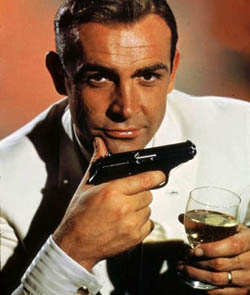
 ,
,  once referred to Bond movie actor
 as "a Glaswegian lorry driver who mangles my character". Many Fleming fans might be inclined to agree that sentiment.
 , opens with Bond sitting in a bar in the Miami Airport. He’s flying back from Central America where he has just carried out his assignment to kill a drug dealer who was working with the communists (the book was published in 1959). Bond reflects on the moment that he killed the man; how the man had life in him one moment and suddenly no longer had that life the minute Bond snapped his neck. His internal musings on his the nature of his dark and deadly occupation depict a man questioning his own morality and place in the world. Fleming's writing in that instance is almost existential in its poignancy.
  sees Sean Connery as James Bond, on a similar mission, emerge from a pond with a plastic duck on his head.
 veteran, wrote the first Bond novel,
  , in 1952. Described by Fleming as being a “blunt instrument” rather than a hero, the literary Bond bore only a passing resemblance to most of the film portrayals that audiences would come to know and love over the years.
 . Hence the term "
 ".
".  only played the role once in
 ,in 1969, almost immediately following Connery's departure. Lazenby was not an experienced enough actor to bring any kind of distinctive interpretation of the character to the table.
  took the part over from
  in 1973 through to
 in 1985. Moore played a highly campy character that happened to have the same name as Ian Fleming’s Bond.
  , took over the role in 1987's
  and is often denigrated by critics even to this day.
  It was a direction that ultimately left Dalton with nowhere to go.
  took over the role in
  in 1995. Brosnan's interpretation was something of a compromise between the lighter Bond of Connery/Lazenby/Moore and the darker Bond of Fleming/Dalton. His performance and the movies themselves often walked a blurred line between action and camp.
  , the Bond reboot of 2006 starring
  as 007, brought back a darker Bond. Though Craig's Bond wasn’t entirely based on Fleming. Some of the characteristics of Fleming’s Bond were there, to be sure, and the movie does follow much of the plot of Fleming’s novel, but, ultimately, Craig and the franchise both used Fleming and at the same time did their own thing with the character.
 spy novel’s film adaptations are a case of extreme mangling. Between 1960 and 1993, American author
  wrote 27 novels centering on the exploits of the tough, hard-hitting, and very deadly secret agent named Matt Helm.
  or
or  . He also describes the violence and death around him in chillingly dispassionate tones.
 were made between 1966-69. That was the height of the 60’s spy movie craze. It was also the height of spy movie silliness. The movies are outright comedies that redefine the parameters of wacky.
  legend
 plays Helm. Martin does not exactly stretch himself as an actor in the role. Not only does Martin maintain his classic recreational drinking, smoking and skirt chasing personality but he even ramps up that which was already a pretty steep ramp to begin with. The sexual innuendo one-liners never stop in the Helm movies, whether they are funny or not (most of the time, not). Nor does the parade of babes for Martin to smugly leer at.
 and
and  from launching a stolen Russian missile from Mexico into the United States. In the movie version of
 , Matt Helm must stop a cartoony South American revolutionary with an army of young women in khaki miniskirts from launching a flying saucer armed with a super duper laser beam.
  has cited Martin’s (and not Hamilton’s) Matt Helm as a major influence on the creation of his of his 60's spy movie parody character,
  . Both, for instance, have the cover profession of fashion photographer. A number of the lines and scenes in the Powers movies are lifted directly out of Matt Helm. Myers, fortunately, manages to make most of the Helm inspired humour much funnier.
  and his company Dreamworks has taken an interest in making a Matt Helm film closer in spirit to the Donald Hamilton novels.
  , the guys who wrote the well received 2009
  reboot are reportedly writing the script.
 is one of the most popular fictional characters of the 20th century. The character first appeared in print in 1912. The
  animated movie adaptation of the character was a box office hit in 1999. That pretty much spans the century. During that time (and even since), there have been some Eighty plus Tarzan movies. The character is known all over the world and has multi-generational appeal and recognition.
  written by his creator,
  . Very few of the
 come close to portraying the Tarzan of Burroughs’ novels.
  officer in
  , discovers a valley of lost
  , is given an immortality potion by a witch doctor, fights the
  , shrinks down to seven inches in height, discovers the still living missing
  between man and ape and is a pilot for the
  during

 as Tarzan, dominated the popular consciousness of the character. That series of movies began with
  in 1932 and continuing for decades, both with and without Weissmuller.
  sidekick named Cheetah. Getting through Cheetah’s “comic relief” segments in these movies requires a great deal of patience.
 and
and  (1960), starring Gordon Scott are two of the better Tarzan movies out there. The 1960’s saw a Tarzan TV series featuring a well spoken intelligent Tarzan in the person of
  . However, it still never really captured the spirit of Burroughs.
 starring
 in the title role, follows some of the Burroughs story line from the original novel. The scenes of Tarzan growing up amongst the apes in the jungle are pretty close to the book. However, the story veers off significantly once Tarzan is brought back to civilization.
 also follows the early parts of the book quite closely. Tarzan is depicted as teaching himself to read, for instance. However, once Tarzan meets Jane, it takes off on its own path. As most Burroughs aficionados will tell you, however, there are no
 songs in the original novel.
 -era
-era  or perhaps a
  type would be a step in the right direction.
 , certainly raises the specter of a possible authentic to Burroughs Tarzan movie.
 in the 1930’s. While published in other forms after Howard’s tragic suicide in 1936, the stories did not really take off until the paperback editions of the 1960’s featuring the character defining cover art of
  . A series of extremely popular
  followed in the 1970’s. By the 80’s, Conan was ready for the big screen.
 . Milius has very particular right leaning libertarian viewpoints that to, one degree or another, colour all of his films (particularly
  ,
,  and the first draft of his screenplay for
  ’s
’s  .) This is true of
  : Emperor of all Men by
  . Clearly, this a line that Milius connected with.
 followed in 1984. The Conan sequel was much lighter in tone than its predecessor. It also had the rather campy presence of people like
 and
and It is a very old school fantasy adventure movie at heart. Director
  (
(

 ) was one of the first directors to discover Schwarzenegger’s sense of humour. It is played up to the hilt and often to great effect. Conan The Destroyer marks the birth of the Schwarzenegger charisma that would lead Arnie through most of his movie work for the next 20 years but would not at all help the man in his subsequent
 than it is to anything Howard ever wrote.