About Me

My photo
Montreal, Quebec, Canada
I am a Montreal-based actor, writer and comedian. When U.S. President John F. Kennedy was shot, I was three days old. I cried all day. My favourite books of all time are Moby Dick by Herman Melville, The Last Temptation by Nikos Kazantzakis and The Ewoks Fun Time Activity Book by Chirpa and Pamploo. I am a member of The Vestibules, On The Spot Improv and The Best Buy Battery Club. Except for the Battery Club, I've been at all this stuff for over 20 years. Enjoy my blog.
Showing posts with label Montreal. Show all posts

Friday, September 21, 2012

Star Trek: Generations Cast Reunites at Montreal Comic Con 2012


Saturday night at the 2012 Montreal Comic Con featured an unexpected on stage reunion of the cast of Star Trek: Generations.

Well, at least part of it was unexpected, anyway.

The 1994 Star Trek movie featured William Shatner, as the original series' Captain Kirk, and Patrick Stewart, as Star Trek: The Next Generation's Captain Picard, together on screen for the first time. The Saturday night Comic Con event, entitled Reunion of the Generations,  featured  Shatner and Stewart on stage together.

The two legendary Star Trek Captains took fans' questions and riffed off of each other for close to an hour,  often whipping the capacity crowd up into a frenzy of applause and laughter.

The two cultural icons regaled the crowd with, among other things, an amusing rant about constantly being asked "What's your favourite episode?" and how they would both love to be in a "J.J. Abrams Star Trek movie". Shatner also added that he, interestingly, is currently working on a documentary film about the making of the Star Trek: The Next Generation television series.


About three quarters of the way through the show, a fan  asked question about about who Captains Kirk and Picard's greatest nemesis was.  Just then, a voice was heard quoting the line "Time is the fire in which we burn".


The line, of course, was uttered by the film's villain, Dr. Tollian Soran, played by none other than Malcolm McDowell (who was scheduled to appear at Comic Con the next day).

While the audience was still contemplating the fact the fan appeared to have just delivered the best McDowell impersonation they had ever heard, McDowell then quickly emerged from backstage to thunderous applause and a standing ovation. 

McDowell and Stewart have,  it turns out, known each other since their days with the Royal Shakespeare Company. Stewart pointed out that McDowell first appeared on stage with him as a "spear carrier" in a mid 1960's production of William Shakespeare's Henry The VIII, Part One. There was some controversy amongst the two about the actual year they met. McDowell saying it was '65 and Stewart '66 (though another online source puts their first meeting in 1964).

Messrs Shatner, Stewart and McDowell then went on to lament the death of Captain Kirk in Generations. McDowell pointed out that "[Star Trek Generations producer and co-writer] Rick Berman could have written you a better death". "They had you shot in the behind", Stewart quickly aware of much of the fan dissatisfaction with the onscreen death of Captain Kirk in Star Trek: Generations.

Throughout the onstage Generations cast reunion, there was no mention of some recent controversial comments McDowell made about the Trek franchise. Appearing at Hero Complex, an event hosted by the Los Angeles Times last June, McDowell said that in Star Trek Generations, he "got to be the guy who shut Shatner up.”, adding, in reference to the Star Trek movie franchise, that he "did them a favor,”.  In the same interview, McDowell continued his unabashed criticism of Trek, "...you have Patrick Stewart spouting off for another 40 minutes. If you find that exciting, hey, go watch paint dry", he said. He then went on to praise J.J. Abrams for "actually making some good [Star Trek] movies".


However, as McDowell and Stewart hugged each other on stage Saturday night, it seemed that, apparently, all had been forgiven, or at least, forgotten.

Monday, May 28, 2012

Student Protests: Haven't I Seen This Movie Before?


Living in Montreal as I do, it's become pretty difficult to ignore a few little things that keep happening in and around my city: the escalating student protests, the mob mentality violence, the police brutality, the divisive reactions to the provincial government's legislative response to the crisis, the nightly pot banging marches outside my window in my supposedly sleepy west end neighbourhood, the list goes on...

It's also hard for me not to think that maybe I've seen this movie before. These kinds of protests and the subsequent public reactions to them are nothing new. It has happened in many different places and during many different times, including in our own backyard. For those of us with even dim memories of decades past, it does all seem kinda familiar. For someone my age, much of that familiarity does not come from the events first hand but, rather, from the pop culture of the day.

Also familiar from both life and pop culture is the slowly increasing number number of comments turning up in the social media spheres regarding "entitled" and "spoiled" "kids" who should "get a job", "learn about responsibility", "sacrifice" and generally "wake up" and get used to life in the "real world".

We have certainly heard that kind of thing before, like in, say, way back in 1968....


Jack Webb in the TV series Dragnet (who became something of a poster child for parodies of  "the establishment" in the 60's, 70's) concisely encapsulates the often dismissive, judgmental and condescending attitude on the part of the established order faced by many different successful and not so successful popular movements towards social change.

On the other hand, the protesters and the activists, even in their pop culture form, are also not above employing their own similarly incendiary language and rhetoric....


Sure, these kinds of clips aren't exactly Montreal 2012. The issues are different. The time is different. The place is different. The culture is different. The underlying emotion, basic ideological conflicts and general atmosphere, though, are really not so different. Social change has and will continue to happen all the time. Otherwise, we'd all still be living in caves and eating Brontosaurus Burgers (again, there might be some pop culture in there).

When seen through the eyes of the events of the last one hundred days here in Montreal, looking back at the pop culture zeitgeist of the so called "youth revolution" of the 60's can be quite thought provoking. If nothing else, it can give us a much broader social and historical perspective. If nothing else it makes it clear that one thing remains unchanged: the issue of student protest and social and political reactions to it is just as devise today as it was then.

While these movies, TV clips and pop culture in general are not necessarily historically accurate records of the events of the day per se, they are incredible time capsules to the way these movements were seen at the time.

For example...


Wild in the Streets (1968) is, at first glance, a silly film. It only takes a few minutes of viewing to see, though, that,  in spite of its superficial silliness, the movie is fascinatingly telling of its time and the attitudes towards the issues that it attempts to address.

Wild in the Streets tells the story about how the youth population of the late 60's (52% of the US population was under the age of 25 at that time, according to the film) manages to change the voting age in the USA to 15. As a result, they elect the first 24 year old President of the United States of America.

Let's make no mistake, this movie was made, first and foremost, like almost any film anywhere, to make money. American International Studios, the people responsible for the picture, were the major producers of Drive-In type B-movies at the time. And it is easy to see the film as cynical  exploitation of then very lucrative youth market. Yet Wild in the Streets does manage to address the issues of the day in a surprisingly well rounded, albeit over the top, manner. The movie both plays to and satirizes the youth movement at the same time.

The youth movement, led by the young millionaire pop star, Max Frost,  wants to see Frost elected as the youngest President of the United States in history. In order to do so, they concoct a plan to get the Legislative Branch of the US government to lower the voting age by putting LSD in their water supply. The scene of all these middle aged politicians tripping out on acid is shot with that classic swirling focus and tilting camera angles that was practically de riguer for movie acid trips of the day.  The scene is played as a youth empowerment fantasy for laughs while simultaneously the film also manages to create an underlying sense of something sinister. It's kinda funny but, still, watching all these hippies manipulatestoned out of their mind elected officials into enacting legislation that will allow their guy to be elected President (in what amounts to a bloodless coup d'etat) is quite unsettling.


The satire arches up even higher as the newly elected President Frost orders that everyone over thirty years of age be rounded up and sent to "re-education" camps where they are forced to drop acid every day. It's part youth culture empowerment fantasy, part satirical political cautionary tale.

View the complete film of Wild in the Streets by clicking here.

A clip from Punishment Park was featured earlier in this post.


On the the almost opposite side of the spectrum is Peter Watkins' still controversial 1971 film, Punishment Park  . Peter Watkins is a British filmmaker known for his mockumentaries. Unlike much of the genre, his mockumentaries are not comedies. If fact, they are generally deadly serious affairs.

Two of Watkins' better known earlier mockumentary works are Culloden and The War Game. Culloden (1964) documents the history of the Battle of Culloden, in which the English (some say brutally) put down a Scottish rebellion in 1746. The film utilizes historical reenactments shot it a TV news documentary style.  The War Game is a 1967 mockumentary film that takes places in England after a hypohthetical nuclear war. It unflicnlingly depicts the potential devastation of such a conflict. It is, to the best of my knowledge, the only mockumentary to ever win an Academy Award for Best Documentary.

Punishment Park, follows in the tradition of those two films by telling the story of how convicted young radical revolutionaries in the US  are sent (under the pretext of an actual existing piece of US legislation enacted in the 1950's) to a desert in Southern California. Once there they are given the chance to escape their sentence if they can survive what is essentially a three day desert death hunt at the hands of the police and National Guard trainees. The central conceit of Punishment Park is that it is a documentary ostensibly shot by a European film crew.


As is the case with many of Watkins' films, he uses only non professional actors. Also like much of his work, the cast improvises a great deal of the film. In this case, the convicted protesters were played by actual activists, students or other similarly inclined young people. The cops and National Guard trainees were played actual cops, ex-cops, National Guardsmen, veterans or others who also may have been similarly ideologically inclined. The result of this non professional improvisational approach creates an unexpectedly engaging discourse between the two sides. Watkins does not take the easy route of merely making the activists righteous heroes and the authorities two dimensional closed minded villains. While the film undoubtedly leans more to the left than than the right, neither side is portrayed as completely right or completely wrong.

In fact, almost everybody  in the movie comes off as pretty much equally unlikable. And that's kinda the point of the whole endeavor. Unmistakably, Punishment Park is agit prop, yet it is not the simple agit prop that often defines the genre. Watkins seems to be ramping up the rhetoric and the hyperbole for the exact purpose of instigating inflammatory debates (and perhaps even second thoughts) on the issues of power vs revolution, peace vs violence, social order vs individual rights, equality vs oligarchy and so on.

It's almost as if Punishment Park is there to kick you in the ass and get you upset about the questions it raises, whether you like it or not.

When you go back into the history of 1960's student protest films, there are many forgotten films that are actually still quite relevant, most especially in light of the recent Occupy movement and the even more recent Quebec student protests. Among others there's Medium Cool (1969), The Revolutionary (1970, starring the now much more right leaning Jon Voight) and this one, The Strawberry Statement (1968):


I'm not sure why the local Montreal TV stations have not been running these movies every night for the last 100 days...

Saturday, January 14, 2012

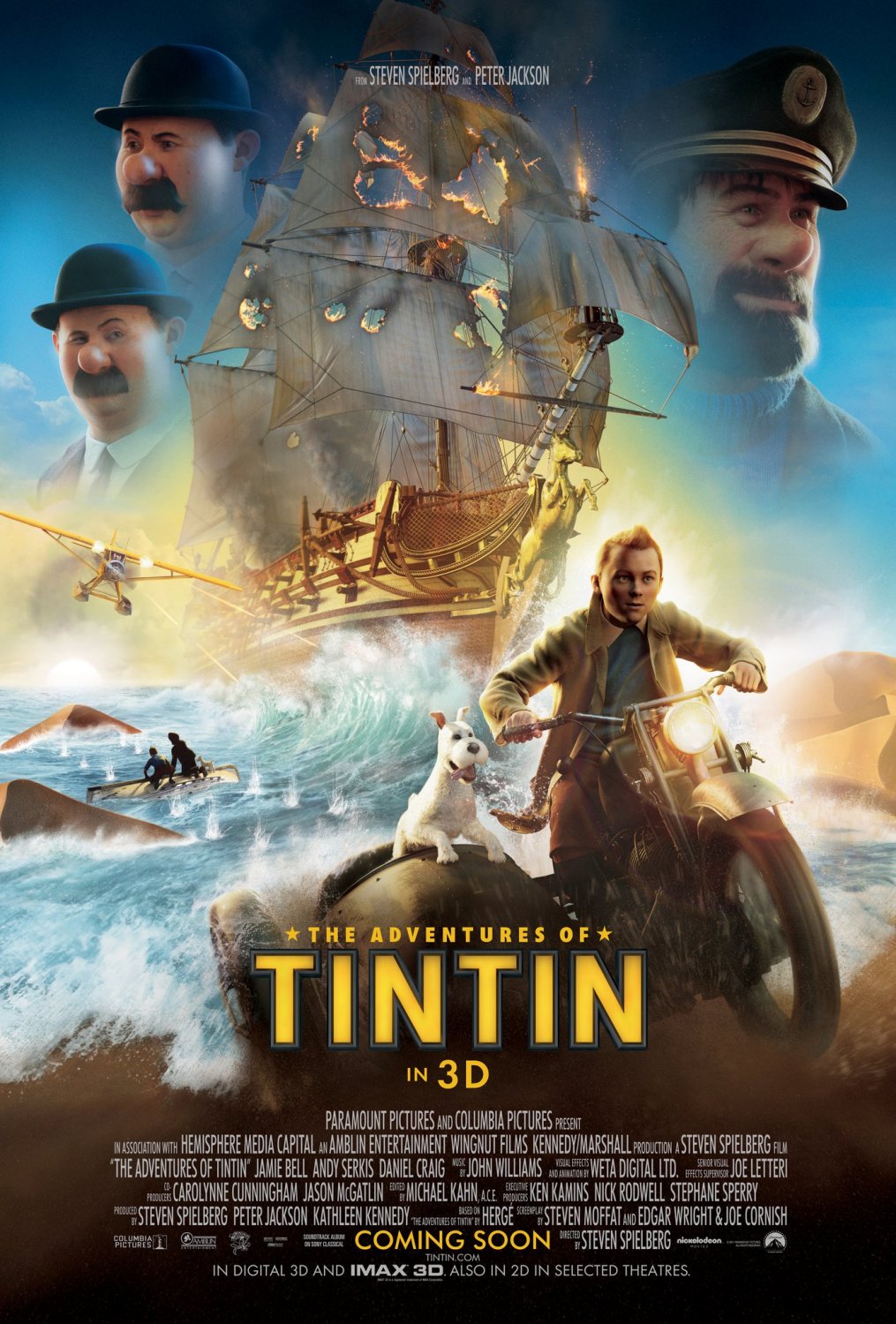
The Adventures of Tintin Bombs in The US, Gets a Sequel Anyway.


The Adventures of Tintin, the movie based on the internationally bestselling comic by the late Belgian artist and writer Hergé, produced by Peter Jackson and directed by Steven Spielberg, despite is struggles at the US box office, is getting a sequel.

The movie has grossed $63 million at the domestic box office since it opened in North America on December 21, 2011. However, that number is has been boosted considerably by box office grosses from the Canadian province of Quebec. The movie opened in Quebec December 9 and had accounted for $16 million of the $25 million in domestic grosses as of the week of December 27, 2011.  Take into account the fact that Quebec comprises a small fraction of the total population of North America and then put Tintin's domestic gross up against the $269 million the movie has made internationally to date, and it's pretty safe to say that the The Adventures of Tintin has, as many predicted it would, bombed in the US.

So, of course, the news has just been announced that the sequel,  The Adventures of Tintin: Prisoners of the Sun (or that's the rumored title anyway), is tentatively scheduled to hit theatres sometime in 2013. The second Tintin movie will be produced by Spielberg and directed by Jackson: a reversal of their roles on Tintin's original big screen outing.

All facetiousness  aside, the sequel has, of course, been ordered based on Tintin's huge international success and not the character's relatively poor showing at the US box office.

No surprises there, really.
The Tintin comics are massively popular throughout the world. In the United States, however, Tintin is, at best, an obscure character with what could generously be described as a small cult following.

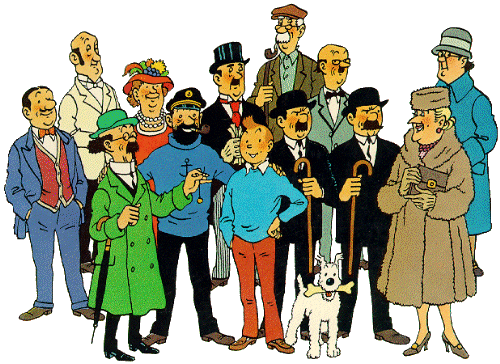
Tintin is a globe-trotting Belgian boy journalist. In a typical adventure, he journeys to an exotic location and quickly becomes entangled in adventure and intrigue. Occasionally, simplistic social or political satire and commentary would figure in the stories. Americans, for instance, were sometimes portrayed as greedy and selfish people, only interested in money. Non-European races were often viewed with dated, colonial and paternalistic attitudes

Tintin has been compared to a boy scout in his values and sensibilities. His dog Snowy, a white Terrier speaks directly to the reader via thought balloons, not heard by anyone else. Captain Haddock, Tintin’s best friend, is a salty sometimes heavy drinking sea captain who was known for such catch phrases as “Blistering barnacles!” and “Thundering Typhoons!”

Titin was drawn in a style originated by HergĂ© known as “lingle clair” (or “clear line”). Linge clair is a style that gives comics a somewhat flat appearance. It is sometimes seen in other European, particularly French, comics but pretty much never appears in mainstream American comics.

Since the character’s debut in 1929, it is estimated that over 200 million Tintin books have been sold. The new Tintin movie spent at least two weeks as the #1 movie in no less than 9 different countries. None of that changes the fact that The Adventures of Tintin faced an uphill battle at the US box office practically from the git go.

Quite simply, Tintin is the soccer of the comic world. And, like soccer, Tintin has been unsuccessfully attempting to break into the US market for some time.

During the 1950’s, Tintin comics were moving over 250,000 copies a week in Europe alone. Towards the end of that decade, the first of several attempts to introduce Tintin to America was made. Accompanied by a large publicity campaign, newly translated and adapted versions of four of Tintin’s most popular adventures hit American bookstore shelves just in time for Christmas 1959. The Tintin titles sold only 8000 copies each over the entire Christmas season.

Why the failure? There are a few possible reasons. Tintin comics were sold as books in Europe, often bound in hardcover and sold at higher price that most comics. In the United States, the Tintin books were seen merely as just another “comic book” that, for some reason, was being sold at a much higher price. Another problem was that not long before Tintin’s first appearance in the US, comic books, particularly the gory and violent crime and horror comics that dominated US newsstands in the early 50’s, were extremely controversial. A 1954 US Senate Sub-Committee investigated comic books as a possible cause of juvenile delinquency. The whole genre still had something of a black mark on it. Finally, and perhaps more importantly, no one was really sure whether or not Tintin translated into the American idiom.

Tintin re-emerged on the American scene in 1966. A US magazine, Children’s Digest, began publishing serialized editions of Tintin adventures. The magazine appearances proved popular enough to warrant a 1969 American re-launch of the hardcover Tintin comics. By 1971, Tintin reached what would become the pinnacle of his American popularity. The books were selling a reported 1000 copies a day. Unfortunately, in 1972, Western Publishing, one of the biggest comic publishers in the US at the time, passed on new and bigger contract to publish and distribute all of the Tintin books in the US. Their argument was that fancy-pants European hardcover comics could not compete in a marketplace where the monthly adventures of such popular characters as Superman, Spider-man and Batman were going for just 20 cents a pop. The books did continue to publish in the US, but, starting in 1974 with a much smaller publisher and distribution.

In Canada, Tintin has fared somewhat better. The original French versions of Tintin have been the educational comic of choice for many a Canadian elementary school French teacher over the years. In Quebec, as recent box office number in the province confirm, Tintin has seen European levels of popularity. Montreal even had for a time its own Tintin boutique that specialized in related books, merchandise, collectibles and memorabilia.


In the US of A, the adventurous young journalist continues to struggle to find an audience to this day, the new blockbuster movie merely proving to be no exception to the rule. On the one of the internet’s biggest movie sites, www.IMDB.com, on the page promoting the Adventures of Tintin's US release, the first FAQ reads "Is this based on a book?”

The message boards on the popular movie site www.aintitcool.com are even more alarming. Comments posted under a still from the movie depicting Tintin reading a book with his trusted Terrier, Snowy, by his side read “I thought Rin Tin Tin was a German Sheppard, not some Terrier.” and “ Rin Tin Tin isn't reading ... He's watching that little boy read. ...did you even look at the picture when you wrote your headline?”. Rin Tin Tin, being a now fairly obscure canine movie star of Hollywood movies of the 20’s and 30’s and later the star of 1950’s TV series of the same name. Obscure or not, US audiences apparently make a quicker connection to the German Sheppard screen hero than they do the Belgian boy reporter.

Even some of the more informed comments are not much more encouraging, “Spielberg is trying to force Americans to love a comic they've had little exposure to.” reads one comment below the latest trailer for the film. “Sorry but why should I give a shit about this boy and his dog?” reads a slightly more extreme comment. Well, at least Spielberg and Jackson have already doubled their 130 million dollar investment in Tintin in the international markets.

One comment that was little more positive refers to the movie as “...a combination of Indiana Jones and Pirates of the Caribbean”. While Tintin predates and has seen longer lasting popularity that either of those franchises and while the comment does not suggest any familiarity with the character it is, at least, positive.

So is it just bad marketing that has robbed Tintin of his potential US fandom? Or is it the fact that Tintin is Belgian and not American? Is it that the rare portrayals of America in Tintin are usually not very complementary? Or is it simply that the whole “linge clair” look of the art and the characters is, for lack of better word, too European?

It seems clear in retrospect that Tintin's best path to US box office gold would have to have been a total overhaul and reboot of the character for American audiences: change Tintin's nationality to American, set at least part of the movie in present day America, redesign the whole look of the Tintin world, have Tintin use current tech like iPads and GPS and so forth. In other words, wreck the franchise completely and kill the movie's prospects for international success (which, in fact, has become the backbone of the film distribution industry in the 21st century). It is unlikely that the Tintin sequel will follow any of these potential directions nor stray all that far from the clear formula for international success that the first film established.

With a second and perhaps third Tintin movie in the works, the Belgian boy journalist could be poised to become an internationally (yet not domestically) successful big screen franchise. If that's the case then future Tintin movies may make incrementally larger and larger inroads onto the US pop culture landscape. If you look at the recent increased interest and awareness of the last World Cup tournament in the US, then perhaps Tintin will see a gradual rise in American popularity, ever growing yet still largely marginalized in the mainstream media. In that case, Tintin will continue to successfully carry the mantle of being the soccer of the comic book world for years to come.


Portions of this post reprinted by permission of the National Post 
(www.nationalpost.ca)

Monday, December 6, 2010

Remembering December 6, 1989

Early December marks a trio of horrible anniversaries: the shooting at L' Ecole Polytechnique on the 6th, the attack on Pearl Harbor on the 7th and the shooting of John Lennon on the 8th. I've always found the terrible trilogy to be a grim counter-point to the gradual onslaught of yuletide cheer.


It is with something of a heavy heart that I recount my memories of December 6, 1989 and the days that followed. I say that because my tone in the rest of my blog may suggest otherwise.

Working in comedy when horrible things like this happen ain't easy. I am still haunted by memories of a show I was in on September 12, 2001 when some majorly misguided stand-up comic rolled out his all new 911 material (I wonder if that would fall into Glen Beck's 9-12 program?).  That, however, is a blog for next September.

Back in 1989, I was writing, performing and producing a weekly sketch comedy radio series with my good pals and colleagues, The Vestibules. We already had our first CBC contract by then but we were still doing our series for CKUT 90.3 FM, Radio McGill. We saw it as a good way to continue to generate new material.

The show aired Thursday nights which meant that 90% of said new material for that week's show was written after 10 PM on Wednesday night. We knew nothing of the Polytechnique shooting that night (just as an aside I have never known what to call the event. I have never liked the Montreal Massacre. It sounds like something an American news network's graphics department came up with).

Not that we saw any news, American or otherwise that night. We were shut away from the world in Breakfast Studios throwing crumpled up bags around the room in attempt to either distract ourselves from the fact that we still didn't have a show written or in the hopes that physical activity would somehow indirectly inspire us to write the Greatest Sketch in the History of Comedy.

I did not learn of the shooting until waking up Thursday morning. I was just getting out of bed so that I could head right back to  Breakfast Studios to help prepare our newly written and recorded show for that evening's broadcast. My clock radio had just gone off. I heard the news for the first time on CKUT FM from an incredibly nervous sounding and shaken up kid clearly reading a wire story verbatim.

One of the newly written and recorded sketches that we had for the show was about these two gruff sounding sleazy movies critics. The critics review and hate just about every movie that was out at the time.  The only movies that get good reviews from these guys are soft core pornos. A simple joke, I know, but trust me, it was all in the performances. It did not take long for us to realize that it was a sketch that, under the circumstances,  none of us were comfortable with putting on the air.

Problem was that we had nothing else ready to put in the questionable sketch's place. So we spent most of the morning and early afternoon re-editing the bit. We cut out anything that we felt might be inappropriate. As it turns out, that was most of the sketch. It made the show a little short but CKUT didn't have all that strict a schedule to adhere to. The remaining bit left even our biggest fans going , "Huh?".

It was worth it.

As I look back on it now, I still wonder if  we were being overly sensitive or not. I think, though, that either way, it was my own (and I can only speak for myself on this score) way of showing, if only to myself, that yes, this horrible event affected me and that, yes, I did what I could.

I would do the same thing again today.

The day after that show aired, I was in the Friday night McGill Improv show (BTW, for the record, I never even attended McGill University) .  In the show, we were playing an improv game called "Most Deaths in a Minute". I'm not sure whose idea it was to even play that game that night but I suspect that some kind of iconoclastic reaction against the media bombardment about the event over the two previous days figured into the decision.

For the non-improv cognoscenti out there, the game is exactly what it sounds like: come up with as many different ways to die in a given location as you can in one minute. Of course, we got the suggestion of "school". Today under those circumstances, I would just turn the suggestion down cold. Back then, being the young Johnstonian  improv purists that we we were, we took it.

The timing of one minute began. There was hesitation amongst the players. Then finally someone ran onto the stage. Seemingly without even thinking, she said, "Is there where the engineering final is?" and then mimed getting shot. I believe the phrase "too soon" was invented that night.

Many years later, I had the occasion to reunite with that player. I told her the story of how she made the first joke about the December 6 shooting. She did not remember the incident at all and was mortified by even the suggestion that she did such a thing. In retrospect, I probably shouldn't have mentioned it.

Working in comedy over the next 21 years, that was the one and only joke that I have ever heard about the events of December 6, 1989.

I hope it stays that way.