About Me

My photo
Montreal, Quebec, Canada
I am a Montreal-based actor, writer and comedian. When U.S. President John F. Kennedy was shot, I was three days old. I cried all day. My favourite books of all time are Moby Dick by Herman Melville, The Last Temptation by Nikos Kazantzakis and The Ewoks Fun Time Activity Book by Chirpa and Pamploo. I am a member of The Vestibules, On The Spot Improv and The Best Buy Battery Club. Except for the Battery Club, I've been at all this stuff for over 20 years. Enjoy my blog.
Showing posts with label Steven Spielberg. Show all posts

Saturday, January 14, 2012

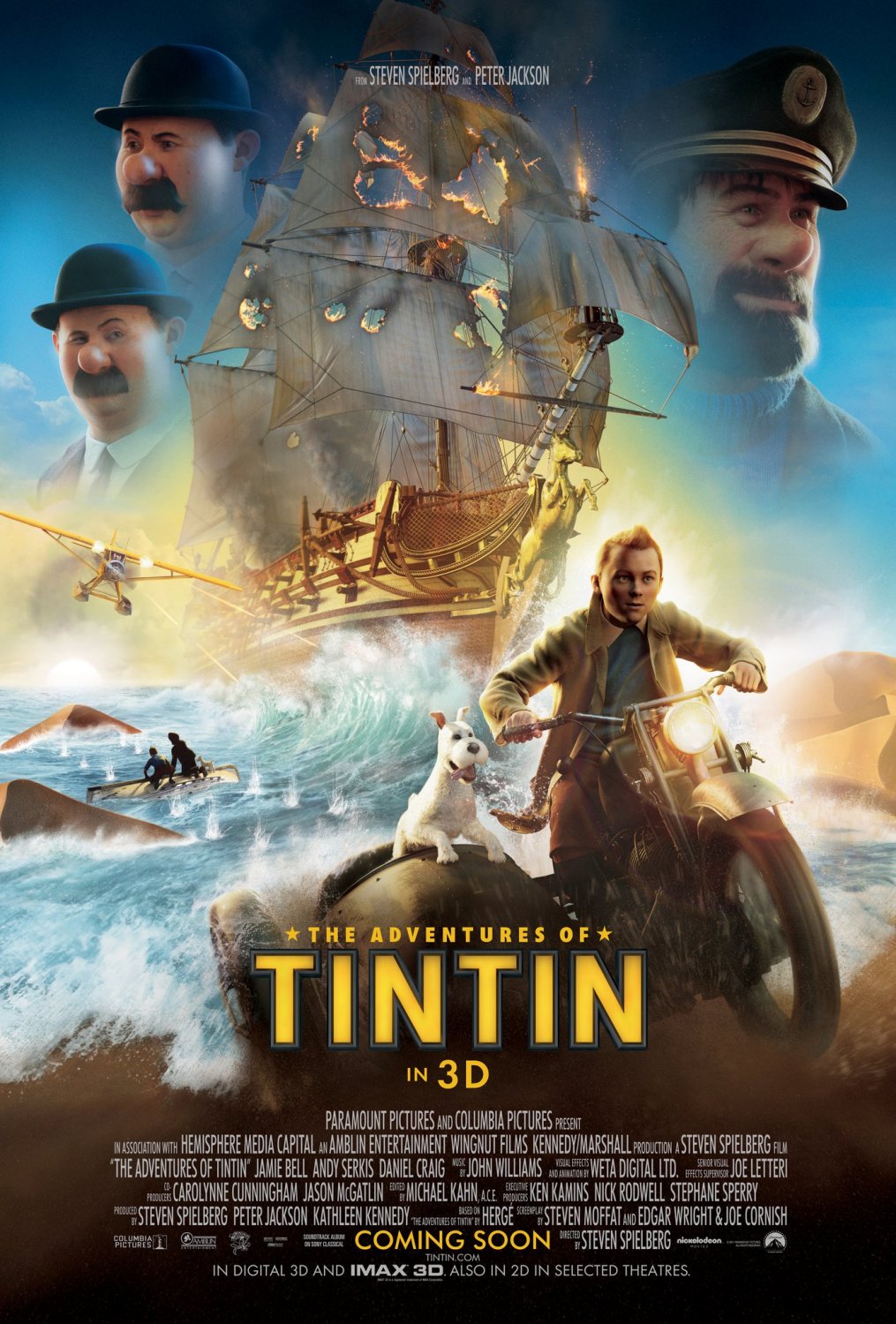
The Adventures of Tintin Bombs in The US, Gets a Sequel Anyway.


The Adventures of Tintin, the movie based on the internationally bestselling comic by the late Belgian artist and writer Hergé, produced by Peter Jackson and directed by Steven Spielberg, despite is struggles at the US box office, is getting a sequel.

The movie has grossed $63 million at the domestic box office since it opened in North America on December 21, 2011. However, that number is has been boosted considerably by box office grosses from the Canadian province of Quebec. The movie opened in Quebec December 9 and had accounted for $16 million of the $25 million in domestic grosses as of the week of December 27, 2011.  Take into account the fact that Quebec comprises a small fraction of the total population of North America and then put Tintin's domestic gross up against the $269 million the movie has made internationally to date, and it's pretty safe to say that the The Adventures of Tintin has, as many predicted it would, bombed in the US.

So, of course, the news has just been announced that the sequel,  The Adventures of Tintin: Prisoners of the Sun (or that's the rumored title anyway), is tentatively scheduled to hit theatres sometime in 2013. The second Tintin movie will be produced by Spielberg and directed by Jackson: a reversal of their roles on Tintin's original big screen outing.

All facetiousness  aside, the sequel has, of course, been ordered based on Tintin's huge international success and not the character's relatively poor showing at the US box office.

No surprises there, really.
The Tintin comics are massively popular throughout the world. In the United States, however, Tintin is, at best, an obscure character with what could generously be described as a small cult following.

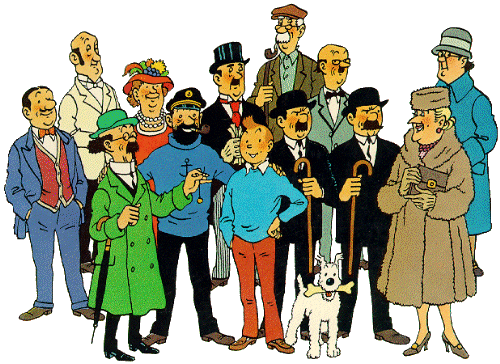
Tintin is a globe-trotting Belgian boy journalist. In a typical adventure, he journeys to an exotic location and quickly becomes entangled in adventure and intrigue. Occasionally, simplistic social or political satire and commentary would figure in the stories. Americans, for instance, were sometimes portrayed as greedy and selfish people, only interested in money. Non-European races were often viewed with dated, colonial and paternalistic attitudes

Tintin has been compared to a boy scout in his values and sensibilities. His dog Snowy, a white Terrier speaks directly to the reader via thought balloons, not heard by anyone else. Captain Haddock, Tintin’s best friend, is a salty sometimes heavy drinking sea captain who was known for such catch phrases as “Blistering barnacles!” and “Thundering Typhoons!”

Titin was drawn in a style originated by HergĂ© known as “lingle clair” (or “clear line”). Linge clair is a style that gives comics a somewhat flat appearance. It is sometimes seen in other European, particularly French, comics but pretty much never appears in mainstream American comics.

Since the character’s debut in 1929, it is estimated that over 200 million Tintin books have been sold. The new Tintin movie spent at least two weeks as the #1 movie in no less than 9 different countries. None of that changes the fact that The Adventures of Tintin faced an uphill battle at the US box office practically from the git go.

Quite simply, Tintin is the soccer of the comic world. And, like soccer, Tintin has been unsuccessfully attempting to break into the US market for some time.

During the 1950’s, Tintin comics were moving over 250,000 copies a week in Europe alone. Towards the end of that decade, the first of several attempts to introduce Tintin to America was made. Accompanied by a large publicity campaign, newly translated and adapted versions of four of Tintin’s most popular adventures hit American bookstore shelves just in time for Christmas 1959. The Tintin titles sold only 8000 copies each over the entire Christmas season.

Why the failure? There are a few possible reasons. Tintin comics were sold as books in Europe, often bound in hardcover and sold at higher price that most comics. In the United States, the Tintin books were seen merely as just another “comic book” that, for some reason, was being sold at a much higher price. Another problem was that not long before Tintin’s first appearance in the US, comic books, particularly the gory and violent crime and horror comics that dominated US newsstands in the early 50’s, were extremely controversial. A 1954 US Senate Sub-Committee investigated comic books as a possible cause of juvenile delinquency. The whole genre still had something of a black mark on it. Finally, and perhaps more importantly, no one was really sure whether or not Tintin translated into the American idiom.

Tintin re-emerged on the American scene in 1966. A US magazine, Children’s Digest, began publishing serialized editions of Tintin adventures. The magazine appearances proved popular enough to warrant a 1969 American re-launch of the hardcover Tintin comics. By 1971, Tintin reached what would become the pinnacle of his American popularity. The books were selling a reported 1000 copies a day. Unfortunately, in 1972, Western Publishing, one of the biggest comic publishers in the US at the time, passed on new and bigger contract to publish and distribute all of the Tintin books in the US. Their argument was that fancy-pants European hardcover comics could not compete in a marketplace where the monthly adventures of such popular characters as Superman, Spider-man and Batman were going for just 20 cents a pop. The books did continue to publish in the US, but, starting in 1974 with a much smaller publisher and distribution.

In Canada, Tintin has fared somewhat better. The original French versions of Tintin have been the educational comic of choice for many a Canadian elementary school French teacher over the years. In Quebec, as recent box office number in the province confirm, Tintin has seen European levels of popularity. Montreal even had for a time its own Tintin boutique that specialized in related books, merchandise, collectibles and memorabilia.


In the US of A, the adventurous young journalist continues to struggle to find an audience to this day, the new blockbuster movie merely proving to be no exception to the rule. On the one of the internet’s biggest movie sites, www.IMDB.com, on the page promoting the Adventures of Tintin's US release, the first FAQ reads "Is this based on a book?”

The message boards on the popular movie site www.aintitcool.com are even more alarming. Comments posted under a still from the movie depicting Tintin reading a book with his trusted Terrier, Snowy, by his side read “I thought Rin Tin Tin was a German Sheppard, not some Terrier.” and “ Rin Tin Tin isn't reading ... He's watching that little boy read. ...did you even look at the picture when you wrote your headline?”. Rin Tin Tin, being a now fairly obscure canine movie star of Hollywood movies of the 20’s and 30’s and later the star of 1950’s TV series of the same name. Obscure or not, US audiences apparently make a quicker connection to the German Sheppard screen hero than they do the Belgian boy reporter.

Even some of the more informed comments are not much more encouraging, “Spielberg is trying to force Americans to love a comic they've had little exposure to.” reads one comment below the latest trailer for the film. “Sorry but why should I give a shit about this boy and his dog?” reads a slightly more extreme comment. Well, at least Spielberg and Jackson have already doubled their 130 million dollar investment in Tintin in the international markets.

One comment that was little more positive refers to the movie as “...a combination of Indiana Jones and Pirates of the Caribbean”. While Tintin predates and has seen longer lasting popularity that either of those franchises and while the comment does not suggest any familiarity with the character it is, at least, positive.

So is it just bad marketing that has robbed Tintin of his potential US fandom? Or is it the fact that Tintin is Belgian and not American? Is it that the rare portrayals of America in Tintin are usually not very complementary? Or is it simply that the whole “linge clair” look of the art and the characters is, for lack of better word, too European?

It seems clear in retrospect that Tintin's best path to US box office gold would have to have been a total overhaul and reboot of the character for American audiences: change Tintin's nationality to American, set at least part of the movie in present day America, redesign the whole look of the Tintin world, have Tintin use current tech like iPads and GPS and so forth. In other words, wreck the franchise completely and kill the movie's prospects for international success (which, in fact, has become the backbone of the film distribution industry in the 21st century). It is unlikely that the Tintin sequel will follow any of these potential directions nor stray all that far from the clear formula for international success that the first film established.

With a second and perhaps third Tintin movie in the works, the Belgian boy journalist could be poised to become an internationally (yet not domestically) successful big screen franchise. If that's the case then future Tintin movies may make incrementally larger and larger inroads onto the US pop culture landscape. If you look at the recent increased interest and awareness of the last World Cup tournament in the US, then perhaps Tintin will see a gradual rise in American popularity, ever growing yet still largely marginalized in the mainstream media. In that case, Tintin will continue to successfully carry the mantle of being the soccer of the comic book world for years to come.

Portions of this post reprinted by permission of the National Post 
(www.nationalpost.ca)

Friday, December 16, 2011

Tintin, The War Horse and the Spielberg Top 10

Mr. Spielberg has probably gotten pretty good at posing for these "Spielberg Directing" publicity shots
Steven Spielberg is having another Double Whammy Year. Like 1993 with Jurassic Park and Schindler's List  or 1997 with The Lost World: Jurassic Park and Amistad or 2002 with Minority Report and Catch Me If You Can, 2011 will see two major Steven Spielberg releases in the same year.


This year, Spielberg's more escapist fare is The Adventures of Tintin, a state-of-the-art animated motion capture adventure that many are characterizing as an attempt to foist a massively popular international comic hero on unsuspecting American audiences.

Spielberg's more serious film is War Horse, a movie that depicts the horrific events of the First World War as seen through the eyes of a horse in military service.

On this occasion, I have decided to look back at Mr. Spielberg's incredible directing career through the prism of my own personal Spielberg Top 10...


10. Sugarland Express (1974)


Sugarland Express is Spielberg's first theatrical release. He had previously directed Duel, a TV movie about a seemingly phantom truck harassing a meek traveling salesmen on the open highways of America. Duel was released theatrically in Europe so there is some debate as to what film is truly Spielberg's first theatrical release.

Based on a true story, Sugarland Express follows the exploits of a very young Goldie Hawn as she breaks her husband out of jail because she fears that she will soon lose custody of her son. In the process, the two fugitives take a Texas State Trooper hostage. It's not long before their escape becomes a media circus.  They are followed down the highways of Texas by a large caravan of cops and media.

It's your basic chase movie with a twist.

One scene that I love takes place while Goldie and her husband William Atherton (later the sleazy journalist in Die Hard) are holed up someplace or other. They look out the window and see a drive-in theater in the distance. They quietly watch a Road Runner cartoon with no sound; a wonderfully surreal visual allegory to the events of the film.

That scene also hits on one of Spielberg's greatest recurring themes: the mediated experience of real events.


9. Empire of the Sun (1987)


The guy from Being John Malkovich  becomes a father figure to a twelve year-old Batman in a Japanese POW camp in China during WWII.

Got it?

Spielberg's early ventures into serious "grown up" films were commercially risky and generally not well received critically. Many critics and audiences who saw the director as crowd pleasing sentimentalist greeted Empire of the Sun and his earlier The Color Purple with skeptically crossed arms. Looking back on Empire of the Sun, though,  for shear human emotional impact set against an incredibly detailed and nuanced historical backdrop, the movie can not be beat.

It's an epic that has stayed with me all these years.

Empire of the Sun is a film that plays to another one of Mr.Spielberg's big themes: the deconstruction and ersatz reconstruction of the nuclear family.


8. Jurassic Park (1993)


Yes, yes, I know. This is Spielberg directing the sequel.
Jurassic Park was kind of a comeback for Spielberg.

In the late 80's and very early 90's, he had stumbled through his ill received more serious films like The Color Purple and Empire of the Sun. Then there were the odd misfires of Always and Hook. His only real old Spielbergian  box office smash was the third film of what was then the Indiana Jones trilogy, Indiana Jones and the Last Crusade. While the third Indy installment has a bit more depth than the first two films, it was still, nevertheless, kinda rehashing old territory.

In 1993, Spielberg once again embraced his now neglected inner child along with some cutting edge special effects. The result was Jurassic Park, one of the biggest box office hits of not just the 90's but of Spielberg's career.

While the movie is a tad weak narrative-wise, the dinosaurs are brought to life in with a combination of technical expertise and artistic mastery that only Mr. Spielberg could pull off. The Thunder Lizards are the true stars of the film and, like any solid movie stars, they carry it well. The human-raptor cat and mouse chase scenes of the later part of Jurassic Park represents some of Spielberg's most tense, scary and thrilling work since Jaws.


7. Close Encounters of the Third Kind (1977)


Spielberg's first, but not last, cinematic fraternizing with aliens.

Close Encounters is quite possibly Spielberg's most visual film. The dialogue is often sparse and usually only supports the visuals anyway. The film also has that great cinematic layering technique that is often seen in the director's earlier work.  There is a lengthy scene where Richard Dreyfus spends a whole day making a scale replica of Devil's Tower, the locale of a future UFO landing, in his living room. As he obsessively does so, the audio and visuals of an entire day of TV programing play in the background. It's a classic example of Spielberg's skilful multi-layering.

Spielberg cast one of his cinematic heroes in Close Encounters: Francois Truffaut. Truffaut's films and the legendary French director's portrayal of children in particular, were a major influence on Spielberg. Critics who cite the kids in Spielberg's films as being influenced by Disney movies have clearly never a Truffaut film. Nor, for that matter, have they likely seen any pre-Spielberg era live action Disney movies either. 

In later interviews, Truffaut said that he arrived on set with a book by the legendary acting teacher Constantin Stanislavsky. He says that then Spielberg showed him the storyboards for the film. After seeing the storyboards, Truffaut immediately put the book away as it was clear he would not be needing it for this movie. Yep, while there are some great performances in Close Encounters of the Third Kind, the movie is just not about the acting.


6. War of the Worlds (2005)


 By 2005, the line between Spielberg's fantasy films and his so-called "grown up" serious films was becoming increasingly blurred.  War of the Worlds is a prime example.

Spielberg's adaptation of the HG Wells' science fiction classic was part of his unofficial trilogy of dark SF films. The other two were A.I. (2001) and Minority Report (2002).  AI and Minority Report are two of Spielberg's most maligned and misunderstood movies. Even so, though, War of the Worlds still remains the strongest film of the three.

Heavily influenced by the events of the post 911 era, War of the Worlds is as much about the destruction of human society and values as it is about an alien invasion.

The alien tripod's attack on a ferry which Tom Cruise and his children are attempting escape on is a tour de force of Spielberg's strengths: visual tension and solid special effects make foe a scene that has a powerful emotional impact. Yes, Spielberg has this wonderful way of putting his characters through hell while ultimately finally delivering them from evil.


5. Munich


Many of  Spielberg's films have been referred to, over the years, as comic books. If that's the case, then Munich is his graphic novel.

Munich is highly stylized yet quite morally ambiguous. The film closely follows an elite group of Israeli intelligence agents.Their mission is to covertly eliminate the Palestinian terrorists believed to have been responsible for the killing of  members of the Israeli Olympic team in Munich in 1972. Whether or not the events depicted in the film actually took place or not is still the subject of some debate.

Munich is based on the 1984 book Vengeance by Hungarian born Canadian writer and columnist George Jonas. The film departs from the book in many significant ways. Jonas clearly states his own personal feelings towards the events he writes about. He contends that while terrorism is evil, counter-terrorism can be morally justified and is necessary.

Spielberg's film, on the other hand, is very sympathetic towards the agents while being critical of the mission itself. Munich is also allegorically critical of the American reaction to the event of 9-11 (the final shot of the film is of the 70's NYC skyline with the World Trade Center featured prominently). Justified or not, Spielberg took a lot of heat for Munich and the film continues to dwell in relative obscurity. 

Unlike many of Spielberg's films, even the serious ones, Munich is not dominated by his overwhelming directorial presence. The cinematic elements of the film, while very strong, do not call attention to themselves as strongly as they might in his other films. Thus the focus of Munich shifts towards the characters and the events they are caught up in.

IMO, Munich is one of Steven Spielberg's most underrated films.


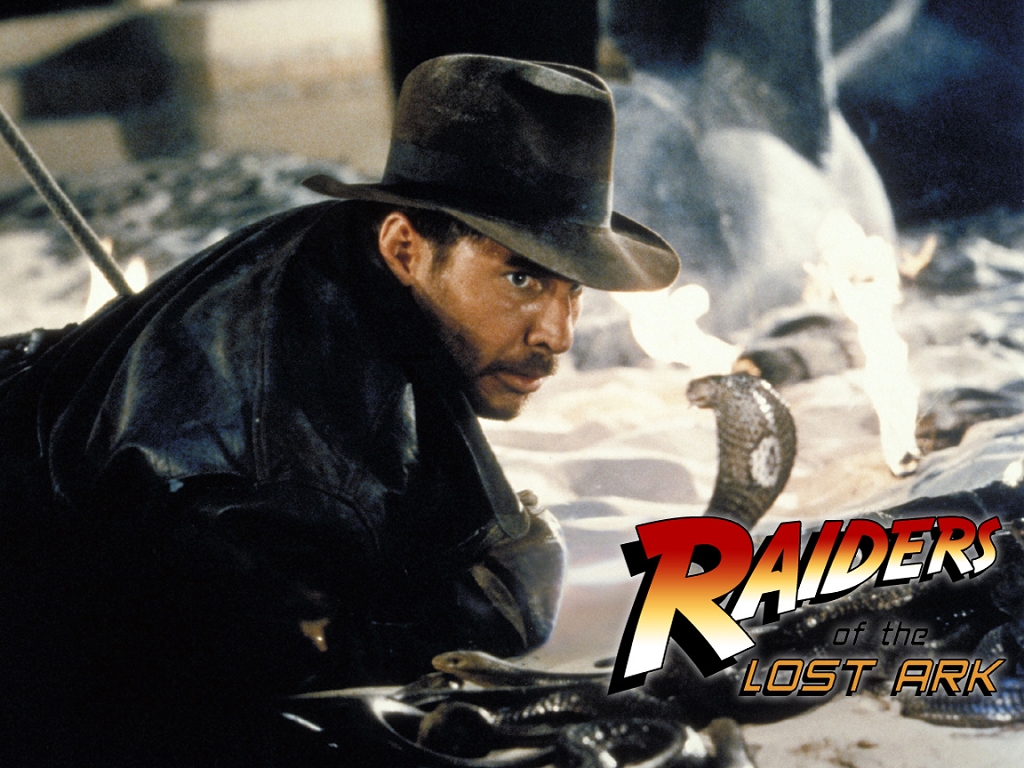
4. Raiders of the Lost Ark (1981)


You ever wonder what it would have been like if Spielberg and George Lucas would have left Raiders of the Lost Ark as just one movie? Yep. One Indiana Jones adventure. No sequels. No books. No comics. No Young Indiana Jones. Just the one movie and that's it, that's all.

K. There's more fantasy in that paragraph than there is in Raiders of the Lost Ark itself.

Raiders of the Lost Ark is loosely based on the old Hollywood theatrical serial adventures that used to play in weekly 15-20 minute installments in movie theaters back in the days before TV. Though, it is much more exciting that many of those serials. In fact, Raiders is a triumph of action and excitement that had never been seen before on the big screen.

Harrison Ford is brilliantly cast the globe-trotting archaeologist who, while incredibly brave and heroic, clearly has some anger management issues. Ford is one of those Hollywood movie star actors who is incredibly good at playing one thing. And that thing is Indiana Jones, followed closely by Han Solo (and, c'mon, is there really that much difference between the two characters?).


I remember watching, on one of my umpteenth re-viewings of Raiders of the Lost Ark, the shot of the Ark of the Covenant in the cargo hold of a ship the Nazis had just commandeered. The Ark is in a crate with a large swastika stamped on the side of it. While the crate sits there alone in the hold and rats scurry by, a light shines out of it. The swastika is burnt away and replaced by a Star of David. I remember at that moment thinking to myself "Someday Spielberg is going to do a serious film about the Holocaust".

Which brings us to....

3. Schindler's List (1993)


I have to admit right off the bat that Schindler's List is one of the rare Spielberg films that I have only seen once. The others I've seen only once are Always, Hook and The Terminal for, as you can guess, completely different reasons.

The truth is that I found Schindler's List such an incredibly emotionally harrowing experience that I've not been eager to go there again.

Nonetheless, there are many scenes in the movie that are still permanently etched in my mind. One in particular was the subject of some debate with a friend of mine back in the day. It's the scene where some young kids hide from the Nazis in the disgusting bowels of an outhouse. I remember my friend making the case that even in the context of the Holocaust, Spielberg was still clinging to his old habits of portraying cute kids; that those kids in that scene still had these big wide innocents eyes just like anything out of, say, ET.

My answer to that argument was and is simple. However, "cute" they may be, these are kids that are literally up to their necks in human excrement in an attempt to escape what is widely considered the largest act of genocide in human history.

See my point about the prevalence of condescending attitudes towards Spielberg's work?


2. Saving Private Ryan (1998)


Again with the pointing.


The first 20 minutes of Saving Private Ryan alone deserved an Oscar. Really, is anyone still blogging about Shakespeare in Love almost 14 years later?

Sorry. Pet peeve. Moving on.

Saving Private Ryan is the ultimate deconstruction and reconstruction of the mythological nature of World War II that has become common in movies and in the popular consciousness in general. World War II, in movies up to that point, was rarely depicted as an incredibly horrific war (least of all in American movies). That kind of treatment of warfare was usually reserved for films about the war in Vietnam.

Spielberg's incredible visuals created a decidedly different vision of World War II. Some veterans of the D-Day invasion have said that Saving Private Ryan is the closest on screen recreation of the event that they have ever seen.

For instance, to avoid the typical look and sound of "movie guns", Spielberg had very realistic mannequins made of the actors so that real bullets from real guns could be fired into them for some shots. He and his Director of Photography, Janus Kaminski, studied a great deal of WWII combat footage and photo journalism to get the verisimilitude just right. It also just about the only war movie off the top of my head where you actually see soldiers cry.

One of Steven Spielberg's finest achievements.


1. Jaws


For my money, there is no film of Spielberg's that is as well crafted and as thoroughly entertaining as Jaws. From start to finish, there is never a dull moment.

It is also rare case of the movie being better than the book. Peter Benchley's bestselling novel of the same name gets bogged down on a mafia subplot and some completely unnecessary sexual encounters.The movie drops all that extra fat and concentrates on the lean action of a classic killer shark story.

From John Williams' iconic Jaws theme to the surprisingly effective mechanical shark to Richard Dreyfus, Roy Scheider and Robert Shaw in some of the best performances of their careers, Jaws is a true classic film of American cinema. Spielberg was just 27 years old when he directed it.

Jaws has one of the best scare scenes ever. In what starts as an unremarkable dialogue scene, Scheider complains about getting stuck dumping dead fish off the side off the boat in attempt attract the shark. While he complains and starts dumping the stuff into the water, suddenly, and without any build up of tension or expectations, a giant shark head casually comes right up out of the water behind him. He turns then sees the shark. Then, stunned, he gets up slowly and backs away towards the unaware Dreyfus and Shaw. Then Roy Scheider utters one my favorite famous lines from any movie ever:

"We're going to need a bigger boat."


Saturday, September 10, 2011

The Post 9-11 Alien Invasion Movies


Like many people out there, I can not believe that ten years has already passed since the stunning events of September 11, 2001. The anniversary brings to mind the many changes the world has seen in the last decade.

9-11 has had long and far reaching consequences. The events of that infamous day have tested, challenged and, in some cases, radically changed the philosophy and ideology of not just governments but also those of people all over the world as well. The aftermath has affected laws, warfare, security, political debate, economics and, yes, even pop culture

And on the pop culture point, I know what you're thinking; "What about the science fiction sub-genre of the alien invasion movie? How specifically was that effected by 9-11?".

Glad you asked.

Like a lot of good science fiction, the alien invasion movie has often been, in one way or another, allegorical to many of the social, political and international issues and events of the time in which it was made. The decade following 9-11 saw something of a resurgence of the genre.

With the notable exception of the 1996 Roland Emmerich blockbuster, Independence Day, it was basically a dead genre. That, like many things,turned around in the decade following 9-11. Given the nature of both 9-11 and the alien invasion genre, that's not surprising.

The alien  invasion genre, as we know it today, was first introduced by HG Wells in his landmark 1898 novel, The War of the Worlds.  Wells' book was, among other things, an allegorical criticism of European, particularly British, colonialism.

The European powers had a notorious history of conquest and occupation of cultures and lands more "primitive" than their own in places like Africa, South America and the South Pacific. A key element in that conquest and occupation was the Europeans' access to and use of superior technology. Additionally, their generally racist assumptions concerning the superiority of the white race helped to fuel the fires of domination.
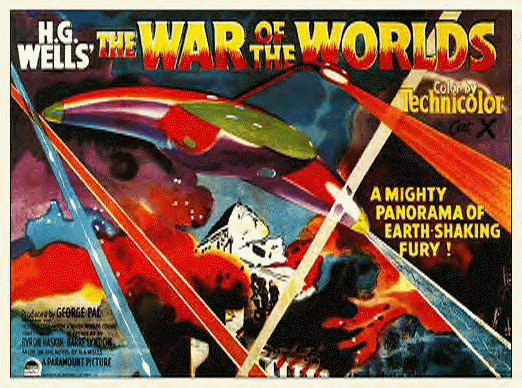
In War of the Worlds, Wells presented a scenario in which Britain was the "primitive" culture facing an enemy with vastly superior weapons and technology who seemingly regarded humanity as inferior. It's the old "How would you feel is someone did that to you?" argument frequently employed by adults throughout my childhood.

In film, the alien invasion genre really took off in the 50's. The political and historical context of the day played a large role in the success of the genre.  At the height of the atomic age and Cold War paranoia, invasion was on every body's mind. A particularly prominent fear was that the Communist Russians or the numerically larger Red Chinese might not just be planning an invasion or attack at any time but that they also might somehow secretly have far superior weapons. The 1953 Hollywood film adaptation of War of the Worlds updated Wells' 1898 British setting to a mid-1950's American setting. So the movie is filled with allegorical fears of a foreign invasion from which there is no defense. These fears are sprinkled with an implied nostalgia for the Second World War as a means of reassurance; the underlying message being, "if we got through it once, we can get through it again". The movie reflects the zeitgeist of the era in which it was made. Interestingly, the theme of the film seems to be more of a Cold War cautionary tale rather than a veiled criticism of current particular political practices or ideologies.

Flash forward to the early 21st century.

There have been a few attempts to make films that deal directly with 9-11. For instance, there was Oliver Stone's World Trade Center and the docudrama Flight 93. However, the incidents of 9-11 are too big, too emotional and still far too close to allow for any extensive cinematic exploration.
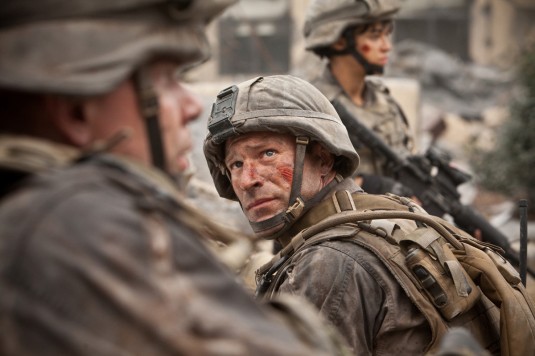
It's times like this that illustrate the beauty of science fiction. When no one can directly address controversial issues, SF comes along, throws an alien or two into the discussions and suddenly, because its got aliens in the story, nobody seems to care one way or the other.

This is the very reason why the decade following 9-11 saw a resurgence of the alien invasion genre.

Let's face it, none of the last decades alien invasion movies are really about aliens. They are about a wide range of issues and emotions directly related to the September 11 attacks and their aftermath.

Here are four examples of the post 9-11 alien invasion movie that fascinate me...

Battle Los Angeles (2011)


Despite its present day urban Los Angeles setting, shaky camera, light flashes, quick editing, pseudo-documentary style and impressive CGI, this movie is as old school a Hollywood war movie as they come. Many critics and Internet commentators have likened Battle Los Angeles to the extremely popular series of combat related video games, Call of Duty. I prefer to take it back a step or two further back than that.

In essence, Battle Los Angeles is a classic World War II movie; the kind they made in the 40's, 50's and 60's before the whole Vietnam War thing laid its roots into American pop culture and changed the war movie genre forever. Battle Los Angeles, however, is not quite as obvious or jingoistic as the Hollywood propaganda movies made during the war itself. It bears more resemblance to the slightly more nuanced treatment of World War II seen in movies like the epic 1962 D-Day movie, The Longest Day or the classic war TV series Combat!.

The Marines depicted in this film are the classic American war movie larger-than-life everyman heroes who rise above and beyond the incredible challenges put in front of them. Now, there is no way in the world that a movie featuring those kinds of characters in middle of a real life current conflict like the ones the US is currently involved in Iraq, Afghanistan and Libya would ever fly. Battle Los Angeles very cleverly creates the context of a world in which modern audiences will readily accept those kinds of characters.

The video game inspired alien invasion scenario serves the movie's purposes well. It's escapist dress for a very real post 9-11 commentary on the wars that America is currently fighting. In that sense, the movie serves to rally around audiences around cause in the same way that a movie like, say, the 1943 film Gung Ho Marines did for the WWII war effort.

The story of battle Los Angeles focuses on one platoon of Marines trapped behind enemy lines trying to make it back to their base. Of course, the platoon is also saddled with the requisite amount of civilians and wounded to raise the stakes of the drama. To anyone who has even a passing familiarity with the war movie genre, the premise is no doubt a familiar one.

Old war movie heroics are the order of the day for much of the film. After Aaron Eckart's heroic Sargent risks his life to divert the alien enemies away from his platoon, one marine comments "That was some real John Wayne shit, Sargent" while another says, "Who the hell is John Wayne?".

That's the movie in a nutshell, folks.


Cloverfield (2008)


Cloverfield cuts right to the heart of the allegorical matter. It's about an attack on New York City documented entirely by hand held video.

What could be more 9-11 than that?

In the film, we see, the head of the statue of liberty crash into the streets. Buildings and structures believed to be indestructible are destroyed by a giant rampaging alien monster. Affluent young New Yorkers, previously untouched by any type of strife, conflict or challenges (outside of their CW network prime time soap opera-like personal lives) are suddenly thrust into a world of devastation, widespread social chaos and the specter of imminent death around every corner. Sure, the military is there, trying to defend NYC and its people. While being a strong force for maintaining social order, there appears to be little the armed forces can do about the actual monster itself.

Cloverfield is the stuff of post-911 nightmares; irrational and dramatic fears of a destructive force from which there is ultimately no defense. Even as (SPOILER ALERT) the monster appears to be conquered, things do not go as well for the young protagonists of the movie..


Monsters (2010)


This British film takes a slightly alternate viewpoint of a post 9-11 world. Monsters deals only peripherally with an alien invasion and focuses largely on the human impact of said alien invasion.

The film takes place an unspecified amount of time after alien life forms were brought to Earth after a NASA deep space probe crashed in Mexico near the US border. It follows the story of two Americans attempting to make it back to the US through "infected" alien territories. It is shot in semi-documentary style. Unlike Battle Los Angeles, the shaky camera is not there to create seemingly realistic window dressing for escapism.

Quite the opposite, in fact.

Monsters is a very low key, deliberately paced movie that focuses on the single journey of two people. It reminded me a great deal of another of film about two characters entering  into an area supposedly occupied by aliens: Russian director Andre Tarkovsky's classic art house sci-fi epic, Stalker. Though, in Monsters, the presence of the aliens is not nearly as ambiguous as it is in Stalker. The aliens in Monsters are rarely seen but often anticipated which helps to build much of the film's tension. There, however, is little question regarding their true existence.

Monsters very subtlety looks at many of the post-911 political and social concerns. For instance, questions about the military response to the invasion abound. The point is often raised in the film as to whether the military is deterring the aliens or needlessly exacerbating the situation.

In fact, whether or not this scenario could even be called an "invasion" is debatable. That is a point which speaks to the crux of the matter.  Has the situation become an invasion only because the governments of the US and Mexico have decided to treat it that way? 

Not exactly a Fox News talking points viewpoint, that.


War of the Worlds (2005)

Steven Spielberg goes right back to the original source of the alien invasion genre with a remake of War of the Worlds.  Spielberg, like the 1950's George Pal version that preceded his adaptation, chose to set the story in present day America. Spielberg also chose to use more elements and scenes from the book than the 50's version did.

The book involves a man attempting cross the English country side to get to his wife during a Martian invasion. The movie follows Tom Cruise attempting to cross the northeastern US  to get his two kids back to his ex-wife during an alien invasion. The interesting perspective that Spielberg takes, like the book, is that follows the entire invasion from one man's viewpoint.

Unlike the first film version of the War of the Worlds, Independence Day and a million other alien invasion movies, we never a single scientist, general, president or anyone else of any major authority in the entire movie. Additionally, unlike those other alien invasion movies, we do not see the impact of the attacks on any major cities or landmarks of the world. There is no statue of liberty head falling into the streets of NYC, no exploding White House, no Eiffel tower crashing to the ground. All we really see is the destruction of overpasses and highways in New Jersey ( a setting that is most definitely a nod to Orson Welles' immortal 1938 radio broadcast that convinced many listeners that a martian invasion was really happening).

The movie keeps many of the books stronger elements. One of the alien tripods (this is one of the rare film versions of the book to keep that detail in tact) attack a crowded ferry filled with alien invasion refugees. It is a sequence that is very close to a similar attack described in the book. The scenes where Cruise and his daughter hole up in a farm house with a borderline psychotic survivalist also bear some resemble to the novel including some lines that are taken verbatim from Wells' text.

Another angle that Spielberg explores with incredible darkness, realism and emotional detachment is the breakdown of social order into mob chaos which ensues in the wake of the invasion. The sequence where an unwieldy mob commandeers Cruise's SUV is starkly powerful.

War of the Worlds is one the more character driven alien invasion movies. It is with the characters that the real post 9-11 themes kick in: ordinary people rising to previously unthinkable challenges. It's not coincidence that (SPOILER ALERT) Cruise is rescued at a crucial moment towards the end of the film by nameless man (with whom he has had no previous relationship) in uniform.

That's the heart of Spielberg's greatly underrated War of the Worlds, people defying both aggressive aliens and social chaos through sheer determination alone. It also helps that and the aliens are finally killed off by (in Wells' words), "disease bacteria against which their systems were unprepared....slain, after all man's devices had failed, by the humblest things that God, in His wisdom, had put upon this Earth."


Wells' words reflect the underlying message of optimism that permeates all of these Post 9-11 alien invasion movies: we will, one way or another get through these nightmare scenarios of death, chaos and destruction.

That much is certain, at least, in the movies, if not in real life as well.