About Me

My photo
Montreal, Quebec, Canada
I am a Montreal-based actor, writer and comedian. When U.S. President John F. Kennedy was shot, I was three days old. I cried all day. My favourite books of all time are Moby Dick by Herman Melville, The Last Temptation by Nikos Kazantzakis and The Ewoks Fun Time Activity Book by Chirpa and Pamploo. I am a member of The Vestibules, On The Spot Improv and The Best Buy Battery Club. Except for the Battery Club, I've been at all this stuff for over 20 years. Enjoy my blog.
Showing posts with label The Green Hornet. Show all posts

Monday, March 12, 2012

The Greatest Green Supeheroes


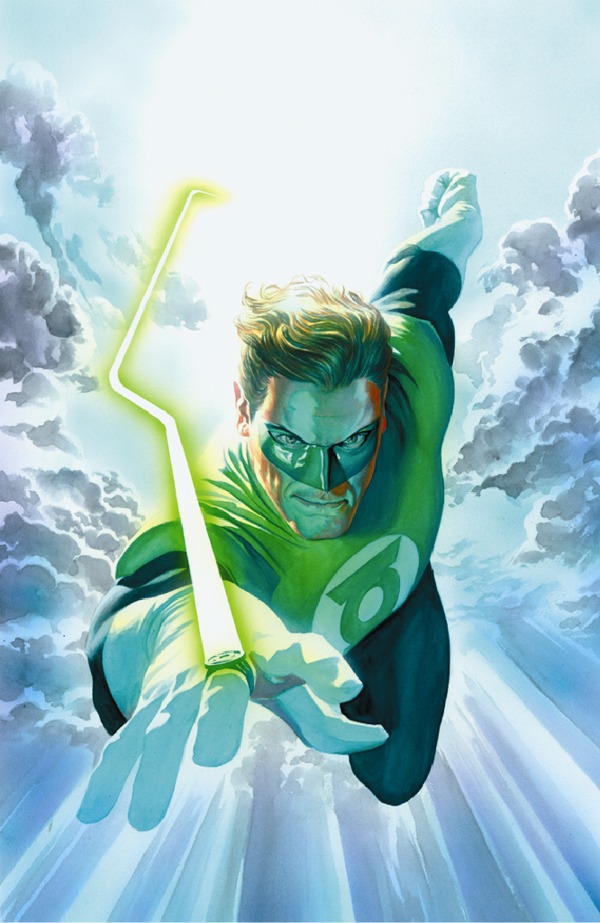
Green Lantern


Created by: 
Bill Finger and Martin Nodell, later re-imagined by Gil Kane and John Broome
First Appeared:
All American Comics #16 July 1940, re-introduced in 1959
Secret Identity:
Identities, in this case: Alan Scott, Hal Jordan, Kyle Rayner, John Stewart (not the Daily Show guy), to name a few...a lot of different people have gotten their hands on that power ring.
Origin: 
A dying alien, just after crash landing on Earth gave test pilot Hal Jordan a ring (and an accompanying lantern in which to recharge it)  that not only gave Jordan special powers but also made him part of an interplanetary police force known as The Green Lantern Corps (that's the better known version, anyway).
Powers: 
Um, what can't he do?
The power ring has, over the years has given Green Lantern such powers as flight, teleportation, matter manipulation, time travel, telepathy, hypnosis, invisibility, force field generation and, my personal fave, the ability to create a giant green boxing glove capable of of squashing his enemies from a distance.
What's Cool About Him: 
See Powers and Secret Identities
What's Not Cool:
See Powers and Secret Identities
Has Been Played by: 
Sadly, only one live action version, played by Ryan Reynolds.
In animated form, The Green Lantern has appeared in many incarnations in everything from the Super Friends to the animated Justice League/Justice League Unlimited series to the recent Batman: the Brave and The Bold. Green Lantern has been voiced by a wide variety of actors including Phil Lamarr, David Boreanaz, Nathan Fillion, Michael Rye, Gerald Mohr and even director/fanboy/egotist Kevin Smith.


The Green Hornet


Created by:
George W. Trendle and Fran Striker
First Appeared:
January 31, 1936 on WXYZ radio, Detroit, later on NBC Radio
Secret Identity:
Newspaper publisher and renowned bachelor playboy about town (sound familiar?) Britt Reid  by day, Green Hornet by night (literally, he's the first guy to do the "by day, by night" shtick).
Origin:
The common thread among the many different takes on the character over the years all involve the following: Reid saves the life of his future sidekick,Kato, while visiting any number of different places in Asia (Kato's nationality has been Japanese, Korean, Thai and Chinese over the years, due to the ever shifting political and military conflicts between the US and various different Asian countries), Reid returns to to the US, becomes publisher of The Daily Sentinel newspaper after the death of his father, Kato invents a bunch of cool gadgets and then the duo proceed to get inadvertently drawn into a life of masked crime fighting.
Powers:
Has a sidekick who knows Martial Arts and who can build technology advanced crime fighting tools like high speed, rocket launching, bullet proof cars and special gas guns that can  knock out  the bad buys out for anywhere from one hour to eleven days.
Other than that, depending on the version, The Green Hornet is either an extremely skilled fighter and detective in his own right or a total doofus who just rides on Kato's coattails or somewhere between the two. 
What's Cool About Him:
You gotta love a guy that puts on a tie before he goes out to kick some ass. The man basically dresses like just about any male cast member of Mad Men, except with a mask and an obsession with the colour green.
While really a crime fighter, The Green Hornet pretends to be a criminal as a means of obtaining the bad guy's trust and learning about all of their nefarious plans.
Britt Reid is the grandson or grandnephew (depending on the version) of the The Lone Ranger. The Green Horent was created by the same guys who made The Lone Ranger and broadcast on the same radio network. The original radio series was aimed a slightly older audience than that of the mysterious masked man of the old west series and touched on many social and political issues. The original radio scripts were often based on actual police file cases.
The Green Hornet has appeared in an impressive number of different mediums: radio, TV, serial, comics, video games and movies.
The 1960's TV series introduced Bruce Lee to the world.
What's Not Cool:
An entire generation only knows The Green Hornet  as a Seth Rogan character.
Has Been Played By:
Al Hodge in the 1936-52 radio series.
Gordon Jones in the 1940 movie serial, The Green Hornet (but voiced by Hodge every time Jones puts on the mask)
Warren Hull in the 1941 sequel serial The Green Hornet Strikes Again (this time, no Hodge)
Van Williams in the 1966-67 TV series
Manu Lanzi in the 2006 French-made short film.
Seth Rogan in the 2011 movie


The Hulk

Created by:
Stan Lee and Jack Kirby
First Appeared:
The Incredible Hulk #1, May 1962
Secret Identity:
Dr.Bruce Banner, though it's not exactly a secret.
Origin:
Doc Bruce Banner, belted by gamma rays, turned into the Hulk.
Powers:
Hulk smash.
What's Cool About Him:
Giant. Green. Can throw tanks to the other side of the desert with a single toss. Get him on your side in am bar fight and you're laughing (just don't do that in front of him).
What's Not Cool:
You wouldn't like him when he's angry.
Has Been Played By:
Billy Bixby as Banner, Lou Ferrigno as The Hulk in the 1977-82 TV series and 1988-90 TV movies
Eric Bana as Banner along with director Ang Lee as a motion capture CGI Hulk in the 2003 movie
Edward Norton as Banner along with a CGI/motion capture Hulk in the 2008 movie
Mark Ruffalo as Banner along with another CGI/motion capture Hulk in the 2012 hit, Marvel's The Avengers and also in the upcoming Avengers:Age of Ultron.
Lou Ferrigno voiced The Hulk in the 1996 animated series as well as (according to IMDB) in the 2003 and 2008 movies, plus the 2012 Avengers movie (he is uncredited in all three films).


Green Arrow


Created by:
Mort Weisinger and George Papp
First Appeared:
More Fun Comics #73, November 1941
Secret Identity:
Leftist billionaire Oliver Queen.
Origin:
When Oliver Queen is abandoned by one of his business rivals on a remote uncharted island, he quickly learns survival skills, mainly through the use of his main hobby, archery. Upon his rescue and return to civilization, he decides to the robin hood thing, only cooler.
Powers:
As the name might suggest, he's really good with a bow and arrow. Plus Queen used his unlimited wealth to create a wide array of unique arrows that can explode, put out fires, disperse tear gas, act as a grappling hook or even become a delivery system for thermonuclear bombs.
What's Cool About Him:
The costume and the blond Van Dyke, for one thing.
The 1970's comic book series in which Green Arrow teamed up with The Green Lantern. Those comics addressed major social and political issues of the day. In one issue, Green Arrow and Green Lantern  had to deal with the fact that Green Arrow's sidekick, Speedy, had become a junkie. From there on in the guy became one of the most outspoken voices of leftist and progressive politics in mainstream comics.
What's Not Cool:
In his first ever on-screen appearance in a 1973 episode of the now classic Saturday morning cartoon, Super Friends, Green Arrow exclaims lines like, "By Nottingham's ghost!", "Great flaming arrows!" and "By Robin Hood's bow!".
Has Been Played By:
Justin Hartley played The Green Arrow on the long running Superman prequel series, Smallville.
Stephen Arnell plays The Green Arrow (or a version thereof) in the current CW network series, Arrow.
The Green Arrow was voiced by actor Norman Alden in the aforementioned Super Friends episode as well as by many other voice actors in such animated series as Justice League Unlimited, The Batman, Batman: The Brave and The Bold, Young Justice and a number of direct to DVD animated superhero movies.


St. Patrick


Created by:
Small shreds of historical evidence embellished by about 1600 years worth of folklore and mythology.
First Appeared:
387 A.D. (estimated)
Secret Identity:
Known as "Patrick" to his friends and family.
Origin:
At age 16, he was brought to Ireland after being captured in Wales by Irish slave traders. He escaped then later returned to Ireland as Catholic Bishop. I know, I know...this one needs some serious retroconning.
Powers:
Superior snake banishing skills, ability to use the shamrock as a metaphor for the Holy Trinity, has a walking stick with debatable divine powers, is a Saint.
What's Cool About Him:
St.Patrick was so good at getting the snakes out of Ireland that many researchers today believe that Emerald Isle at that time never even had snakes to begin with.
What's Not Cool About Him:
Inspires an annual display of the most incredibly rowdy drunken cosplay ever.
Has Been Played By:
The appropriately named Patrick Bergin in the 2000 TV movie St.Patrick: The Irish Legend. Fans everywhere are still waiting for that big, definitive St.Patrick blockbuster, though....maybe Hollywood will get to it after The Dark Knight Rises and The Avengers?


Not an actual ad on my blog, BTW.
I knew I couldn't be the first person to ever make these connections.


Happy St. Patrick's Day Everyone!

Friday, May 6, 2011

Reboots of Classic Old School Heroes


This week, somehow in midst of the killing of the world's most evil man and a ground breaking shift in  politics that this country has not seen in decades, the DVD and Blu-Ray release of The Green Hornet movie, starring Seth Rogan, was almost completely over-looked in the media.

It kinda fits, if you think about.

The fact that Seth Rogan's latest comedy action vehicle is based on a character that is now 75 years old has been down played to the max in the promotion and publicity surrounding the film. The Green Hornet's roots as a radio show, a TV show, two movie serials and an endless amount of comic books remains an arcane story known only by those in the elite Order of Fanboys.

I seriously doubt that the gang of 17 year old kids sitting behind me in the cinema on opening weekend last January had any notion of any such thing. They were all too busy laughing and cheering while texting and tweeting Rogan's best one-liners to their friends.

And that's all cool.

I'm just intrigued by the idea that, for some reason, this particular obscure old school hero found his way to be played by Seth Rogan  in a movie that clearly appeals to an audience that has no knowledge of or previous connection to the character.

Similarly, over the years, we have seen a number of reboots of many of the classic old time heroes of the 30's. Each of these reboots were made many decades after the heyday of their respective character's popularity. Sure, in most cases these heroes have endured and still exist, in one form or another, but only really for a niche audience of cult fans.

Yet some producer somewhere always seems to be interested in resurrecting and updating a Green Hornet or a Doc Savage or a Dick Tracy for a mass audience. Sometimes it may be a case of an old time fanboy who has gone on to become a successful writer, actor, director or producer and just plain has a passion for bringing a beloved childhood icon to the screen. Sometimes it may be investors or studios who believe that Flash Gordon or The Shadow, say, can recapture the "franchise"'s  multi media success and profits of the past. Sometimes it's just that freakish timing and coming together of random elements that actually gets a movie financed and made.

One thing is certain, attempting to capture decades old lightening in a bottle is a feat that sometimes even these almost 80 year old larger than life heroes can barely pull off...


Doc Savage: Man of Bronze (1975)


This 1975 film version of the classic pulp adventure hero is perhaps the most curious reboot of all.

The Doc Savage movie was made at time when superheroes and adventurers of Doc Savage's ilk were extremely rare in feature films, even in those aimed at children. Such characters were historically relegated to movie serials and, later on, Saturday morning TV. Before Richard Donner broke the comic hero box office barrier with Superman in 1978, you had only a handful of such feature  films. Two examples, Superman and The Mole Men (1951) and Batman (1966), for instance, were both based on hit TV show versions of the classic comic book characters.  That and Sindbad's occasional golden seventh voyages was just about the only game in town on that front.

The pulp publication known as Doc Savage Magazine first appeared in 1933. All of the Savage stories were credited to Kenneth Robeson, a name that actually served as a front for no less than nine different writers over the years. The basic premise of the character is actually a little scary when seen though today's  sensitivities.

Clark Savage was raised from birth by an elite team of scientists so as to maximize his strength and intellect to almost super human levels. Looking back at it now, the whole premise kind stings a little too much of master race eugenics. Add to that Savage's blond hair, blue eyes, massive muscles and bronze skin and, well, it's all a bit much for a character that was created in a decade that saw the rise of Nazism and similar fascist movements around the globe.

In the naivete of his time, though, Doc Savage was the all around perfect hero adventure guy. He was a physician, surgeon, scientist, adventurer, inventor, explorer, researcher and musician who, according to the copy on the back of one of his books, "...is dedicated to the destruction of all evil-doers". He also had  a team of "the five greatest brains ever assembled in one group" working for him, a headquarters on the 86th floor of the The Empire State Building, a special flying wing aircraft, a wide array of cool gadgets and an arctic retreat known as, get this, the Fortress of Solitude. You can easily see how Doc Savage went on to influence Superman, Jonny Quest, James Bond, Indiana Jones, Mission: Impossible! and Buckaroo Bonzai.

Interestingly, despite magazines, novels, a comic strip, numerous comic books and a radio series, the good Doc never saw an  on screen incarnation of any kind for the first 40 years or so of his existence. The one and only on-screen version of Doc Savage was brought to life in 1975 by the guy who "said to his bride, 'I'm gonna give you some terrible chills'", George Pal.

Pal, a legendary Hollywood producer, gave those terrible chills to his bride and the world in the 50's and the 60's in the form of films like War of the Worlds,When Worlds Collide, The Time Machine, and The Seven Faces of Dr. Lao (featuring Tony Randall at his most scary...seriously).

For some reason, Pal felt that a film treatment of Doc Savage should not take itself as seriously as most of his other SF/fantasy/horror movies or even, for that matter, as most of the Doc's hard knuckled pulp adventures. Perhaps Pal was persuaded by the massive success of the high camp 60's TV version of Batman. Or maybe he just felt that Clark Savage was just way too square a character to be taken seriously in the hip and groovy 70's. Whatever the reason, the movie did not work, artistically or financially.

The campy style of Doc Savage: Man of Bronze does not go far enough to be anywhere near as entertaining as the 60's Batman camp. The film is just plain not interesting either as camp, adventure, comedy or whatever else it is the movie's uneven tone is trying to achieve. The narrative structure is a very simple A to B story with no surprises along the way, if it can even command that much of your attention.  The former TV Tarzan, Ron Ely, plays Doc Savage. Smiling and posing seems to be his only approach to the role. The fact that we never really see the guy playing Doc Savage with his shirt off speaks to Ely's being a tad long in the tooth for the role at that stage in his career.

Doc Savage: Man of Bronze was directed by Michael Anderson. Among Anderson's other films are Around The World in 80 Days (which one the Oscar for Best Picture in 1956), The Dam Busters (the final sequence of which inspired George Lucas' attack on the Death Star sequence in Star Wars) and Logan's Run (a seminal fave film of my prepubescent years).  You'd think Anderson could have done better.

I remembering reading an interview with Anderson in the early 80's. He cited Doc Savage as attempt at a Raiders of the Lost Ark type film. It was just before its time,that's all. Um...yeah...one small tip on that: watch Raiders of the Lost Ark again and note the lack of fight scenes scored with music by John Phillip Sousa.


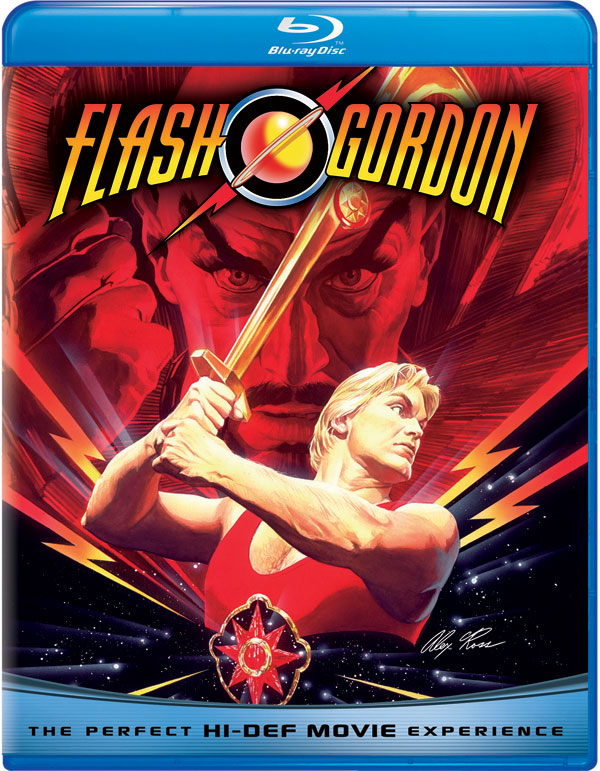
Flash Gordon (1980)


"Flash! Ah-ah! Savior of the universe!". When I think of this film, I can never get that Queen song out of my head. Funny that, it's like they scored the movie or something.

Flash Gordon first appeared as newspaper comic strip on January 7, 1934. It quickly became the first popular mainstream space opera.  Flash Gordon followed the adventures of a Yale polo player and generally good looking, confident guy. Oddly, the 30's was an era where the well-to-do elite were actually seen as heroic and desirable.

Anyway, long story short: through a series of seemingly random circumstances Flash ends up on a rocket ship bound for the stars (in the 1930's, no less). He is accompanied by the attractive all American girl Dale Arden and the brilliant yet still slightly foreign Dr. Zarkof.

Flash lands on the planet Mongo and instantly takes up the good fight against the Ming The Merciless, the evil leader of the planet. Ming is a guy who's got a definite Mongol horde thing going on in his personal grooming and fashion sense.

Flash Gordon has seen reincarnations in a varied amount of mediums: comic books, comic strips, books, radio shows, TV series', Saturday morning cartoons and, of course, "Flash Gordon was there in silver underwear" in three different movie serials (to the best of my knowledge, the only movie serial trilogy ever). The serials starred the man forever linked to the role of Flash (at least to my Dad, anyway), Buster Crabbe. 

In 1980, Flash Gordon saw a cinematic rebirth at the hands of latter-day movie mogul Dino De Laurentis. The timing of this reboot is fairly obvious, coming after massive late 70's SF box office hits like Alien, Star Trek:The Motion Picture, Close Encounters of the The Third Kind and a little movie-that-could written and directed by a guy named George Lucas.

Flash Gordon is also unique on the list in that it is the only reboot that ditched the original setting of its source material. The action is moved from the 30's to the early 80's (it looks more like the late 70's, really) setting. The movie has the look of an old 1930's Sunday comic strip synthesized with 1970's Disco Glam.

Much of the look, design and visual effects in Flash Gordon owe more to movies like Barbarella and Danger Diabolik (also produced by Dino De Laurentis) than they do any of the old Buster Crabbe serials or even the  popular sci-fi blockbusters of the day.  The characters and narrative are much more conventional than any of those aforementioned trippy European SF films, however.

The movie is one I caught up while working at one of the city's first video stores in the early 80's. I got to watch a lot of movies back then.Flash Gordon was among the first.

In the 1980 version, Yale polo playing Flash Gordon is replaced with the the more down to earth star quarterback of the NY Jets Flash Gordon. Watching it back in '81, the film lost me early on. There is one majorly silly scene that crosses over the line from camp to absurdity. It is a scene where Flash, newly arrived on the planet Mongo, suddenly encounters these guards in Ming The Merciless' palace.Coincidentally, the guards look kinda just like football players. Naturally, Flash immediately begins playing offense against the evil alien linebackers. Dale Arden suddenly joins in by taking to the sidelines and acting like a cheerleader, dancing and chanting "Go, Flash Go!" .

I turned it off right there.

That approach to the material seems to have lost a lot of other audiences too. The movie did not do so well at the box office. It was an era when SF box office meant blockbuster genre movies that took themselves just a tad more seriously. Campy self-parody written by the same guy that wrote the 60's Adam West Batman series was, like, so ten years ago. 

I gave Flash Gordon another chance about 30 years later. The Blu-ray format is the great redeemer.

If Logan's Run pioneered the Disco Sci-Fi look in 1976, Flash Gordon took that look to its ultimate logical glitter ball conclusion. Throw in a nice heaping helping of 70's glam rock and that Queen score starts to make a lot more sense.

Flash Gordon is fun on its own terms.

I've never understood producer Dino de Laurentis  obsession with good looking empty male model vessels in leading roles. That being said, Sam Jones as Flash does what he needs to do: look good while throwing not-too-violent punches. Timothy Dalton, as one of Mongo's resistance fighters, is great as always (the best James Bond until Daniel Craig...just had to throw that in there). And Max Von Sydow turns in a great performance as Ming The Merciless. The role continued the great Scandinavian actor's Hollywood streak of Weird Roles For Max Von Sydow To Play.

I must say, though, it would be nice if someone could do a Flash Gordon reboot that's updated  but still true in spirit to its comic strip, movie serials and space opera source material.

Oh...actually...yeah...wait a sec....somebody already did just that...I think it was called Star Wars.


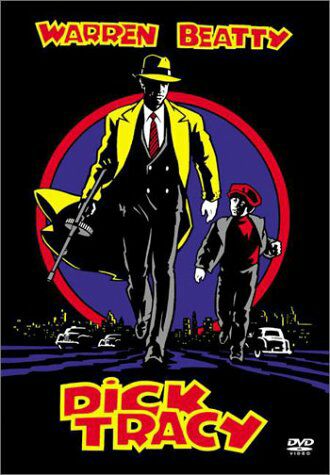
Dick Tracy (1990)


Warren Beatty has, to me, always been intrinsically linked to that New Hollywood movement where movies started to be seen as art in the mainstream for the first time. He starred in the ground breaking anti-hero tone Bonnie and Clyde, the classically 70's political thriller The Parallax View, Robert Altman's master stroke western McCabe and Mrs. Miller and the sexual revolution satire Shampoo (which he also wrote).  Beatty also wrote, directed and starred in the box office smash Heaven Can Wait as well as being a triple threat in one of the most underrated films of all time, Reds. As a writer director and actor, Beatty is known both for his gorgeous mug and his commitment to emotionally real and socially relevant cinema.

So how exactly did this guy end up directing and starring in a movie about a larger-than-life Depression era comic strip super cop?

Dick Tracy was one of the most popular newspaper comic strips ever. Created by Chester Gould, the squared-jawed, hooked-nose tough yet honest comic cop first turned up in 1931.  Tracy was largely a product of the then just ended era of prohibition. Prohibition, of course, had given rise to a great deal of infamous bootlegging gangsters, like Al, the original "Scarface", Capone. Tracy became mainstream America's fictional Eliot Ness (the real life cop that famously brought down Capone). In the daily newspaper comic strip, Tracy routinely went up against any number literally nick-named hoods like Prunface, Flattop Jones, The Mole and Al "Big Boy" Caprice. Dick Tracy was part police procedural, part film noire and all black-and-white bad guys vs. good guys.

Dick Tracy and his trademark yellow trench coat and fedora saw many different incarnations between 1931 and 1990. There was a radio series, comic books, five movie serials (a record for one character, I'm pretty sure), four low budget B-list feature films, one short lived TV series, two animated series and one unsold TV pilot (produced by William Dozier, the guy who gave us the 60's camp version of Batman).

Among Dick Tracy's legions of young fans was a kid named Warren Beatty. Beatty had been wanting to make a Dick Track film as far back as 1975. However, he never owned the rights and back in the 70's Beatty in comic strip movie probably felt like too weird a fit for any studio to back.

In the meantime, a Dick Tracy feature film had been living in what the industry terms "development hell" for decades. The Dick Tracy movie was at one time of another going to be in the hands of directors like Stephen Spielberg, John Landis and, believe it or not, Martin Scorsese. Actors considered for the lead role included Clint Eastwood (a darker gritty take on the character was considered at one point), Harrison Ford (Disney expressed interest in an urban thriller version of Indiana Jones), Tom Selleck (there was screenplay out there that one writer referred to as "uncomfortably campy") and, yes, even Warren Beatty.

By the time Beatty was considered, Disney had their hands on the project. Beatty stipulated that he direct the film as well before accepting the role . The studio wanted nothing to with a guy whose last writer/director/actor project, Reds, went over budget, over schedule  and bombed horribly at the box office too boot. Not to mention that the films' celebration of communism would no doubt have Uncle Walt spinning in his cryogenic chamber. So, to keep the project alive, Beatty bought the rights to the character himself and agreed to absorb any and all financial losses against his directing and acting fees. The movie moved ahead but Disney refused to make any kind of a big financial commitment to the project. In fact, the entire film was shot in 60 days.

After the massive success of Tim Burton's Batman in 1989, Disney decided to commit to a humongous ad campaign for the release of Dick Tracy in the summer of 1990. The campaign paid off. Dick Tracy was a massive hit in its initial release and remains Warren Beatty's highest grossing movie ever.

The end result was worth it too.

Dick Tracy maintains the spirit of the comic strip without heading into that "uncomfortably campy" territory previously explored by the Doc Savage and Flash Gordon movies. The film's story arc is a wonderfully simplistic yet effective morality play. It stands as a valid take on many of Beatty's classic character-based and socially relevant themes.

The great cinematographer Vittorio Storaro (Last Tango in Paris, Apocalypse Now, 1900 and Beatty's Reds) does an incredible job of capturing the brightly coloured comic strip visuals. The film was shot using, in the true tradition of the coloured Sunday comics (keep up with me here, kids), just seven colours. Those colours seriously pop big time on the screen. There are bright red cars, lush green walls and Tracy's hat and trench coat have never looked quite so yellow.  Dick Tracy is a perfect movie for the Blu-ray format...hint...hint....

Dick Tracy also boasts great editing, great make-up (to pull off the likes of villains like Flatop Jones, say), a Danny Elfman score that predates the composer collapsing in upon himself and, thanks to Beatty's extensive Hollywood connections, a great cast including Dustin Hoffman, James Caan and Mandy Patinikin.

Beatty himself was 53 at the time he took on the title role. His age was not a problem for the role as Beatty was still in that "perpetually youthful" stage of his life and Tracy is one of those rare heroic comic characters who seemed to be always drawn to look perpetually middle-aged. I remember most of the comments amongst my friends at the time went something like this: "Warren Beatty as Dick Tracy? Well, at least that's a step up form Michael Keaton as Batman."

Al Pacino as the main villain, Al "Big Boy" Caprice, shows just how well his emotionally raw loudness can be adapted into the realm of comic caricature.

The only real downside of the casting is, well, Madonna as Breathless Mahoney. She really is not in the same league as the other actors in the cast. She was famously cast on account of her relationship to Beatty at the time (and paid only scale just so it all looked good). And, yes, yes, I know what this sounds like: here we go with the straight male fanboy irked by the presence of Madonna in a comic movie. Well, the cardboard stand-up of Madonna from Dick Tracy that I had in my office for years would beg to disagree with you on that point.

I suspect Madonna may have had perhaps a bit too much pull with Beatty during production (kinda like how Guy Ritchie suddenly started making bad movies when he was married to her then started making good ones again after the divorce).

For instance, there is one sequence that is a classic cop-battles-gangsters montage right out of any 1930's gangster film. Beatty nails the look and feel perfectly. It's got all those great shots of tommy guns firing, old style cars careening around corners and spinning newspaper headlines. However, instead of a classic Hollywood Alfed Newman or Max Steiner style score, the montage is set to Madonna singing a slow torch song. It does not fit in the least. The pace of the editing isn't even right for the music. I understand that if you've got Stephen Sondheim writing new songs for you movie (he wrote two for Dick Tracy), you're going to want to showcase them well. That montage was just not the place. The song should have been cross-faded out as a classic score took over. Instead the song plays for its entirety throughout the montage. Either that creative choice was a Madonna Yoko moment or it was one of Beatty's few misguided ideas on the project.

I remember attempting to convince a friend of mine to go see Dick Tracy when it first came out. Her main objections were to Madonna. "No, no.", she said, "I really don't want to have to see Madonna's naked breasts again". I assured her that Madonna (or anybody Else's) naked breast were never going to turn up in a Disney produced movie based on a 1930's comic strip. About a quarter of the way into the movie, as my friend glared at me in the darkened theatre, I was very much proven wrong.

Yep. Probably a a bit too much influence there.


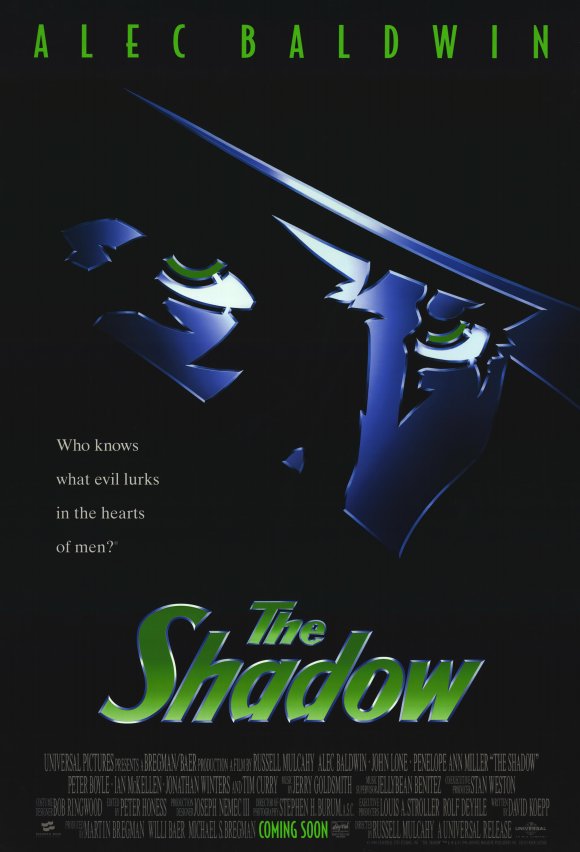
The Shadow (1994)


I find that I have to keep reminding myself that the pudgy middle-aged funny Alec Baldwin I know and love on 30 Rock was once a much, younger thinner, more sparkly eyed, generally hotter and dramatically more intense Alec Baldwin that starred in major Hollywood motion pictures in the 80's and 90's.

The Shadow makes that reminder really nicely. Baldwin plays the title character of the 1994 film adaptation of the classic pulp and radio hero.

The Shadow debuted, in fact, as one of many characters on a popular anthology radio detective series in July of 1930. The character quickly became a favourite and The Shadow Magazine, (published by the same people that published Doc Savage Magazine)  followed soon after. Like Doc Savage, several different writers wrote for The Shadow but were credited under one pseudonym: Maxwell Grant, in this case.

The Shadow was to the 30's what Batman was to the 60's and Spider-Man was to the 00's: a hugely successful superhero franchise (though they did not exactly use that terminology in the 30's).

The Shadow even had his own catch phrase: "Who knows what evil lurks in the hearts of men?" (catch phrases have gotten snappier over the years).

As far on-screen incarnations go, The Shadow had two short lived obscure TV series in the 50's and was treated to a very typical movie serial adaptation in 1940. The Shadow was also seen in series of lower budget b-pictures throughout the 30's and 40's. I've seen one of these, The Shadow Strikes from 1937. If your idea of a good time is sitting through a long dull murder mystery story in which the title character appears twice in the whole movie (for about a total screen time of about three minutes), then I highly recommend The Shadow Strikes.

In the mid-90's, Universal Pictures was banking on The Shadow franchise to live again. The 1994 Shadow movie was meant to be the first in a series of summer blockbusters. The Shadow, though, is a bit of an odd choice for a character to drive mass market event movies.

In his original pulp and radio incarnations, The Shadow can only very loosely be termed a superhero (a term that did not even exist until at least 1938 at that). In many of the early pulp stories, The Shadow only appeared briefly as a mysterious and often unseen deus ex machina whenever the protagonists of the story needed help. His psychic powers were vaguely defined. The Shadow's alter ego, Lamont Cranston, was sometimes even more mysterious a figure than The Shadow himself. Indeed, The Shadow often had more than just one "secret identity".  Even his origin story was never really fleshed out until years later.

The movie draws on many of the better defined characteristics of The Shadow (all of which were established later in the long running radio series). Now living in Big Budget Land, The Shadow is cast in a much more traditional superhero mold. He maintains the dual identities of Lamont Cranston and The Shadow in much the same way that Clark Kent or Bruce Wayne might. The Shadow has his own requisite superhero headquarters, The Inner Sanctum. The Shadow even has a consistent iconic costume. The plot too is your very traditional "bad guy trying to blow up the world before superhero can stop him" story.

That's the main problem with the film: the screenplay, written by David Koep. Koep has written many Hollywood blockbusters over the years including Jurassic Park and Indiana Jones and the Kingdom of the Crystal Skull. Koep's main weakness as a screenwriter, I have found, is that all his screenplays tend to fall apart in the third act. No big, when you think about it, really. The third act is only the conclusion of the entire movie.

The Shadow sadly meets the same fate.

The film also suffer a little from director Russell Mulcahy's tendency for big dramatic action that has no real anchor in anything else in the film. The only film where Mulcahy really pulls off that kind of action is in his classic movie, Highlander.

Alec Baldwin is almost everything that is interesting to watch in The Shadow. Those eyes, that voice, that incredible delivery and that consistently grounded acting are quite the combo. Baldwin's timing is impeccable not just in comedy but also in drama (though he does get out a few bon mots in the dialogue of this film). Baldwin's earlier work with the Pulitzer Prize winning playwright David Mamet served him well on that front. I can tell you from experience that Mamet is all about timing (along with some of the most intricately constructed sentences to ever contain the word "motherfucker".).

When The Shadow allows himself to be seen by others, Baldwin's face is magically and digitally altered to the angular-nosed Shadow of the comic strips and pulp magazine covers. The character's mouth is covered by his iconic red scarf. In those moments Baldwin delivers every line as if were appearing in a classic old school radio play. Keeping that kinda stuff consistent with the character is a feat that would have seen many actors falling flat on their lovely faces. Baldwin pulls it off. He also always has this wonderful relationship with the text, giving every line a life and bounce of its own.

Alas, The Shadow did not do nearly well enough at the box office in '94 to create a big time box office franchise.

Even if it did, we all know that Alec Baldwin would have walked away after first film anyway.


The Phantom (1996)

The colour of The Phantom's costume was apparently altered to fit the Blu-ray format.
The Phantom, created by Lee Falk,  first appeared as a daily newspaper strip in February of 1936. The Phantom was a similarly themed hero to The Shadow. The mysteriously named hero with slight suggestions of the occult was a popular notion in the 30's, it seems. The Phantom, however, had no psychic or mystical powers. Nor did he have any super human powers of any kind.  The Phantom did have such an enigmatic presence, though, that his physic and mystical powers existed only in the minds of his enemies. The Phantom was thought to be immortal. In reality, the mantle of The Phantom was passed down from generation to generation creating the impression that there has always been just one Phantom (unless, of course, someone  hit upon the idea that more than one person can wear a costume). Also like The Shadow, The Phantom packed a two gun holster. Unlike The Shadow, it kinda made a bit more sense that a guy without special powers might need the aid of a gun or two every once in a while.

Also like The Shadow (I'll get off this Phantom/Shadow comparison thing soon, I promise) the film version The Phantom was made in the 90's. The movie was intended to launch a big blockbuster franchise but never quite got there. With The Phantom and The Shadow (last time, seriously), the success of the film versions of the characters are largely in the hands of the lead actor.

In the early 90's, Billy Zane made a mark for himself by playing the psychotic bad guy (is there any other kind?) in an early Nicole Kidman thriller titled Dead Calm. The part helped land him the title of role in the 1996 film version of The Phantom. Zane was able to make the transition from psychotic bad guy to comic strip hero with aplomb. He put quite a lot of effort into the role too.

The Phantom was one of the first heroes to have that traditional superhero look: tights, a mask and underwear worn on the outside. The entire outfit was purple and skit tight too boot. If you have ever been to any kind of a comic con anywhere, you are well aware of the fact that it is not every guy that can pull off a skin tight outfit. Pretty much any man who is not currently named Prince has a hard time with purple as well. Well aware of this fact of life, the producers of The Phantom pulled a Michael Keaton and had a foam rubber muscled suit made for Zane. Turns out, though, that Zane had a lot of discipline and a really good personal trainer. He slimmed down and bulked up to rise to the challenge of the all purple skin tight costume. The foam rubber muscles were ditched. Watch the movie: that's all Zane, baby.

However, there is more to Zane's Phantom than just the bod. The actor is able to make The Phantom just that right combination of charming, friendly and heroic yet also tough, brooding and mysterious when he needs to be. He carries the film through some of its weaker moments. While The Phantom never took off as a big movie phenomenon it did impress James Cameron enough to cast Zane in one of the highest grossing movies of all time, Titanic.

The Phantom is, on the whole, a fun and entertaining movie. The action walks that fine line between grit and fun. The film even limits the use of The Phanom's guns to only being used to shoot weapons out of his enemies hands. Such upstanding 1930's-style heroic role model behaviour was extremely rare in the post-Schwarzenegger/Rambo era, even in family friendly adventure movies.

The sequence where The Phantom jumps out of a plane to his land on his galloping horse Hero (while his trained Wolf,  Devil runs alongside) is the highlight of the film. It's great stunt: well shot and very nicely executed. It was still  the pre-CGI stunt era back in the mid 90's. The only real problem with the scene is that happens about half way through the movie. The climax of the film, sadly, offers nothing quite as spectacular or dramatic.

The Phantom has a similar problem to The Shadow (whoops, sorry, slipped back there): screenwriter David Koepp. Once again, Koepp's screenplay collapses in the third act. Kind of a problem for an comic strip action movie. Director Simon Wincer's engaging direction is not able to save the day.

The Phantom is primarily a jungle based costumed hero (he is the defender of the fictional African nation of Bengalla). Situated as the film was in the mid-90's, the whole thing kinda plays like Indiana Jones Meets Batman.

That's reason enough for a revival of the classic old school Depression era hero right there.


The Green Hornet (2011)


Despite the impression that one may get from this blog, my Facebook page and my most recent Halloween costume, I am not the single greatest Green Hornet fan that ever lived. If I were, I doubt I would be able to bring myself to write anything good about the Green Hornet's big screen incarnation in 2011.

All 1930's action heroes began as either radio shows, comic strips of pulp magazines. In The Green Hornet's case, it was a radio show. The Green Hornet debuted on radio in January of 1936.  It followed the story of Britt Reid, publisher and owner of The Daily Sentinel newspaper by day and the masked vigilante known as The Green Hornet by night. The Hornet's angle was kinda cool and different. He pretended to be a criminal while really being a good guy.

'Natch, The Green Hornet had a really cool car with lots of weapons and gadgets. The car, known as The Black Beauty, was always driven by the Hornet's sidekick, Kato. This being the 1930's, Kato was your classic subservient benevolent racial stereotype. Kato was a character that took some time to turn around.

The Green Hornet was also made into movie serials, comic books and, perhaps most famously as a prime time TV series in the 1960's.  The TV show cast up-and-coming martial arts star Bruce Lee in the role of Kato. Lee and his Kung Fu mastery went a long way towards turning around the role of Kato. Though, his lines in the series were still a bit on the scarce side.

Rumors of a Green Hornet movie have been flying around since the 90's.  At one time or another the Hornet was supposedly going to be played by George Clooney, Greg Kinnear and Mark Wahlberg. It was not until the sudden "make a movie about every superhero ever" craze kicked in to high gear that The Green Hornet movie kicked into high gear as well. The reception to the news of the casting of Judd Apatow's favorite goofy guy, Seth Rogan, in the title role was received with grace and poise by fans on the Internet.

Uh-huh. Yeah. Right.

Not since the rumours of Nicolas Cage playing Superman, have I seen such fanboy vehemence. The immediate question on the lips of the more reasonable commentators was "Will it be serious or funny?". Serious, we were told. Although when it was announced that the director of Eternal Sunshine of The Spotless Mind and Be Kind Rewind, Michel Gondry, was involved, I knew that we might be in for something a little bit more off the beaten path.

Turns out, no.

Aside from one or two odd little scenes here and there, The Green Hornet is the most mainstream Hollywood movie that Gondry has ever made. And, oh, yeah. They went with the funny angle too.

While I would have loved to see a slimmed down and bulked up Seth Rogan take on a dramatic role, I did not have a big issue with turning The Green Hornet into a comedy. I also didn't have a big issue with the casting of Rogan. Nor do I really care about the way the movie significantly changed certain characters and situations. In the movie, for instance, D.A. Scanlon, the Hornet's traditional lone ally in law enforcement, is turned into a majorly dickish character. It doesn't even bug me (that much) they went with the oldest superhero satire gag in the book: make the hero into a dumb doofus and the sidekick into the real brains of the operation. If nothing else that did finally help turn around Kato's 75 years of tereotyping.

No, my biggest problem with the movie was the portrayal of The Green Hornet and Kato (as played by Asian pop star Jay Chou) as a couple of big time partying bros who loved taking their cool car out on the highway and blowing shit up. Fighting bad guys seemed to be more of an after thought.

The comedy, the one-liners and the uber-cool slacker nature of the characters isn't necessarily a bad thing. My problem is that I never got the sense that these guys had any sense of a higher purpose. Even Inspector Closeau had a sense of higher purpose. Neither of the two leads seemed to really care about stopping the bad guys or any of the injustices they were perpetrating.  It seemed like they were just having fun and that's it. In fact, The Hornet and Kato seemed more concerned with competing amongst themselves. There is one scene where Britt Reid and Kato get into a ludicrous brawl in their Green Hornet club house that, frankly, I did not buy for a second.

That didn't matter to most of the audience at the opening weekend screening that I attended. For them, It was just a  fun movie.

True dat.

The Green Hornet is well directed. Gondry proves that he can direct fast-paced over-the-top action with the best of them. Oscar winning actor Christophe Minz, of Glorious Basterds fame, is great playing a villain once again. It's amazing how well Minz understands the fine line between comedy satire,camp and serious action the movie is precariously walking most of the time.

The whole exercise perplexes me. Just like all the rest of the heroes in this blog,  what I don't get is: why that character? Why at that point in time?

Clearly, they are not banking on kids knowing and loving The Green Hornet. The advertising certainly does not play on the tradition of the character in the way other superhero movies have. Even the DVD and Blu-ray special features do not seem to be about the rich background of The Green Hornet.

The film itself makes little or no reference to the character's history save a couple of references to the movie serials that were so obscure they even had to be pointed out to me. And, yeah, there is one bit towards the end of the film where the screen fills with the Green Hornet logo from the 60's TV series while theme from the old show plays (Al Hirt playing Flight of the Bumble Bee -it's awesome). However, for the uninitiated, that's just one more piece of odd random humour that the movie seems to love.

Sure, they got me in theatre but how much money are they really gonna make off the likes of me?

The whole enterprise comes of as sorta nostalgia in vacuum...fun nostalgia, actually....and, as vacuums go, well, it is a pretty entertaining one..

Friday, January 14, 2011

The Green Hornet and Other Great Pre-Superhero Superheroes


Sure, yeah, there's a big new blockbuster Green Hornet movie opening today. It may or may not be a huge hit and it may or may not forever connect the roles of The Green Hornet and Kato with the oddly cast duo of funny guy Seth Rogan, and pop singer Jay Chou.  Even so, The Green Hornet has a rich and varied history dating back to the 1930's. Among other things, the 30's was an era of early prototype superheroes who appeared in pulp magazines, radio shows, feature films, comic strips and movie serials.

So when it comes to The Green Hornet, forget Seth Rogan and Jay Chou, forget Van Williams and Bruce Lee of the 60's TV series and even forget Gordon Jones and Keye Luke of the 1940's movie serials (okay, okay, so nobody really remembered them anyway). Instead remember Al Hodge and Tokutaro Hayashi who originated the roles of the Green Hornet and Kato on radio in 1936.

The Green Hornet appeared two years before Superman burst on to the pop culture scene of the waning days of the Great Depression. The first appearance of the Man of Steel ushered in a new era of the superhero and the comic book (both are still very much with us today, mainly in the form of big Hollywood movies like The Green Hornet).

Before June 1938, though, there were a bunch of pre-supehero superheroes. While not strictly speaking by today's pop culture standards, superheroes, all of these characters disguised their identities, possessed a special skill set of extraordinary abilities and had a distinctive outfit that they would not be caught dead without when fighting evil.

As a side note, just so that everyone out there has a realistic idea of my age, all of these heroes are before my time. I've developed an appreciation for them either from my dad's stories about the beloved heroes of his youth or through a lifetime of an almost professional level of pop culture geekiness...or perhaps both.

In addition to The Green Hornet, here are some of  my personal faves, in no particular order.

The Phantom


The Phantom does what few men can do: pulls off wearing an all purple skin tight outfit.


The Phantom was created by legendary comic strip artist Lee Falk. The character first appeared as a daily newspaper comic strip in 1936 (before comic books, newspaper comic strips featured almost all of the most popular two dimensional characters or the era, both funny and serious).

The Phantom went on to appear in film, TV, comic books and video games over the years. Creator Lee Falk worked on the strip from 1936 till 1999, the year of his death. Wow. 63 years writing the same character. As a fellow professional writer, my hat goes off to you, Mr. Falk.

I also take my hat off to your great premise (I'm not really into wearing a hat today anyway). The Phantom is a multi-generational hero. I'm not talking about his appeal. I'm talking about the actual character. See, in the fictional African nation of Bengalla (don't ya just love 1930's writing?), there has always been a Phantom, dating all the way back to 1536. That's the year that Christopher Walker's father was killed by pirates off the coast of Bengalla. From then on, Walker swore an oath to dedicate his life to fighting evil. It is an oath passed down from generation to generation, all the way to Kit Walker, the current and 21st Phantom (all of The Phantoms have the first name of Kit in their true identities).

Thus The Phantom has become something of a a mythical legend in Bengalla. This being the 1930's, of course, the native African population can only come to the conclusion that this guy is immortal. After all, they cannot possibly conceive of the notion that different people might be able to wear the same costume.

And while we're in the business of taking 1930's comic characters too seriously, boy, it's a good thing none of the Walker kids over the years ever wanted to ditch the family business and pursue a career in the arts.  That would have been a great victory for evil, no?

Ironic detachment aside, The Phantom is still a very cool character. He got a mystical allure about him and is surrounded by all the pulp adventure props: pirates, jungles, swords, guns and a secret headquarters in cave (sound familiar, Mr. Wayne?). He fights evil in Africa (almost all of it perpetrated by white people-so there is some sense of historical perspective there). The Phantom relies on absolutely nothing more than his intense physical strength, his superior wits and the fear surrounding his mythical reputation as "the ghost who walks" and "the man that cannot die",  along with a trained wolf, horse and falcon and two semi-automatic side arms. But that's it. That's all he's got on his side.

The Phantom is an enduring, popular, if somewhat obscure, character.

There are a number of different comic book runs in many different countries around the world and the newspaper strip is still running. That in itself is stunning; not that the strip is still running but that there are still newspapers.

There is also a 1940 film serial of The Phantom, an unaired 1961 TV pilot (um, hello youtube?) , at least two TV cartoon versions, a coolly received 1996 film starring Billy Zane and a really lame-o 2008 TV miniseries/pilot shot here in Montreal (my apologies to all my actor pals that were in it-it's not you, guys, it's almost everything else).

In the wake of the current comic book superhero movie craze, there is a new film entitled Phantom: Legacy (no relation to the graphic novel) in development. Hopefully, it will make more of dent than this last big screen outing:


The Lone Ranger 


The Lone Ranger as he originally appeared on radio

"To the dump, to the dump, to the dump, the dump, the dump, dump, dump..." Sorry. Could not resist that one.

The Green Hornet's granddad  (more on that later), The Lone Ranger was the first cowboy superhero. A masked man with superior gun fighting and horse riding skills who was "riding the plains searching for truth and justice", the character of The Lone Ranger was created for radio in 1933. The masked man of the west was created by George Trendel and Fran Striker, the same duo that would later create The Green Hornet (but, again, more on that later). 

The use of the now-more-closely-associated-with-The-Lone-Ranger-than-Rossini William Tell Overture was largely on account of the fact that classical music was in the public domain and required no fees or royalty payments. The original premise of The Lone Ranger was so good that it could not possibly last. In the early radio shows, the character's true identity was never revealed nor did he have an origin story.  The audience was as in the dark about the mysterious masked man as the people he helped. Hence the now famous "Who was that masked man?" line.

But, as is the often the case today, Hollywood fucked it up. 

The release of the 1938 Republic studios serial added a back story that fans today would use the word "apocryphal" to describe.  For the record,  Republic Studios made some of the best theatrical serials ever (Spy Smasher, King of the Mounties, Manhunt in the African Jungle, to name a few) but this ain't one of 'em.  Not only did they add an origin story and give the character a secret identity but their version had six different Lone Rangers. 

Holy Tim Burton's thankfully never made take on Superman!   

Were there the equivalent of Comicon back then (Radiocon?), director William Whitney would have been booed off the stage.

With the popularity of Republic's version, the radio show producers had no choice but to incorporate some of the serial elements into the The Lone Ranger radio show and thus into the overall official masked man mythology.  So now it turns out that The Lone Ranger was-sigh-once a Texas Ranger (about a hundred years before Chuck Norris' Walker made the Rangers a household name) named Reid (Green Hornet connection alert), first name Dan or John, depending on the version.  Reid and five other Rangers were ambushed by the notorious outlaw Butch Cavendish. Reid, the only survivor of the attack, was found barely alive and nursed back to health by a Native American (though that's not exactly the terminology they used back in the day) named Tonto .  Tonto became The Lone Ranger's faithful companion. Tonto also became shorthand for "benevolent racial stereotype" for years to come.


The Lone Ranger reached icon status in the hands of actor Clayton Moore in the 1949-57 TV series. Aimed almost exclusively at a kid audience, the show made the masked man, his horse Silver, Tonto, and all their exploits into tired corny worn cliches. It all seemed pretty silly to anyone over the age of eight. 

The Lone Ranger did uphold some pretty high standards that you don't see much of in this age of the quasi-anti-hero movie superheroes like Wolverine and The Dark Knight. The Lone Ranger would only use his guns to shoot guns out of the bad guys's hands. He never shot to kill or even to wound.  He never smoked or drank.  He always used perfect grammar without the use of slang or colloquialisms. Al Swearengen, he ain't.

Many comic book versions, two Clayton Moore-Jay Silverheels feature films, two animated TV series (including an animated Lone Ranger-Brady Bunch crossover...I'm serious) and video games followed in the years to come. Most curious of all was a 2003 pilot for a WB Network teen oriented reboot starring Chad Michael Murray, of Dawson's Creek fame, as The Lone Ranger.

In 1981, there was a really bad Dino DeLaurentis produced film titled The Legend of the Lone Ranger. It starred the unknown (now and then) Klinton Spillsbury as the Lone Ranger. Spillsbury must have been pretty bad as all of his dialogue was redubbed by Stacey Keach. A pre-Twin Peaks Michael Horse played, what was by 1981, the racially problematic role of Tonto. 

I remember watching this movie once on VHS back while I was working in a video store in the 80's. As I recall, the film's only bright spot is its last line. After taking forever to foil an assassination attempt on then US President Ulysses S. Grant, The Lone Ranger triumphantly rides off into the sunset. President Grant, incidentally, is played marvellously by a slumming Jason Robards, who totally nails the immortal line "Who was that masked man?"


Zorro


Anyone else suddenly have the odd sensation of being in my dining room?


Zorro is one of the earliest masked heroes. He inspired both Batman and Indiana Jones. Spanish for Fox, Zorro is arguably the world's fist superhero. Not only does he hide his identity (not an absolutely essential superhero trait but you get my point) but he also possesses some extraordinary abilities: incredible swordsman skills, excellent horsemanship, stealth, guile, cunning and he can carve a pretty mean Z too. 

Zorro first appeared in 1919 in a story called The Curse of Capistrano in the pulp publication All Star Magazine. The story was written by a New York-based pulp writer named Johnson McCulley and was serialized over several issues. In 1920, all of the installments were released as a novel under the title of The Mark of Zorro. McCulley was no doubt unaware of the magnitude of his creation at the time. Zorro's true identity is revealed to everyone at the end of the story.

The husband and wife silent movie star team of Douglas Fairbanks and Mary Pickford has just founded a studio called United Artists in 1920. They came across the book and chose The Mark of Zorro as the first film for their new studio. The movie was such a huge hit that it prompted McCulley to completely ignore the ending of the first book and go on to write 60 more Zorro novels. Those books and the enduring popularity of Zorro prompted more feature films, movie serials, radio shows, TV series, cartoons, books, video games and comic book adaptations that still continue to this day.


Zorro is actually Don Diego de la Vega, a nobleman living in the small pueblo of Los Angeles in Spanish colonial California (the date is not mentioned in the original story but that places the action some time between 1781-1821).  In most versions Don Diego adopts the character a wimpy cowardly fop so as to avoid suspicion of his dual identity. It's an idea that Bob Kane openly lifted when creating Batman and his alter ego, Bruce Wayne (along, possibly, with the cowl, the cape and the general dark look of the character).

The ideological premise of Zorro is that a benevolent aristocracy must look out for the oppressed peasants. The peasants, of course,  inherently lack the ability to stand up for themselves. If that struggle means conflict with the established order and other aristocrats, so be it (but be sure and hide your own identity so as not to threaten your wealth and property). Not written by a Marxist, in other words. 

Quite the opposite, in fact. 

The whole premise smacks of an allegory to the American Revolution. Taking into account the historical context of Manifest Destiny, the coming Mexican-American war and the eventual assimilation of California into the USA, then Zorro, really, is the ultimate agent of ideological and cultural assimilation.

Adding to the assimilationist nature of the character is the presence of only Caucasian actors in the role. That did not change until a 1974 Mexican made film gave pop culture history its first ever actual Hispanic Zorro. Antonio Banderas continued to carry the ethnically accurate casting torch in the 1998 reboot  The Mask of Zorro and its 2005 follow-up The Legend of Zorro. Otherwise, it's been white American-sounding guys wielding the swords of justice all the way.

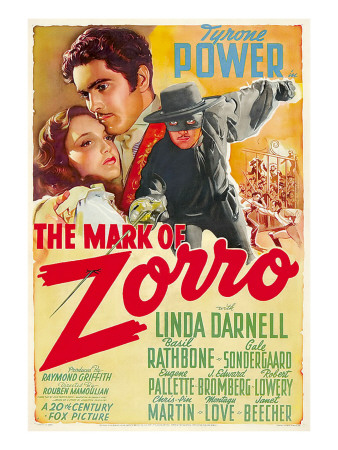
My endowing a pulp adventure character with ideological, historical and cultural interpretations aside, Zorro, when done well, is a really fun, cool guy to watch in action. He's also the only character on this list that has seen major mainstream popularity outside of the male youth and comic book geek audience.  Part of the mainstream appeal may be on account of the sexy masked Latin lover angle that is often played up to the hilt. It's the kinda thing that opens Zorro up to a much wider (ie: female) audience. Well, that and Tyrone Power's tight bullfighter pants.


After the era of Douglas Fairbanks and Tyrone Power (actually a white guy, for my younger readers), Zorro came to TV in the 50's. Much like the Lone Ranger series, the Disney TV show brought Zorro to a massive audience while at the same time systematically suckifying and borifying (those are real words, right?) the character. 

There's also the 1975 French Spaghetti Western take on Zorro starring Alain Delon, the really very homophobic Zorro The Gay Blade parody movie starring George Hamilton and Chilean novelist Isabelle Allende's wonderfully spiritual and culturally appropriate reinvention of the iconic character in her 2005 novel simply titled Zorro.


The best of all the Zorro's for me are the Republic theatrical movie serials. Usually  consisting of 12 or 15 fifteen minute episodes or chapters, these films were originally made to to be shown once a week in theatres. Each chapter, of course, ends in a cliffhanger designed to get audiences back in theatre the following week to see how the hero cheats death once again. The resolutions of those cliffhangers are some of the most obvious cheats in cinema history. In the days before TV, that cynical ploy kept kids coming back for more in massive numbers for over 20 years. 

Unlike the Lone Ranger, Republic Studios did the Zorro thing very well. They produced five Zorro serials in all: Zorro Rides Again, Zorro's Black Whip (actually about a female descendant of Zorro and the first ever woman serial hero-but that's a whole other blog), Son of Zorro, Ghost of Zorro (starring a pre-Lone Ranger Clayton Moore) and my personal favorite of  them all, Zorro's Fighting Legion.  Zorro's Fighting Legion used an idea only previously seen in McCulley's novels: a legion of Zorro's led by the one true Zorro carry on (K, so the Marxists do take over a bit there). It's also, like all the other serials Zorro or otherwise, all about the action; no politics, no romance, no character development, just lots and lots of fights and chases. 

The entire reason why Indiana Jones has a whip was 'cause Spielberg and Lucas wanted to rip-off all of Zorro's best whip-related stunts in Raiders of the Lost Ark. Take a look at this clip and see if anything seems familiar:


The Shadow


Definitely some lurking here.


"Who know what evil lurks in the hearts of men?"

"Who knows who will get that reference in 2011?"

"The Shadow knows!"

That's a slight embellishment of the classic opening of the long running Shadow radio series.  The Shadow premiered on radio in 1930 but had been appearing in the pulp publication Detective Story Magazine for quite some time before that. There is no individual writer who is credited with The Shadow's definitive creation.

Which is kind of appropriate to the nature of the character. 

The Shadow is a mysterious figure. In most versions, he wears a big black cloak, a black fedora, red scarf and/or a crimson lined cape (that he would often drape over the lover part of his face) along with a black trenchcoat or black business suit.  He possessed various mystical mental powers including hypnosis, the ability to influence other people's thoughts and, in a clever invention for the medium of radio, the power to "cloud men's minds so that he cannot see them".  It was great device for radio. It meant much maniacal laughter on The ("invisible") Shadow's part and much freaking out on the bad guys part. In addition to his incredible mental powers, The Shadow (like The Phantom) packed two semi-automatic hand guns. It seems weird to me that all these mystically themed heroes needed the help of not one but two guns. My best guess is that these characters were initially up against the more conventional and better selling cowboy stories in the pulp adventure magazine and comic strip marketplace. They probably needed some way to compete with all those two-gun kids.

In the pulp magazines, The Shadow had two different alter egos. Now that's crafty. For radio and all subsequent versions, it was simplified to one: Lamont Cranston.  The origin stories differ but it is generally accepted that Cranston "a wealthy young man about town" acquired his powers while traveling in "far east Asia" (a setting that opened the door to a great deal of -shall we say- dated ethnic portrayals). The origin story has been greatly embellished in subsequent adaptations (most notably in the 90's movie version) but that's about as far as it went on radio.

In the late 1930's, The Shadow was voiced by a hot up and coming nineteen year old actor named Orson Welles. Nobody is really sure what happened to the guy after The Shadow but, man, did he ever hold great promise. There were three feature film versions of The Shadow and one 15 chapter Columbia serial through the 30's and 40's. None of them really do the character any justice. There were also a comic strip and several comic books (all these guys got comic books once the Superman led boom kicked in). 

In 1973, DC Comics attempted to relaunch The Shadow. I remember buying the first issue and showing it to my dad (The Shadow was his era all the way). He looked at for a moment and simply hrumphed at it. Fans never change, do they?

In 1994, a pre-dumpy, pre-funny guy on 30 Rock Alec Baldwin played The Shadow in a big screen adaptation directed by Rusell "Highlander" Mulcahy. I remember watching it when it came out. I simply hrumphed at it. Fans never change, do they?

George Lucas openly admits that the "Jedi mind tricks" are lifted directly from The Shadow (and, BTW, in case you didn't realize it, nothing in Star Wars is original). If you listen to the radio shows, you can hear some "these aren't the droids we're looking for" type scenes when The Shadow uses his mental powers to influence "weaker minds". In fact, when the '94 film came out, some lunkhead critic actually accused The Shadow of ripping off Star Wars. 

"Who knows how that guy got his job?" 


The Green Hornet


The greatest actor to ever portray The Green Hornet


If your only frame of reference for The Green Hornet is the just released Seth Rogan movie, chances are you have not read this blog quite this far. This one's for all of you that have stuck with it.

So let's get the basic premise down. The Green Hornet is rich suave newspaper publisher Britt Reid. Reid is either the grand-nephew or the grandson of Dan (sometimes John) Reid, aka The Lone Ranger.  Not surprisingly The Green Hornet shared the same creators with The Lone Ranger. Hence the connection.  

By night Reid disguises himself as The Green Hornet to fight crime along side his Asian sidekick, Kato (you see benevolent racial stereotyping Ranger connection, kimo sabe?). Kato has over the years been Japanese, Chinese, Phlipino and Korean in origin, depending on the politics of the era. He drove The Hornet's cool car, The Black Beauty. The car was, of course, equipped with all kinds of cool gadgets. The Green Hornet also has a "sting" weapon that dispensed gas designed to knock out bad guys instead of shooting them. In the TV version, The Hornet Stinger (as they called it) became an ultrasonic sound wave weapon.

The Hornet's modus operandi is that he pretends to be a notorious criminal. With that ruse, he can easily gain entrance to many an evil lair, get info, even make the bad buys cut him in on their action (the proceeds of which go to funding his crime fighting) or make a deal with one set of bad guys that gets them to take out another set of bad guys. All the while, The Green Hornet's true motivations are safely hidden. To seal the deal and take suspicion of him, Reid makes sure that his paper takes an anti-Hornet editorial stance. It's a brilliant scheme really. 


The Green Hornet also has a great outfit: green tie, green trenchcoat, green fedora and a green mask. It was a every guy on a commuter train circa 1962 wearing all green and a mask kind of a look. But, hey, I've always loved heroes that put on a jacket and tie before they go out kick some evil ass.

In the age before Seth Rogan was born, The Green Hornet is probably best remembered for the short lived 1966-7 TV series. The series was produced by William Dozier, hot off producing the campy hit Batman TV show starring Adam West. Dozier was smart enough to know that the silly Batgags format was a beat you just couldn't hit twice. So The Green Hornet show played it straight. After the silliness of Batman, it seemed that audiences were just not ready for a straight superhero show in 1966.

If nothing else, The Green Hornet TV series introduced Bruce Lee to the world. It starred Van Williams as The Green Hornet and Bruce Lee, as, of course Kato. You gotta hand it to Lee for forever elevating Kato's sidekick nature out of the hackneyed Tonto territory into the serious ass-kicker territory of a martial arts master. Martial arts were not associated with Kato before Bruce Lee. Indeed, they were generally unknown to the mainstream world before Mr. Lee. The show is worth watching just to see Lee leave a bunch of Hollywood western bar fight type stunt men in the dust.  Even when Lee is just running to The Black Beauty, he displays incredible grace and agility.  Today, the show is often sold on Lee's merits alone:


Before TV, there were two Green Hornet movie serials: The Green Hornet (1940) and The Green Hornet Strikes Again (1941). The former starred  Gordon Jones in the title role and the latter Warren Hull. Both serials, though, used the voice of the radio Green Hornet, Al Hodge, whenever the mask was on. Both also starred a pre the-old-Chinese-guy-in-Gremlins and pre-Kung Fu, Keye Luke in the role of Kato. Luke was a great character actor and one of the few Asians working in Hollywood at the time. For obvious reasons, Kato was no longer referred to as Japanese by 1941. In these serials, he is referred to as Korean.

In later adaptations, Kato became Filipino then finally returned to Japanese again by the 1960's. As far as Hollywood casting went all Asians are interchangeable (we still see that today).

As with most serials based on comic strip, pulp or radio characters, The Green Hornet serials mainly plugged pre-existing established characters into an almost constant fight, chase, then cliffhanger formula.


As I mentioned earlier, The Green Hornet began as a radio show. The character was originally called The Hornet but was changed to The Green Hornet for copyright reasons.

Like The Lone Ranger, the radio show utilized cheaper public domain classical music. In this case, Flight of the Bumblebee by Nikolai Rimsky-Korsakov (Bee-Hornet, get it?). Probably the best version of the "theme" was used in the 60's TV show. It featured legendary jazz trumpeter Al Hirt playing an amazing version of the piece. Nothing on the show ever quite matched the excitement of that theme. It's a version that was famously used by Quentin Tarantino in Kill Bill, part 1.

The Green Hornet has also appeared in many different comic book adaptations beginning in 1940 and continuing right up to 2011.

A Green Hornet feature film had been in development for decades. Finally, with the current comic book movie craze, the movie was finally green lit (no pun intended but I'll take credit for it anyway). 

Michel Gondry, director of Eternal Sunshine of the Spotless Mind and The Science of Sleep was, oddly, chosen to direct The Hornet movie. Fans, though,  are probably even more miffed by the casting of Judd Apatow comedy star Seth Rogan in the title role and Asian pop star Jay Chou as Kato. Chou's Kato, thanks to events set in motion by Bruce Lee 45 years ago, seems to have broken out of the subservient sidekick role. In fact, in the trailers, it seems like he's the guy in charge. 


The trailers also suggest a decidedly comic tone to the movie. However, that may just be a ploy to put as many millions of asses in the seats as is possible opening weekend. That's all the time they've got before potential word gets out that the movie is not really a comedy and/or is not really very good. Either is possible. Personally, I'm wary of a movie whose release has been delayed twice already, only to finally come out in the studio's January garbage dump release season.


Wannna go Saturday?

Finally, I'd like to close on this fascinating low budget indie short film made in France in 2006. Out of all The Hornet's incarnations, I find this one the most intriguing.


Feel The Sting Everybody!