About Me

My photo
Montreal, Quebec, Canada
I am a Montreal-based actor, writer and comedian. When U.S. President John F. Kennedy was shot, I was three days old. I cried all day. My favourite books of all time are Moby Dick by Herman Melville, The Last Temptation by Nikos Kazantzakis and The Ewoks Fun Time Activity Book by Chirpa and Pamploo. I am a member of The Vestibules, On The Spot Improv and The Best Buy Battery Club. Except for the Battery Club, I've been at all this stuff for over 20 years. Enjoy my blog.
Showing posts with label Jack Kirby. Show all posts

Monday, March 12, 2012

The Greatest Green Supeheroes


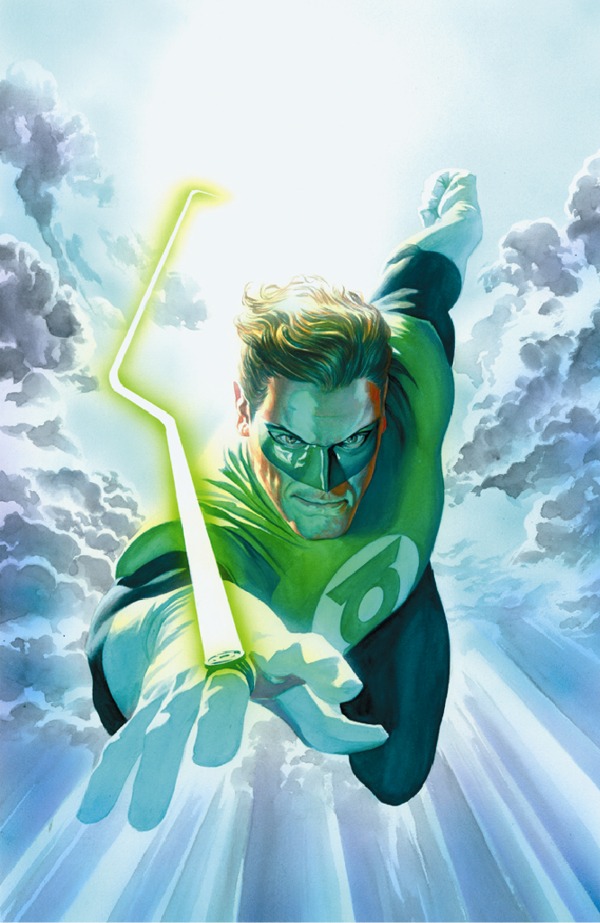
Green Lantern


Created by: 
Bill Finger and Martin Nodell, later re-imagined by Gil Kane and John Broome
First Appeared:
All American Comics #16 July 1940, re-introduced in 1959
Secret Identity:
Identities, in this case: Alan Scott, Hal Jordan, Kyle Rayner, John Stewart (not the Daily Show guy), to name a few...a lot of different people have gotten their hands on that power ring.
Origin: 
A dying alien, just after crash landing on Earth gave test pilot Hal Jordan a ring (and an accompanying lantern in which to recharge it)  that not only gave Jordan special powers but also made him part of an interplanetary police force known as The Green Lantern Corps (that's the better known version, anyway).
Powers: 
Um, what can't he do?
The power ring has, over the years has given Green Lantern such powers as flight, teleportation, matter manipulation, time travel, telepathy, hypnosis, invisibility, force field generation and, my personal fave, the ability to create a giant green boxing glove capable of of squashing his enemies from a distance.
What's Cool About Him: 
See Powers and Secret Identities
What's Not Cool:
See Powers and Secret Identities
Has Been Played by: 
Sadly, only one live action version, played by Ryan Reynolds.
In animated form, The Green Lantern has appeared in many incarnations in everything from the Super Friends to the animated Justice League/Justice League Unlimited series to the recent Batman: the Brave and The Bold. Green Lantern has been voiced by a wide variety of actors including Phil Lamarr, David Boreanaz, Nathan Fillion, Michael Rye, Gerald Mohr and even director/fanboy/egotist Kevin Smith.


The Green Hornet


Created by:
George W. Trendle and Fran Striker
First Appeared:
January 31, 1936 on WXYZ radio, Detroit, later on NBC Radio
Secret Identity:
Newspaper publisher and renowned bachelor playboy about town (sound familiar?) Britt Reid  by day, Green Hornet by night (literally, he's the first guy to do the "by day, by night" shtick).
Origin:
The common thread among the many different takes on the character over the years all involve the following: Reid saves the life of his future sidekick,Kato, while visiting any number of different places in Asia (Kato's nationality has been Japanese, Korean, Thai and Chinese over the years, due to the ever shifting political and military conflicts between the US and various different Asian countries), Reid returns to to the US, becomes publisher of The Daily Sentinel newspaper after the death of his father, Kato invents a bunch of cool gadgets and then the duo proceed to get inadvertently drawn into a life of masked crime fighting.
Powers:
Has a sidekick who knows Martial Arts and who can build technology advanced crime fighting tools like high speed, rocket launching, bullet proof cars and special gas guns that can  knock out  the bad buys out for anywhere from one hour to eleven days.
Other than that, depending on the version, The Green Hornet is either an extremely skilled fighter and detective in his own right or a total doofus who just rides on Kato's coattails or somewhere between the two. 
What's Cool About Him:
You gotta love a guy that puts on a tie before he goes out to kick some ass. The man basically dresses like just about any male cast member of Mad Men, except with a mask and an obsession with the colour green.
While really a crime fighter, The Green Hornet pretends to be a criminal as a means of obtaining the bad guy's trust and learning about all of their nefarious plans.
Britt Reid is the grandson or grandnephew (depending on the version) of the The Lone Ranger. The Green Horent was created by the same guys who made The Lone Ranger and broadcast on the same radio network. The original radio series was aimed a slightly older audience than that of the mysterious masked man of the old west series and touched on many social and political issues. The original radio scripts were often based on actual police file cases.
The Green Hornet has appeared in an impressive number of different mediums: radio, TV, serial, comics, video games and movies.
The 1960's TV series introduced Bruce Lee to the world.
What's Not Cool:
An entire generation only knows The Green Hornet  as a Seth Rogan character.
Has Been Played By:
Al Hodge in the 1936-52 radio series.
Gordon Jones in the 1940 movie serial, The Green Hornet (but voiced by Hodge every time Jones puts on the mask)
Warren Hull in the 1941 sequel serial The Green Hornet Strikes Again (this time, no Hodge)
Van Williams in the 1966-67 TV series
Manu Lanzi in the 2006 French-made short film.
Seth Rogan in the 2011 movie


The Hulk

Created by:
Stan Lee and Jack Kirby
First Appeared:
The Incredible Hulk #1, May 1962
Secret Identity:
Dr.Bruce Banner, though it's not exactly a secret.
Origin:
Doc Bruce Banner, belted by gamma rays, turned into the Hulk.
Powers:
Hulk smash.
What's Cool About Him:
Giant. Green. Can throw tanks to the other side of the desert with a single toss. Get him on your side in am bar fight and you're laughing (just don't do that in front of him).
What's Not Cool:
You wouldn't like him when he's angry.
Has Been Played By:
Billy Bixby as Banner, Lou Ferrigno as The Hulk in the 1977-82 TV series and 1988-90 TV movies
Eric Bana as Banner along with director Ang Lee as a motion capture CGI Hulk in the 2003 movie
Edward Norton as Banner along with a CGI/motion capture Hulk in the 2008 movie
Mark Ruffalo as Banner along with another CGI/motion capture Hulk in the 2012 hit, Marvel's The Avengers and also in the upcoming Avengers:Age of Ultron.
Lou Ferrigno voiced The Hulk in the 1996 animated series as well as (according to IMDB) in the 2003 and 2008 movies, plus the 2012 Avengers movie (he is uncredited in all three films).


Green Arrow


Created by:
Mort Weisinger and George Papp
First Appeared:
More Fun Comics #73, November 1941
Secret Identity:
Leftist billionaire Oliver Queen.
Origin:
When Oliver Queen is abandoned by one of his business rivals on a remote uncharted island, he quickly learns survival skills, mainly through the use of his main hobby, archery. Upon his rescue and return to civilization, he decides to the robin hood thing, only cooler.
Powers:
As the name might suggest, he's really good with a bow and arrow. Plus Queen used his unlimited wealth to create a wide array of unique arrows that can explode, put out fires, disperse tear gas, act as a grappling hook or even become a delivery system for thermonuclear bombs.
What's Cool About Him:
The costume and the blond Van Dyke, for one thing.
The 1970's comic book series in which Green Arrow teamed up with The Green Lantern. Those comics addressed major social and political issues of the day. In one issue, Green Arrow and Green Lantern  had to deal with the fact that Green Arrow's sidekick, Speedy, had become a junkie. From there on in the guy became one of the most outspoken voices of leftist and progressive politics in mainstream comics.
What's Not Cool:
In his first ever on-screen appearance in a 1973 episode of the now classic Saturday morning cartoon, Super Friends, Green Arrow exclaims lines like, "By Nottingham's ghost!", "Great flaming arrows!" and "By Robin Hood's bow!".
Has Been Played By:
Justin Hartley played The Green Arrow on the long running Superman prequel series, Smallville.
Stephen Arnell plays The Green Arrow (or a version thereof) in the current CW network series, Arrow.
The Green Arrow was voiced by actor Norman Alden in the aforementioned Super Friends episode as well as by many other voice actors in such animated series as Justice League Unlimited, The Batman, Batman: The Brave and The Bold, Young Justice and a number of direct to DVD animated superhero movies.


St. Patrick


Created by:
Small shreds of historical evidence embellished by about 1600 years worth of folklore and mythology.
First Appeared:
387 A.D. (estimated)
Secret Identity:
Known as "Patrick" to his friends and family.
Origin:
At age 16, he was brought to Ireland after being captured in Wales by Irish slave traders. He escaped then later returned to Ireland as Catholic Bishop. I know, I know...this one needs some serious retroconning.
Powers:
Superior snake banishing skills, ability to use the shamrock as a metaphor for the Holy Trinity, has a walking stick with debatable divine powers, is a Saint.
What's Cool About Him:
St.Patrick was so good at getting the snakes out of Ireland that many researchers today believe that Emerald Isle at that time never even had snakes to begin with.
What's Not Cool About Him:
Inspires an annual display of the most incredibly rowdy drunken cosplay ever.
Has Been Played By:
The appropriately named Patrick Bergin in the 2000 TV movie St.Patrick: The Irish Legend. Fans everywhere are still waiting for that big, definitive St.Patrick blockbuster, though....maybe Hollywood will get to it after The Dark Knight Rises and The Avengers?


Not an actual ad on my blog, BTW.
I knew I couldn't be the first person to ever make these connections.


Happy St. Patrick's Day Everyone!

Saturday, February 4, 2012

Mighty Memories of Mightor

Excerpt from the  short lived comic book based on the 60's animated series Moby Dick and The Mighty Mightor

I've just spent the last couple of months revisiting one of my very first favourite TV shows ever. There seems to be a digital age mandate that every TV show that ever aired anywhere at anytime must be made available to everyone everywhere (whether it be via DVD, Blu-ray, streaming video or digital download). Thanks to that unofficial internet mandate, I have got see, for the first time in over 40 years, an old Saturday morning cartoon called Moby Dick and The Mighty Mightor.

Regular He-Had-on-a-Hatters may recall that I previously blogged about Moby Dick and The Mighty Mightor in a post of mine from around  a year ago concerning some of the weirdest cartoons ever made for kids.

As coincidence would have it, Moby Dick and the Mighty Mightor was released on DVD just months after I first blogged about the show. Thanks to some lucrative TV work over the summer, I was able to indulge in the so frivolous a thing as the complete series DVD set of a cartoon that I barely remembered from my early childhood.


Contrary to what the order of names in the title might suggest, the feature attraction of  the 1967-69  animated series was a prehistoric superhero known as The Mighty Mightor, and not a cartoon version of Herman Melville's infamous white whale  The show was produced by Hanna Barbera, the animation production company famous for creations such as Tom and Jerry, The Flintsontes, The Jetsons, Yogi Bear,  Johnny Quest, The Super Friends, Josie and The Pussycats and,  in perhaps their greatest contribution to ironic Gen X pop culture kitsch, Scooby Doo.

Until a few months ago, I had only vague memories of Moby Dick and The Mighty Mightor. That's understandable. I would have between 3 and 5 years old during its original run (possibly a bit of older if I caught it in reruns).


Looking at the show "again", made me realize that I really didn't remember much about it at all. It was only seeing the opening titles on Youtube that even made me aware of the Mightor's prehistoric setting. I also had forgotten that Mightor's adventures were lumped in with the Moby Dick cartoons. I did remember that there was a Moby Dick cartoon but I never connected it with Mightor. I also remember somehow knowing that Moby was a pre-existing character from a book or something like that. More than likely,  Classics Comics Illustrated had something to do with that knowledge.

Given how vague I was on Moby Dick and The Mighty Mightor, I sure as hell can't expect my readers to know anything about the show either.
Time for some background.

Moby Dick and the Mighty Mightor had the classic 60's Saturday morning cartoon structure. It was divided into three seven minute-ish cartoons: one about Mightor, followed by one about Moby Dick and then another with Mightor to close out what really was a pretty offbeat cartoon sandwich.  Moby and Mightor were always shown in completely separate self-contained adventures. They never crossed-over. The belief behind this popular format at the time was that younger kids did not have the attention span for longer and more involved 25 minute stories (yep, 25 and not today's standard of 20 to 22 minutes-there were way less commercials back then).

I gotta say that, even after just having seen the entire series over a four month period,  I still find the show's prehistoric superhero and happy albino whale premise just a tad on the bizarre side.

The Moby Dick segments could generously and humorously be described as a very loose adaptation of Herman Melville's classic American novel. Aside from potentially agitating Melville purists no end, the Moby Dick segments featured some of the most basic cartoon chases this side of the Road Runner. Two perpetually scuba diving kids named Tom and Tub seemed to be continually attacked and chased by any number of undersea creatures, mutants, mad scientists, aliens or all of the above. Inevitably, they were saved by a friendly yet somewhat scrappy heroic whale named Moby Dick. If one really wanted to got out on a limb, I suppose one could argue the "scrappy" part is somewhat true to Melville...but I guess one doesn't.

Any other tenuous connections to Melville end there. Moby is essentially a superhero whale in these cartoons . He is able to smash and destroy many a ship, submarine, or sea monster just by head butting 'em with enough force .Moby never dispenses with Tom and Tub's nemesis without having a bratty bullying smirk cross his  face. Kinda creepy, if you ask me.

In one cartoon, Moby cements his cetacean superhero status when he is actually able to tie himself into a knot and then quickly snap himself undone in order to produce enough inertia to swim after the bad guys at record speed (marine biologists can confirm the complete scientific validity of this  maneuver -look it up on Wikipedia).

Tom, Tub and Moby are accompanied by a seal named Scooby.  Apparently two kids and a happy-go-lucky heroic whale just didn't provide enough cute for one cartoon. And yes, that's right. The seal's name is Scooby. However, unlike like his canine successor, this Scooby did not speak, let alone pronouncing every word as if it begins with the letter "R". Nor did this Scoob have a pothead level obsession with munchies and snacking.

One episode worth checking out features a Captain Nemo-esque submariner who escapes to a "mysterious island'. It's the closest thing you'll ever get to a Herman Melville-Jules Verne crossover.

You can take a look at a more typical Moby Dick episode by clicking here.

As for The Mighty Mightor, this intro explains the show's premise more concisely and eloquently than I ever could:


"And Tog is transferred into a fire breathing dragon"? What is he? A crosstown bus? Maybe the word you were looking for is "transformed"?

Sorry. Had to get that off my chest.

Superheroes and dinosaurs. It's a no brainer, really. Undoubtedly, every five year old boy in the world would be glued to the TV.

I know I was.

And, no,  despite the prehistoric setting that features a dinosaur-human coexistence, I don't think the creators of this show were creationists. Back then seeing people and dinosaurs together was just plain everywhere in pop culture. It was in everything from The Flintstones to One Million Years BC. It represented a common misconception of the day. I doubt there was any kind of overwhelming creationist agenda in Hollywood then, except maybe for not wanting to offend some religious groups (and doing so was particularly bad for business back then, especially when it came to kids shows). Indeed, the human dinosaur co-existence convention goes back to the earliest silent films set in prehistoric times. No doubt those early movie producers felt that people fighting dinosaurs just plain made for more exciting stories, not to mention a more lucrative bottom line at the box office.

It wasn't until Steven Spielberg's Jurassic Park in the early 90's, that the human dinosaur co-existence misconception (among other dinosaur misconceptions) was finally put to rest in the popular consciousness. After that, the primitive man-thunder lizard connection was strictly the domain of the creationists.

A typical Mightor episode would revolve around some kind of attack or plot against mild mannered cave dweller Tor's village. Tor would then have to sneak away to transform into Mightor in order to defend the village. Usually, the chieftain's daughter, Sheera, was somehow directly or indirectly threatened as well. Sheera ,with her bold red hair and Bedrock original designer cave dress, was a cross between Wilma Flintstone and Raquel Welch in One Million Years BC. The anachronistic prehistoric babe next door, in other words.

This clip kinda gives you a good idea of  what usually went down in Mightor's world. 


Some of the comments below this clip on Youtube, for obvious reasons, degenerate into a heated creationist vs. evolution debate. Um, folks, did you notice that Mightor flies? That he has a wooden club that fires energy bolts? That he uses that same club to transform his physical being? That his sidekick is a fire breathing dragon? That his adventures often involve giants, rock monsters, insect people and vampires? That it's a cartoon?

See, it's this thing called Fantasy, there, guys. Look into it.

On less contentious note, notice how Mightor has a sorta British sounding voice. He speaks in that "standard English" accent that was often taught in theatre schools in the pre-James Dean/Marlon Brando method acting  era. It was the kind of voice that was de-riguer for any Saturday morning hero in those days.

Most annoying of all and not seen in the above clip is the character of  Little Rok, Sheera's younger brother. Little Rok is a kid who has a major hero fixation on Mightor. He is always dressing up like Mightor and trying to take on the bad guys and monsters himself. Such ventures would, of course, would end up with Little Rok getting into trouble, leaving Mightor to come rescue him. Mightor truly is a superhero in that he has incredible patience towards this essentially really dumb kid. Mightor keeps rescuing Little Rok over and over again without complaint. Not only that, but doesn't even attempt to turn these incidents into some kind of teachable moment. You know, so that Little Rok could learn the valuable lesson that it's really not a good idea throw rocks at an Allosaurus.  The 1970's era of preachy, hammer-over-the-head message-y Saturday morning cartoons was still, thankfully, a few years away.

It's very clear that Mightor was made by the same guys that made The Flintstones. Sheera, for instance, rides around on a mini mammoth that, as any good fan can tell, is clearly the Flintstones' vacuum cleaner. That guy sure worked a lot back then.

Alex Toth's Mightor designs
Like many of Hanna-Barbera's 60's creations, Mightor was designed by the legendary comic book and animation illustrator, Alex Toth. Toth spent years in the comic book industry, drawing the early Green Lantern and Justice Society of America comics. By the time Mightor came around, Toth was lending talents to most of Hanna Barbera's action adventure shows like Jonny Quest, The Herculoids, Space Ghost, Birdman, and later, in a return to his roots, The Super Friends.

However, the Mightor design is not totally Toth's. Some of the credit has to go to Jack Kirby. Yes, Jack Kirby, the legendary Marvel Comics artist. In 1967, Hanna Barbera had made an animated series based on Stan Lee and Jack Kirby's classic creation, The Fantastic Four. As a follow-up, Hanna-Barbera had a series in development based on another popular Marvel character, The Mighty Thor. For some unfathomable reason, Marvel decided instead to go with a deal with with the bargain basement animation of production company known as Grantray Lawrence. They were hired to make animated versions of the rest of  Marvel's major characters (except Spider-Man who had his own series elsewhere at the time). Grantray-Lawrence created animation for the Marvel characters so bad that it made Rocket Robin Hood look like Fantasia.

Why anyone would forfeit this...


...for this...


...is beyond me.

Not wanting to waste the time and money they'd already put into the development process, Hanna-Barbera turned The Mighty Thor into The Mighty Mightor . You can kinda see the similarities: the cape, the horned helmet and the hammer/club that helps the hero fly. Though, for my money, the Mightor's transformation seems closer to that of Billy Batson becoming Captain Marvel than it does to Dr. Donald Blake becoming Thor (keep up with me here, geeks).

Still waiting for this crossover...

Personally, I just wanna see Kenneth Branagh's film version of the Mighty Mightor. Mightor could be played by a dark haired Chris Hemsworth type but he should definitely be voiced by Branagh himself, just to keep things consistent with the original series.


For now, though, I guess we'll just have to settle for Mightor's recurring role as Judge Hiram Mightor on the classic Adult Swim series, Harvey Birdman, Attorney at Law. 


Finally, I want to leave you with the opening titles of the Moby Dick and the Mighty Mightor. Mightor does something that I have never seen any superhero do; he makes his enemy hit themselves.

Take a look at 0:21 to see what I mean...


Now I know where all those schoolyard bullies picked up that "Stop hitting yourself! Stop hitting yourself!" move.

Thanks a lot, Mighty Mightor.

Saturday, January 28, 2012

Captian America, The Great American Iconoclast


When the blockbuster Captain America movie first hit theatres throughout the world in the summer of 2011, some countries released the movie not under its original title of Captain America: First Avenger but under the truncated title, First Avenger.

The underlying concern was that the name “Captain America” might negatively impact international box office numbers in some countries due to Anti-Americanism and a general distrust of American foreign policy- notwithstanding the potential brand recognition attached to an over 70 year old comic book hero.  

Paramount Pictures reportedly gave international distributors a choice: Call it Captain America: The First Avenger or truncate it to The First Avenger - but no other variations. In the end, only Russia, Ukraine and South Korea opted to shorten the movie's title.

Given the true history and nature of Captain America's character, however, no country should have had to change the movie's name: Far from being an icon of American jingoism, this superhero often has been one of his nation's most trenchant critics.

On the surface, the reasons for concern are understandable. Outside of comic-book fandom, all that most people think of when they hear the name "Captain America" (or even just look at the guy) is an over-the-top American propaganda figure. Let's face it: Cap's costume is heavily dominated by stars and stripes. It's like Betsy Ross and Edna Mode teamed up to design the outfit. Many observers simply assume that he is a creature of the Pentagon spin machine. Indeed, an informal survey of media coverage of the upcoming Captain America movie found news outlets from CNN to Fox News to the BBC stating that the superhero with the star-spangled shield was created as a propaganda tool for the U.S. war effort during the Second World War.

That is a major misconception: The first issue of Captain America was published by Timely Comics (later Marvel Comics) in December 1940, a full year before America's entry into World War II.


At that time, the American mood towards the war in Europe was largely isolationist: There were still many Americans who wanted the United States to stay out of what was then seen as a European war and none of America's business.

Of course, there were also a number of Americans who took the opposite view. One of them was FDR. Others were hawkish media figures who led a subtle push toward military involvement through movies, radio, newspapers and, yes, even comics.

In the latter case, the push was not always so subtle: The cover of the first issue of Captain America featured a splashy full-colour rendering of the red, white and blue clad superhero punching Adolf Hitler right in the face. Believe it or not, it was a controversial image back in the day.

For Captain America's creators, the legendary Jack Kirby and Joe Simon, both the character and the punch were no accident. Like many Jews in America at the time, Kirby and Simon were concerned with the news coming out of Nazi Germany. The political message behind an American superhero who was ready, willing and able to take on the Nazis was intentional. Simon said in an interview years later that, "the opponents to the war were all quite well organized. We wanted to have our say, too."

After its initial publication, the now-famous Hitler-bashing cover resulted in threats and hate mail for the authors. The underlying patriotic wartime themes of Captain America were embraced by official government propaganda only much later - after the attack on Pearl Harbor.

Sales of Captain America comic books trailed off significantly after the end of the Second World War, and it eventually ceased publication. But 20 years later, the character was revived by another comic-book legend, Stan Lee, who concocted a story about Cap being frozen in suspended animation since 1945, and revived by a newly formed superhero group, The Avengers, in 1964.


In the February 1970 issue, Cap is seen wandering the streets of New York, contemplating the then-current social revolution. Thinks Cap in a classic Marvel comics thought bubble: "And in a world rife with injustice and endless war . Who is to say the rebels are wrong? But, I've never learned to play by today's new rules! I've spent a lifetime defending the flag, and the law! Perhaps I should have battled less, and questioned more!"

Later, Cap bolts out of bed and says of the establishment: "It was the same establishment that gave them a Martin Luther King, a Tolkien, a McLuhan, and a couple of brothers named Kennedy! We don't claim to be perfect . no generation is! All we can do is learn to live with each other - learn to love one another."
Not exactly gung-ho American conservatism, that. It was the kind of nuanced reflection that was a rarity in the anti-establishment era.


A little later in the 1970s, when Watergate rocked America, the Marvel Uni-verse produced its own fictional version of the scandal - and Captain America was front and center.

A subversive terrorist organization known as The Secret Empire attempted a coup d'état against the United States. The group was stopped by Captain America. Later, Cap learns that the leader of the Secret Empire was none other than the president of the United States (who, at that time, of course, was Richard Nixon). The actions of The Secret Empire and their connections with the commander-in-chief were covered up. Like Joe Simon and Jack Kirby many years before him, writer Steve Englehart openly admitted the political intentions of the story; it was definitely meant to be an allegory to Watergate.


Captain America, disillusioned by the whole affair, dumps his American red, white and blue costume, and takes on the identity of Nomad (the man without a country - get it?). It was around the same time that Cap took on The Falcon, one of the very first African American superheroes in mainstream comics, as a sidekick. Captain America was no Archie Bunker in tights.

Fast forward to the George W, Bush era, and you find that the Marvel Universe in general, and Captain America in particular, were still commenting on the times. In a story-line that mirrored the real-life Patriot Act, the fictional U.S. Government passed the "Superhuman Registration Act," requiring all persons with super powers to register with the government as "a human weapon of mass destruction." The superhumans also were required to reveal their true identities and submit to government training. The creed of the post-9/11 era was: "You are either with us or against us." Captain America was most decidedly on the "against us" side: He opposed the Act and refused to register, arguing that such legislation was an infringement of American civil liberties.

Actually, he didn't just argue. He fought. Hard. And a lot. And against his former friends and allies such as Iron Man. Captain America, the onetime "sentinel of liberty," finally went into hiding as a mall cop.
Finally, and begrudgingly, Cap did "the right thing" and surrendered, preferring instead to fight the rest of his political battles in court. But while Cap was being brought into the court house, he was shot by a sniper. Then, Sharon Carter, a SHIELD agent and Cap's former lover, also known as Agent 13, finished the job and killed Captain America.


She was, of course, under the influence of the bad guys at the time. Nonetheless, the circumstances are telling: Captain America was killed by a federal agent while defying the actions of his government in a time of war. The story behind the death of Captain America certainly did not reflect the mainstream jingoism of the post-9/11 Bush Era.

All of which to say: Anyone who understands Captain America's story should understand that the title of the movie should not have been changed - because he is the farthest thing from an icon of unthinking American sabre-rattling. Doing so serves only to fortify misconceptions surrounding a character who has wrestled, more than most real-life thinkers, with the question of what it means to be "American."


Reprinted courtesy of the The National Post
www.national post.ca