The Bowman Blog: trenchantly goofy musings from an actor, writer and all around pop culture geek.
About Me
- Terence Bowman
- Montreal, Quebec, Canada
- I am a Montreal-based actor, writer and comedian. When U.S. President John F. Kennedy was shot, I was three days old. I cried all day. My favourite books of all time are Moby Dick by Herman Melville, The Last Temptation by Nikos Kazantzakis and The Ewoks Fun Time Activity Book by Chirpa and Pamploo. I am a member of The Vestibules, On The Spot Improv and The Best Buy Battery Club. Except for the Battery Club, I've been at all this stuff for over 20 years. Enjoy my blog.
Showing posts with label rise of the planet of the apes. Show all posts
Saturday, January 21, 2012
What Are the Hidden Agendas of DVD and Blu-ray Extras?
The other day I was checking out the extras on the Rise of the Planet of the Apes Blu-ray I got for Christmas this year. One of the special features focuses on the history of the Apes franchise.
A history of the The Planet of the Apes franchise? Really?
Given how much Fox, the owners of the rights to all things Apes, seems to want to find a new audience for the reboot and given how much the Apes franchise is either or unknown to or dismissed by just about anyone under the age of 40, I was kinda surprised they even went there.
And, in fact, they kinda didn't.
In one featurette, director Rupert Wyatt, screenwriters Rick Jaffa and Amanda Silver as well as actor Andy Sirkus all talk in very positive terms about the original Planet of the Apes. They all say that they are big fans of the movie. However, 99% of the focus of the featurette is on the original 1968 film. Little or no mention is made of the later films.
I found this particularly bizarre as Rise of the Planet of the Apes is, for all intents and purposes, a remake of the fourth film in the Apes series, Conquest of the Planet of the Apes (some say it is more a reboot of Conquest but, hey, let's split Ape hairs). The interviews imply that the writers somehow just came up with this idea of creating a back story for Planet of the Apes as a means of a rebooting the franchise. This is even more bizarre in light of the fact that Fox has had a Conquest remake/reboot in the works since almost right after the failure of the last reboot attempt, Tim Burton's 2001 "re-imagining" of the '68 film.
Also weird is that at one point Jaffa says that in one of the later films "reference" is made to an ape named Caesar who first defied his human masters and said "No". He adds that he thought it would be a great to actually see that moment on screen.
First of all: "reference"? Conquest of the Planet of the Apes is an entire movie devoted to Caesar's story. That's slightly more than just a "reference". Secondly, the moment Jaffa refers to has already been seen in said movie; it is not something new to the franchise as Jaffa seems to be suggesting. For the record, the only "reference" to the event in question is in the previous film in the series, Escape from the Planet of the Apes. Jaffa comments make me wonder if he has even seen these movies. Both he and all of the publicity I've seen about the movie says that Jaffa is big fan of the series.
There is more to this than just Apes fanboy nitpicking. It's like the featurette is purposely drawing attention away from connection between Rise of the Planet of the Apes and Conquest of the Planet of the Apes. What's the agenda here? Is just that they think most of the public at large only know the original film and not the sequels? Or do they not want to confuse potential new fans of the reboot? Or does Fox just simply feel that getting into the whole history of the Apes franchise will "turn the kids off"?
Another example of perplexing Blu-ray extras can be found on the Let Me In Blu-ray. Let Me In is the "not as bad as you might expect it to be" remake of the amazing Swedish teenage vampire movie, Let The Right One In. BTW, if you have not seen Let The Right One In, do so. It's one of the most engagingly creepy movies of all time.
Imagine Twilight directed by Ingmar Bergman.
As was the case with Rise of the Planet of the Apes, the Let Me In Blu-ray extras gloss over the remake angle. In one of the featurettes on the background of the film, director Matt Reeves (Cloverfield) says that he loved the 2004 novel, Let The Right One In by Swedish writer John Ajvide Lindquvist, since he first read it. He said that he always wanted to make a film of the novel.
Yes, it's true: the original Swedish film is also based on the same novel. However, the implication of the subsequent interviews with Reeves and the various producers of the film is that Let The Right On In is the only adaptation of the book that exists. Nowhere does anyone even bring up the original film.
As with Apes, this is kinda weird if you've seen both movies.
Let Me In is, in some scenes, a shot for shot remake of the Swedish film. The sets, costumes and cinematography are all variations on or recreations of elements of original movie. In. To be fair, there a few Americanizations here and there. Some scenes are ramped up big time, old-school Hollywood style. Overall, though, the Let Me In is a very close in mood, tone and look to Let The Right One In.
So, why then do they seem to be deliberately deceitful about the background of this film?
I know American audiences will not flock to European movies en mass, even when they involve trendy pop culture icons like vampires. Though, will it really turn off American viewers that much if they even know that the movie is in any was connected to a European film?
Sometimes the agendas of the DVD extras go another way. Take the Batman and Robin DVD...please (sorry, could not resist).
Of course, I'm talking about the 1997 movie that, in star George Clooney's words, "shut down the Batman franchise". Indeed, Batman and Robin is pretty much a universally reviled movie by both fans and non fans alike. Unlike the previous examples, the extras on this DVD are not so quite so deceptive in nature.
If fact, all of the interviews and commentary tracks on the Batman and Robin DVD are quite apologetic, often explaining where and how the problems with the film developed. Chris O' Donnell (Robin) says that the media "assault" for a movie like this can hurt a film in that it builds up false expectations. Director Joe Schumacher goes even further. He actually says, "I'm sorry" outright at one point.
So why point out that the movie that someone just bought or rented is really bad?
Well, in this case, I remember people talking about the apology on the DVD. Let's face it, it attracted a lot of attention to a DVD of a movie that has such a bad reputation that it might never have left the Zip.ca warehouse. Perhaps they were trying to draw people to the DVD that way?
My theory is that the DVD extras can achieve two goals.
One is the DVD's are, of course, sent to critics. Often the extra content of the DVD/Blu-ray turn up in reviews. Many websites feature reviews of not just the movie but also of the special features. And, in some cases, the DVD extras have doubled as promo material appearing in electronic press kits and the like. In other words, the extras are tool in the overall publicizing of the movie in the media.
The second goal DVD/Blu-ray extras can achieve is that they can (hopefully) generate good word of mouth publicity (which even now is still often the backbone of a movie's success). So if, for example, the word gets out that Let Me In is not a completely original movie then that can impact future DVD/Blu-ray sales.
Negatively, apparently.
These are just a few examples I noticed recently.
Anybody out there ever notice the DVD/Blu-ray extras that seem to have some kind of an agenda going on?
Feel free to weigh in below
Friday, January 6, 2012
My Top 10 Movies of 2011*
*even though I didn't see everything.
Hey Everybody!
Welcome to "He Had on a Hat", 2012 version. We're in for another year of interesting, arcane, goofy and possibly (though probably not) insightful blog posts by the guy that writes this thing every week.
I'm starting off the New Year with two tried and true blog post conventions: the Top 10 List and The Year End Wrap Up.
Originality! Yay!
10. J.Edgar
D: Clint Eastwood
J.Edgar is shot in wonderfully muted colours that give the film that distinctively nostalgic look of faded photographs, newsreel footage and even memories.
J. Edgar is a biopic of unusual depth. One of the many dimensions of legendary yet reportedly a bit looney tunes FBI director, J. Edgar Hoover's personality explored in tin the film is the man's penchant for self aggrandizement. In particular, Hoover is called to task by his superiors regarding his "appearances" in radio programs and comic books. Given the era in which the the media appearances occurred, it place them, of course, right smack dab in the middle of Clint Eastwood's childhood years. All great auteurs revisit their childhoods via their films in one way or another.
And that's the interesting crux of J.Edgar. The film may have an aura of glowy retro nostalgia but its insights into the past are much more grounded in an emotional reality. The film suggests, among other things, that Hoover was something of a paranoiac. It also suggests that the man's alleged homosexuality was so heavily closeted that even he himself did not even understand his own sexual orientation.
J.Edgar's mother, whom Hoover continued to live with even while running what would become the most powerful law enforcement agency in the USA, is wonderfully played by Dame Judi Dench. Despite the excellent performance, the film does her character no favours. As is often the case with these historical biopics (especially in the case of ones directed by the more maverick auteurs like Eastwood and Oliver Stone), Hoover's conflicts and demons are all about mommy issues; everything is always the mother's fault. If that is true, then I guess the same can be said of the all the great films directors like Eastwood create.
9. X Men: First Class
D: Matthew Vaughn
Who knew a Mad Men/X-Men crossover would work so well?
Casting Mad Men cast member January Jones as a young Emma Frost really helped the cross over come together. Though there needed to be scenes of Xavier and Magneto knocking back scotch and making sexist comments throughout there mission to really seal the deal.
I can't wait till all of the documents surrounding the 1962 Cuban Missile Crisis are declassified so that we can learn what role mutants actually did have in the events that brought the world closer than it has ever been to nuclear annihilation.
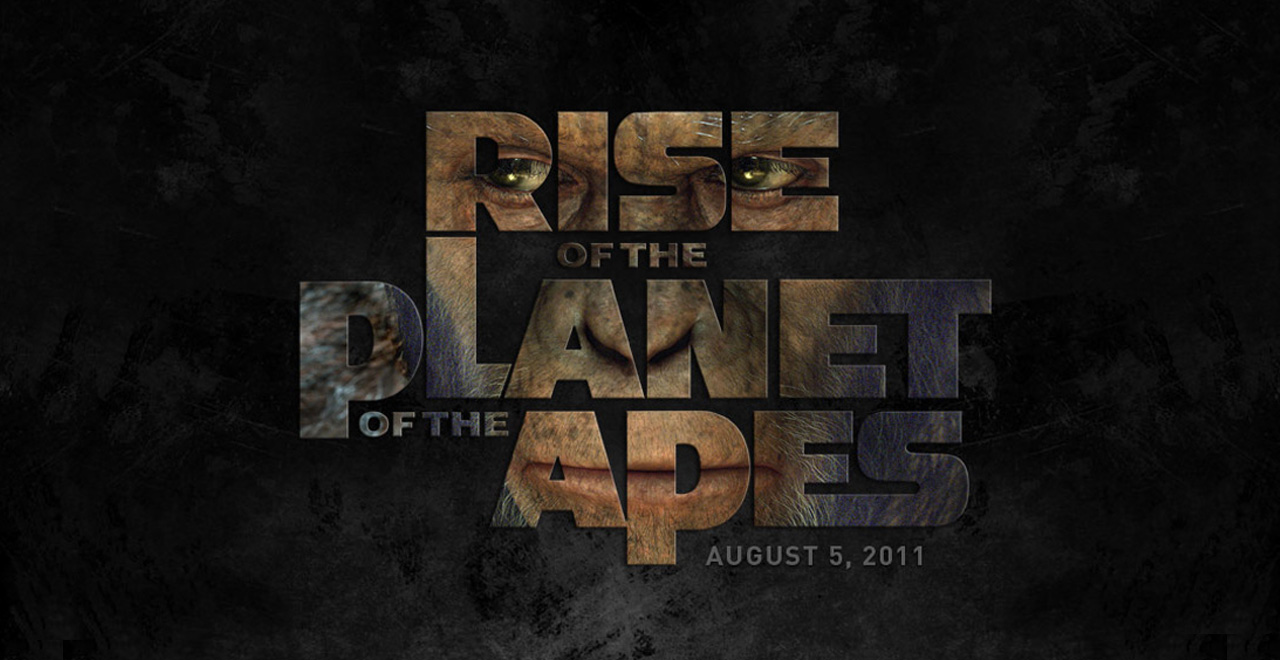
8. Rise of the Planet of the Apes
D: Rupert Wyatt
I was super skeptical than anyone could ever make the The Planet of the Apes franchise come to life again. Social commentary oriented SF movies with dark, depressing endings went out the day Star Wars opened in 1977. I never thought that a franchise so downbeat would ever play in the 3D blockbuster land of today's cinema marketplace.
Yet it did. Big time.
Rise of the Planet of the Apes was both a commercial and critical success, plus a really good movie to boot.
Andy Serkis, the great actor who plays (via CGI motion capture tech) the Ape rebel leader Caesar, has, I must say, ended up in the weirdest bit of type casting in the history of cinema.
Despite the best efforts of the Blu-ray special features to tell you otherwise, Rise of the Planet of the Apes is not just a reboot of the franchise but also actually a remake of the 4th (and some would say best) movie in the Planet of the Apes series, Conquest of the Planet of the Apes. Seriously. Go rent/stream/download Conquest of the Planet of the Apes and you'll see what I mean.
7. The Way Back
D: Peter Weir
Peter Weir is da man.
This Australian director has managed, under the radar in many cases, to make some of the most consistently solid movies of the last 35 years: Picnic at Hanging Rock, Gallipoli, The Year of Living Dangerously, Witness, Dead Poets Society, The Truman Show and Master and Commander: The Far Side of the World. Even his offbeat misfires like Mosquito Coast, Green Card and Fearless are fascinating movies.
In his first feature film in eight years, Weir has added to the former and not the latter category.
The Way Back follows the apparently true story of three men who escaped from a Siberian gulag in the USSR in 1941. Not only did the men evade capture but they ended up traveling, on foot, all the way from Siberia to India. Needless to say, the cinematography and the scenery in The Way Back is amazing as are the performances by Jim Sturges, Ed Harris, Colin Farell and Saoirse Ronan. Of course, the sum of the film's great parts are all pulled together through Weir's impeccable direction. The epic journey movie has rarely been so well realized.
Though, I do have to admit that I was disappointed that neither Sherman, Mr.Peabody nor the eponymous machine appeared in The Way Back.
6. Red State
D: Kevin Smith
I am super up and down on the films of Kevin Smith; some are brilliant, others are, well, very Kevin Smith.
I approached this film with a fair amount of trepidation. As it turns out, Red State is quite possibly Smith's best film. It's also his biggest departure as a director.
I was not expecting a sick yet quirky action movie with socially satirical overtones. Additionally, knowing nothing about the film going in, nor did I see just about anything that happens coming. I highly recommend watching this film if you know very little about it. If you do, well, I'm sure it's still good then too.
One note to Kevin Smith: stay off the Blu-ray extras, k? Your egomaniacal hard sell rants just about undid all the goodwill you built up with such an intense, compelling and satisfying movie.
5. Hanna
D: Joe Wright
Oh, man if I have to see 17 year old Irish actress Saoirse Ronan play yet another ass-kicking action hero in another Hollywood action blockbuster....geez, guys, come up with something new already.
Like Red State, Hanna was unexpectedly good. It has both excitement and emotional depth to spare. It's basically a majorly ramped-up dysfunctional family drama with archetypical fairly tale overtones thrown in for good measure...geez, guys, come up with something new already.
When you've got a movie featuring hero who can take on Galadriel and The Hulk both physically and emotionally, then you know you are definitely not dealing with your standard movie fare.
4. Another Earth
D: Mike Cahill
Anybody who has been casually going to movies over the last 30 years may not realize this but you can actually make good science fiction movies that don't involve laser battles and giant bugs eating people.
Another Earth is a very low budget film (much of it was shot in the director's mom's house!) that really demonstrates how character and basic human emotions can drive a good SF movie. In a plot line similar to Lars von Triers' Melancholia (which I have not yet seen), Another Earth follows the story of how the appearance of, literally, another Earth in the sky impacts the lives plain old regular folks living out their daily lives on Earth. It reminded me a lot of another low budget indie SF movie, Moon. Moon also showed how a really good premise very simply executed can get you long way in science fiction cinema. It can often take you much further than laser battles and giant bugs eating people can, that's for sure.
3. Bridesmaids
D: Paul Feig
K. Let's get this outta the way now. I do not like gross-out bathroom humour at all. It's not that I object to it or anything like that. Quite honestly, I have just never ever gotten what's funny about bodily functions. It leaves me cold is all. So, if I had been directing Bridesmaids, the famous "poo" scene that I've heard so many people rave about, would have been left on the cutting room floor, where, IMO, it belongs.
That being said, Bridesmaids is a rare new comedy film that not only did I like but that stayed with me with long after I watched it. The humour is smart and, with one or two obvious exceptions, pretty subtle.
It's great to see Kristen Wiig finally break that weirdo-looking and weirdo-acting character typecasting that has dogged her for -what now?- six seasons on SNL. To be fair, one of Wiig's strengths as a performer is playing quirky. SNL, though, often ramps up the quirk to the point where it obscures her real talent. That talent being Wiig's ability to play offbeat characters that are actually real people and not merely caricatures of general weirdness. In Bridesmaids, Wiig hits just the right balance between quirk and truth and thus is able to carry the entire film nicely.
A Facebook friend of mine once wrote "Why can't Judd Apatow do for average looking women what he's done for average looking men?".
I think that just happened.
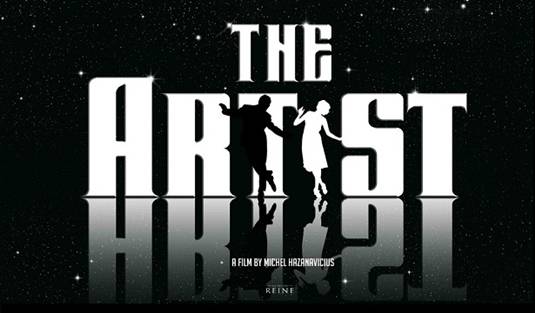
2. The Artist
D: Michel Hazanavicius
It was a refreshing change to be one of the youngest people in theatre instead of the oldest, which has become de riguer to my film going experience of late. The Artist may be a film that plays only to the older cineaste crowd. My gut instinct, though, is that the movie is a bit more universal than elitist in its appeal.
There is a lot more to The Artist than just it's silent film gimmick. Director Michel Hazanavicius nails the now over 100 year old silent movie genre and, like many great silent films, it is compelling to watch despite (or perhaps even because of) its format.
It's a super freaky experience to watch a seemingly authentic silent movie and then suddenly see the faces of current contemporary actors. John Goodman is particularly good at playing the style of the film while still creating a grounded and nuanced performance.
The Artist walks a particularly fine line between imitation, parody and actually being its own film on its own terms . Jean Dujardin's dog sidekick is one of the film's biggest risks in that regard. Somehow, though, the happy little dog fits almost seamlessly into the rest of the picture.
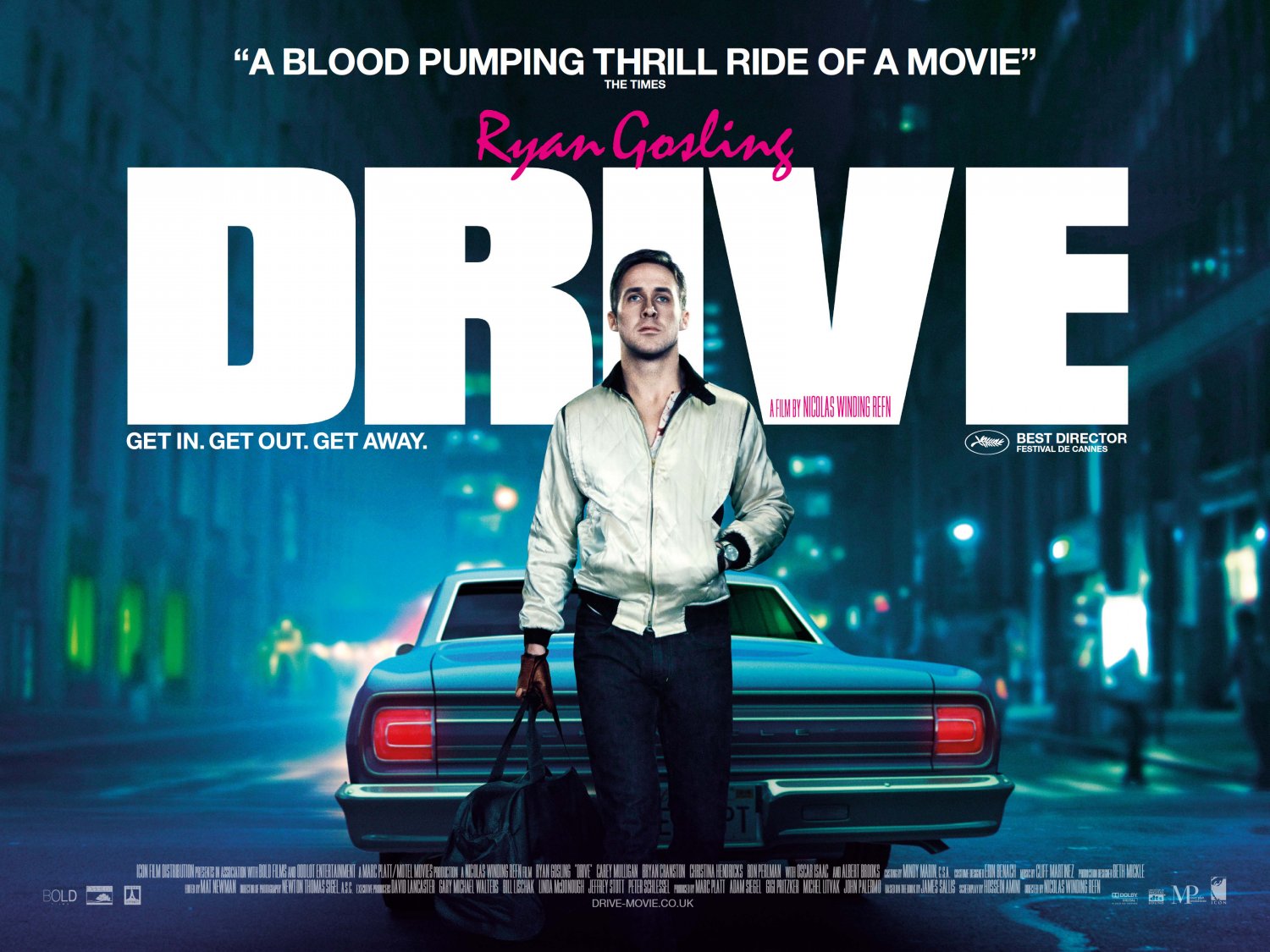
1. Drive
D: Nicolas Winding Refn
Drive is probably the most conventional film that maverick Danish director Nicolas Winding Refn has made to date. Actually, it ain't that conventional a movie but next to Winding Refn's previous films like the acid trip Viking epic Valhalla Rising and the smaller more intimately violent full frontal male nudity epic of Bronson...well, you get the picture.
Sure Drive may appear to be a standard Hollywood/indie action thriller on the surface. A stunt driver for movies moonlights as wheel man for any job that pays well enough but then soon gets himself caught in a web of mafia intrigue and betrayal.
But, as the woman who filed a lawsuit against Drive's distributors for falsely advertising the film as a "Fast and the Furious" type action movie will tell you, appearances can be deceiving.
Ryan Gosling continues his rise towards becoming that "that guy who is in everything now." Gosling's characters all have that fascinating combination of being emotionally withdrawn and almost expressionless while hiding a deep and complex inner rage.
Plus who knew Albert Brooks could be such a bad ass?
Drive has that rare ability to aloof and in-your-face at the same time.
I am quite serious when I say that I simply cannot wait to see what Nicolas Winding Refn and Gosling (in the lead role) will do to the upcoming remake of the 70's disco sci-fi classic Logan's Run.
Is there a way I can just buy those tickets now?
Honourable mentions:
Blue Sunshine, Rango, Midnight in Paris, Hugo, Cedar Rapids
Dishonouarble mentions:
The seemingly endless 3D fad.
See you next week, He Had on a Hat-ers!
| Just a collage. For my actual list, see below. |
Hey Everybody!
Welcome to "He Had on a Hat", 2012 version. We're in for another year of interesting, arcane, goofy and possibly (though probably not) insightful blog posts by the guy that writes this thing every week.
I'm starting off the New Year with two tried and true blog post conventions: the Top 10 List and The Year End Wrap Up.
Originality! Yay!
10. J.Edgar
D: Clint Eastwood
J.Edgar is shot in wonderfully muted colours that give the film that distinctively nostalgic look of faded photographs, newsreel footage and even memories.
J. Edgar is a biopic of unusual depth. One of the many dimensions of legendary yet reportedly a bit looney tunes FBI director, J. Edgar Hoover's personality explored in tin the film is the man's penchant for self aggrandizement. In particular, Hoover is called to task by his superiors regarding his "appearances" in radio programs and comic books. Given the era in which the the media appearances occurred, it place them, of course, right smack dab in the middle of Clint Eastwood's childhood years. All great auteurs revisit their childhoods via their films in one way or another.
And that's the interesting crux of J.Edgar. The film may have an aura of glowy retro nostalgia but its insights into the past are much more grounded in an emotional reality. The film suggests, among other things, that Hoover was something of a paranoiac. It also suggests that the man's alleged homosexuality was so heavily closeted that even he himself did not even understand his own sexual orientation.
J.Edgar's mother, whom Hoover continued to live with even while running what would become the most powerful law enforcement agency in the USA, is wonderfully played by Dame Judi Dench. Despite the excellent performance, the film does her character no favours. As is often the case with these historical biopics (especially in the case of ones directed by the more maverick auteurs like Eastwood and Oliver Stone), Hoover's conflicts and demons are all about mommy issues; everything is always the mother's fault. If that is true, then I guess the same can be said of the all the great films directors like Eastwood create.
9. X Men: First Class
D: Matthew Vaughn
Who knew a Mad Men/X-Men crossover would work so well?
Casting Mad Men cast member January Jones as a young Emma Frost really helped the cross over come together. Though there needed to be scenes of Xavier and Magneto knocking back scotch and making sexist comments throughout there mission to really seal the deal.
I can't wait till all of the documents surrounding the 1962 Cuban Missile Crisis are declassified so that we can learn what role mutants actually did have in the events that brought the world closer than it has ever been to nuclear annihilation.
8. Rise of the Planet of the Apes
D: Rupert Wyatt
"Ape Shall Not Remake Ape"
-The Lawgiver after seeing Tim Burton's 2001 attempt at a Planet of the Apes reboot.
I was super skeptical than anyone could ever make the The Planet of the Apes franchise come to life again. Social commentary oriented SF movies with dark, depressing endings went out the day Star Wars opened in 1977. I never thought that a franchise so downbeat would ever play in the 3D blockbuster land of today's cinema marketplace.
Yet it did. Big time.
Rise of the Planet of the Apes was both a commercial and critical success, plus a really good movie to boot.
Andy Serkis, the great actor who plays (via CGI motion capture tech) the Ape rebel leader Caesar, has, I must say, ended up in the weirdest bit of type casting in the history of cinema.
Despite the best efforts of the Blu-ray special features to tell you otherwise, Rise of the Planet of the Apes is not just a reboot of the franchise but also actually a remake of the 4th (and some would say best) movie in the Planet of the Apes series, Conquest of the Planet of the Apes. Seriously. Go rent/stream/download Conquest of the Planet of the Apes and you'll see what I mean.
7. The Way Back
D: Peter Weir
Peter Weir is da man.
This Australian director has managed, under the radar in many cases, to make some of the most consistently solid movies of the last 35 years: Picnic at Hanging Rock, Gallipoli, The Year of Living Dangerously, Witness, Dead Poets Society, The Truman Show and Master and Commander: The Far Side of the World. Even his offbeat misfires like Mosquito Coast, Green Card and Fearless are fascinating movies.
In his first feature film in eight years, Weir has added to the former and not the latter category.
The Way Back follows the apparently true story of three men who escaped from a Siberian gulag in the USSR in 1941. Not only did the men evade capture but they ended up traveling, on foot, all the way from Siberia to India. Needless to say, the cinematography and the scenery in The Way Back is amazing as are the performances by Jim Sturges, Ed Harris, Colin Farell and Saoirse Ronan. Of course, the sum of the film's great parts are all pulled together through Weir's impeccable direction. The epic journey movie has rarely been so well realized.
Though, I do have to admit that I was disappointed that neither Sherman, Mr.Peabody nor the eponymous machine appeared in The Way Back.
6. Red State
D: Kevin Smith
I am super up and down on the films of Kevin Smith; some are brilliant, others are, well, very Kevin Smith.
I approached this film with a fair amount of trepidation. As it turns out, Red State is quite possibly Smith's best film. It's also his biggest departure as a director.
I was not expecting a sick yet quirky action movie with socially satirical overtones. Additionally, knowing nothing about the film going in, nor did I see just about anything that happens coming. I highly recommend watching this film if you know very little about it. If you do, well, I'm sure it's still good then too.
One note to Kevin Smith: stay off the Blu-ray extras, k? Your egomaniacal hard sell rants just about undid all the goodwill you built up with such an intense, compelling and satisfying movie.
5. Hanna
D: Joe Wright
Oh, man if I have to see 17 year old Irish actress Saoirse Ronan play yet another ass-kicking action hero in another Hollywood action blockbuster....geez, guys, come up with something new already.
Like Red State, Hanna was unexpectedly good. It has both excitement and emotional depth to spare. It's basically a majorly ramped-up dysfunctional family drama with archetypical fairly tale overtones thrown in for good measure...geez, guys, come up with something new already.
When you've got a movie featuring hero who can take on Galadriel and The Hulk both physically and emotionally, then you know you are definitely not dealing with your standard movie fare.
4. Another Earth
D: Mike Cahill
Anybody who has been casually going to movies over the last 30 years may not realize this but you can actually make good science fiction movies that don't involve laser battles and giant bugs eating people.
Another Earth is a very low budget film (much of it was shot in the director's mom's house!) that really demonstrates how character and basic human emotions can drive a good SF movie. In a plot line similar to Lars von Triers' Melancholia (which I have not yet seen), Another Earth follows the story of how the appearance of, literally, another Earth in the sky impacts the lives plain old regular folks living out their daily lives on Earth. It reminded me a lot of another low budget indie SF movie, Moon. Moon also showed how a really good premise very simply executed can get you long way in science fiction cinema. It can often take you much further than laser battles and giant bugs eating people can, that's for sure.
3. Bridesmaids
D: Paul Feig
K. Let's get this outta the way now. I do not like gross-out bathroom humour at all. It's not that I object to it or anything like that. Quite honestly, I have just never ever gotten what's funny about bodily functions. It leaves me cold is all. So, if I had been directing Bridesmaids, the famous "poo" scene that I've heard so many people rave about, would have been left on the cutting room floor, where, IMO, it belongs.
That being said, Bridesmaids is a rare new comedy film that not only did I like but that stayed with me with long after I watched it. The humour is smart and, with one or two obvious exceptions, pretty subtle.
It's great to see Kristen Wiig finally break that weirdo-looking and weirdo-acting character typecasting that has dogged her for -what now?- six seasons on SNL. To be fair, one of Wiig's strengths as a performer is playing quirky. SNL, though, often ramps up the quirk to the point where it obscures her real talent. That talent being Wiig's ability to play offbeat characters that are actually real people and not merely caricatures of general weirdness. In Bridesmaids, Wiig hits just the right balance between quirk and truth and thus is able to carry the entire film nicely.
A Facebook friend of mine once wrote "Why can't Judd Apatow do for average looking women what he's done for average looking men?".
I think that just happened.
2. The Artist
D: Michel Hazanavicius
It was a refreshing change to be one of the youngest people in theatre instead of the oldest, which has become de riguer to my film going experience of late. The Artist may be a film that plays only to the older cineaste crowd. My gut instinct, though, is that the movie is a bit more universal than elitist in its appeal.
There is a lot more to The Artist than just it's silent film gimmick. Director Michel Hazanavicius nails the now over 100 year old silent movie genre and, like many great silent films, it is compelling to watch despite (or perhaps even because of) its format.
It's a super freaky experience to watch a seemingly authentic silent movie and then suddenly see the faces of current contemporary actors. John Goodman is particularly good at playing the style of the film while still creating a grounded and nuanced performance.
The Artist walks a particularly fine line between imitation, parody and actually being its own film on its own terms . Jean Dujardin's dog sidekick is one of the film's biggest risks in that regard. Somehow, though, the happy little dog fits almost seamlessly into the rest of the picture.
1. Drive
D: Nicolas Winding Refn
Drive is probably the most conventional film that maverick Danish director Nicolas Winding Refn has made to date. Actually, it ain't that conventional a movie but next to Winding Refn's previous films like the acid trip Viking epic Valhalla Rising and the smaller more intimately violent full frontal male nudity epic of Bronson...well, you get the picture.
Sure Drive may appear to be a standard Hollywood/indie action thriller on the surface. A stunt driver for movies moonlights as wheel man for any job that pays well enough but then soon gets himself caught in a web of mafia intrigue and betrayal.
But, as the woman who filed a lawsuit against Drive's distributors for falsely advertising the film as a "Fast and the Furious" type action movie will tell you, appearances can be deceiving.
Ryan Gosling continues his rise towards becoming that "that guy who is in everything now." Gosling's characters all have that fascinating combination of being emotionally withdrawn and almost expressionless while hiding a deep and complex inner rage.
Plus who knew Albert Brooks could be such a bad ass?
Drive has that rare ability to aloof and in-your-face at the same time.
I am quite serious when I say that I simply cannot wait to see what Nicolas Winding Refn and Gosling (in the lead role) will do to the upcoming remake of the 70's disco sci-fi classic Logan's Run.
Is there a way I can just buy those tickets now?
Honourable mentions:
Blue Sunshine, Rango, Midnight in Paris, Hugo, Cedar Rapids
Dishonouarble mentions:
The seemingly endless 3D fad.
See you next week, He Had on a Hat-ers!
Friday, August 5, 2011
The Rise of the Rise of the Planet of the Apes
If you are not familiar with The Planet of the Apes saga,
this post contains some big time SPOILER ALERTS.
The upcoming movie Rise of the Planet of the Apes
The original 1968 film, Planet of the Apes
The original Apes franchise was known for its use of the allegorical device of intelligent talking apes as means of making social commentary on issues like racial discrimination, animal rights, the legal system, religion and war, to name a few. The series’ penchant for social commentary goes right back to its original literary source material.
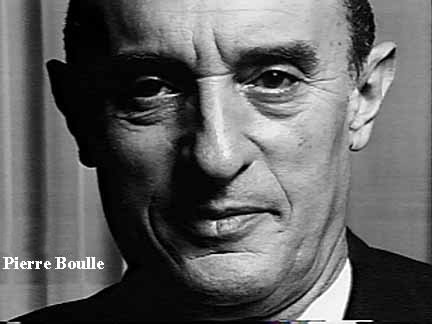
| Boulle felt that his "monkey" novel was a lesser work all the way to the bank. |
The novel tells the story of a French journalist embedded on a space mission who ends up stranded alone on a planet where apes are the masters and humans the beasts. It bears more similarities to Jonathan Swift
![]() |
| The cover of this early edition nicely captures the book's satirical nature |
The novel set the stage for a basic concept of metaphorical and satirical social and political commentary that would, to one degree or another, inhabit the entire franchise in all of its future incarnations.
Fortunately, when Hollywood
Veteran Hollywood producer Arthur P. Jacobs
| The O.Henry of TV writers |
Michael Wilson
In the film version, only the very basic premise of Boulle’s novel and the names of most of the ape characters remain (i.e.: Zira, Cornelius and Dr.Zauis). The French journalist becomes an American astronaut. For budget reasons, the apes’ modern day technological society became a more primitive Bronze Age
True to the allegorical nature of the book, Heston's naked trial scene at the hands of an ape tribunal, for instance, was a mix of allegories to the Scopes Monkey Trial
Then there is, of course, that Cold War
Planet of the Apes was released in 1968. It was a massive box office hit. Even in 1968, that meant that a sequel was inevitable. Heston wanted nothing to do with a sequel but did finally agree to cameo role. After passing on scripts by both Serling and Boulle himself, Jacobs settled on a screenplay by British writer Paul Dehn.
Beneath the Planet of the Apes
The apes soon follow; then there’s a lot of fighting and shooting. Finally a mortally wounded Heston activates the atomic bomb and blows up the entire world. Yes, the Apes movies were always kind of downer; the heroes are hunted and chased with no relief until the entire world is blown up. All this in the second movie of a big box office franchise, no less. Imagine Iron Man II
It was a very different pop culture landscape in 1970, that’s for sure.
So there we go. End of story. End of franchise.
Well, not really.
Beneath The Planet of the Apes came out in 1970 and was another huge hit. Fox decided they had a hit series of films on their hands and ordered Jacobs to make another Apes movie, leaving him to figure out how to make a sequel to a movie where the world was destroyed. Lucky for Jacobs, Dehn was a clever writer.
In the opening of the next film, Escape from the Planet of the Apes (
It is better not to think about that premise too much.
Hunter and McDowell reprise the roles of the apes Cornelius and Zira. The story of the apes in present day human society mirrors much of the plot of Boulle’s original novel. Like the human in Monkey Planet, the intelligent apes are treated as celebrities and embraced by human society. Like in the book, they are then eventually seen as a threat to civilization and hunted down. In the book, the French journalist finally escapes the planet. In the third Apes movie, the ape couple are hunted down and killed.
Yes. Killed. Along with their newborn baby, who is seen as the ultimate threat to the future of humanity. And you thought the end of the world was a downer ending.
The scenes of the two protagonist apes’ death especially showcase the dark nature of the Apes movies. And Escape from the Planet of the Apes is supposedly the comic relief “fish out of water” lighter outing of the franchise. Even so, the two main characters and their baby are shot and killed. Once again, imagine that in another big SF franchise. It would be like Star Trek IV: The Voyage Home
Only in the 70’s.
The series would get darker still in Conquest of the Planet of the Apes
Twenty years later, now in the year 1991, apes have become slaves to humans. Everybody remembers that from 1991, right? The big fads were , MC Hammer
Caesar, the intelligent ape baby has now grown up. He emerges from hiding and launches a revolution against his now crypto fascist human overloads. This time the film ends with the overthrow of all humanity. There are a couple of sympathetic exceptions but, really, the real heavies of this movie are the humans.
It’s hard to miss the allegories to the African American experience in the history of the United States. This is especially true during the many uprising scenes. The images of cops in helmets, holding armored shields while throwing tear gas into advancing apes also brings to mind the tumultuous youth rebellion of the era.
They even open fire on the crowd, just like at Kent State.
Caesar (as played by the same actor who played his dad, Roddy McDowell
Battle for the Planet of the Apes
Spoiler alert: it’s a rule that gets broken.
![]() |
| The Starsky and Hutch Fugitives on The Planet of the Ape |
The fifth film was followed by a 13 episode TV series
The producers of the first small screen Apes venture went to a guy who knew both Planet of the Apes and TV science fiction pretty well, Rod Serling. Though uncredited, the basic premise of the show and the characters were based on Serling's ideas. Sadly, the assignment would mark one of Serling's final TV jobs before his untimely death in 1975.
The show followed the adventures of two Starsky and Hutch
The model for the show was basically that of The Fugitive
The show did carry on the Apes tradition of social commentary, albeit in a more simplistic form. The commentary usually came in the form the morally and intellectually superior humans teaching the apes everything from how to hunt, farm and fish to basic physics to aviation to medicine to lessons in truth, justice and the American way. There was usually some kind of message about tolerance in there somewhere too. Benevolent Americans aiding the inhabitants of the socially, industrially and politically inferior Third World was the basic paradigm utilized in all 13 episodes.
The Apes TV series also presented something very significant in the franchise, something that had hardly been seen at all up to that point: optimism. Though not enough optimism to keep the show from being cancelled mid-season.
The optimism, however, would continue to grow in the animated series, Return to the Planet of the Apes
Interestingly, the Saturday morning cartoon
In Boulle's version, the intelligent human helps the primitive humans to escape from the apes. The humans then take up residence in a fortified camp and attempt to establish a new civilization. Serling's version added to that the humans discovering and subsequently utilizing old human weapons and technology like airplanes.
Those two elements made up most of the story arc of the series. Sadly, the show was cancelled before the continuation of that story arc ever made it to the screen (unless there's a comic book adaptation or some fan fiction out there somewhere I'm not aware of ).
The Apes animated series featured very limited animation and much of the writing was forced and clunky. Great ideas, not so great execution. If they have used those ideas in the live action show, with stronger writing, they may well have a hit TV show on their hands.
In addition to optimism the Apes animated series also brought something heretofore unseen in the franchise: empowerment. Up to that point the humans has always been portrayed as running, hiding, getting beaten up, shot, cut up and generally, well, losing every time to the apes. For the first time, the Apes series showed humans starting to get an upper hand over the apes. Ironically, Return to the Planet of the Apes also marked the decline and fall of the entire franchise.
Well, for about 30 years anyway.
An Apes revival had been in the works for many years after the end of the animated series. When Generation X
Finally, in 2001, Tim Burton
Burton's vision of the Ape society is interesting. In a rarity for the series, the apes actually take on some simian behavior (though no feces throwing, fortunately). The jungle-based ape city and the Kurosawa
There is certainly some social commentary in the film but the whole endeavor is lacking the gravitas and darkness that made the original films so memorable. In the first series, the Planet of the Apes is brought into being due ultimately to humanity's tragic flaws. In the 2001 version, the Planet of the Apes is brought into because Mark Wahlberg
That aside, Burton’s remake was released to disappointing critical and commercial success. Other than perhaps the success of the 1974 live action TV series in international markets outside of North America, no subsequent Apes property has lived up to the initial success of the Planet of the Apes box office phenomenon of 1968-73.
Nonetheless, Fox was still not content to just let a successful franchise sit on the shelf . As early as 2005, rumors of another Apes reboot started flying around the internet. This time it was said that the plan was to start the series over at the very origin of The Planet of the Apes itself. In other words, a remake of Conquest of the Planet of the Apes.
Originally titled simply Caesar
Younger stars like James Franco
Not surprising then, that Fox is giving the series another go. Though they are taking a few odd risks.
For some reason, Fox moved the release date up from November to August. This opens the film in and amongst many other big time summer blockbusters like Harry Potter
Remaking the fourth film of the series could be a risky commercial move too. Most audiences today are probably much more familiar with the original 1968 film or the even the 2001 remake. Awareness of the third sequel in the series does not seem to be as high in the mainstream.
The whole approach is certainly a gutsy move all around.
Who knows what will become of the social and political commentary that has become an intrinsic part of the Apes genre. The cautionary tale of nuclear Armageddon seems to be gone in favor of what seems to be a cautionary tale of genetic engineering. Social commentary today doesn’t play the way it did in the 60’s and early 70’s. Today, such undertones are often tempered with optimistic and upbeat endings, if they are there at all.
It is very unlikely that Rise of the Apes will end with Andy Serkis blowing up the world or with James Franco and Fried Pinto getting shot in the head. Without a similarly audacious downbeat ending or unflinching social commentary, it’s hard to say if, in fact, we will again witness a real Rise of the Planet of the Apes.
Should Rise of the Planet of the Apes fail, the series may want to take on a new motto:
"Ape shall not remake ape."
Subscribe to:
Posts (Atom)