About Me

My photo
Montreal, Quebec, Canada
I am a Montreal-based actor, writer and comedian. When U.S. President John F. Kennedy was shot, I was three days old. I cried all day. My favourite books of all time are Moby Dick by Herman Melville, The Last Temptation by Nikos Kazantzakis and The Ewoks Fun Time Activity Book by Chirpa and Pamploo. I am a member of The Vestibules, On The Spot Improv and The Best Buy Battery Club. Except for the Battery Club, I've been at all this stuff for over 20 years. Enjoy my blog.

Friday, March 11, 2011

How The Western Went Post Apocalyptic

The Hollywood genre of the Western has had its apocalypse. Some time long ago it all but vanished from the great cinema screens of yore. There was a time, the old ones say, that The Western was a genre that dominated the Great Box Office Wars of the 20th century. A time when at least one western movie was broadcast each day back in The Time of Only 4 Channels on Television. A time when The Cowboy Role was a rite of passage for every male movie star. A time when the presence of the mythological cowboy dominated the fantasy world of every young boy and not just the ones who are really really into Toy Story.

All of that is gone now.

Little of the genre still stands today. The Western can only be seen occasionally in The Museum that is known as Cable Movie Networks. It is only spoken of by The Old Ones, overheard in a coffee shops and bars debating the merits of someone called The Duke over someone called Gary Cooper. Sometimes The Western will attempt to emerge from the sacred ground in which it is buried. A 3:10 to Yuma or an Alpaloosa will stick its head out of the sand. Even when well received, these films do not stay out in the light for long. People like Clint Eastwood and Kevin Kostner have attempted, with varying degrees of success, to keep the genre alive. The Western even manages a small but stable existence in Direct To DVD Valley and in Animated Comedy Gulch.

The genre met its apocalypse some time 30 or 40 years ago. Back in the 70's The Western experienced The Great Deconstruction. The myths of violence and racism that kept the genre alive for so long were challenged and taken apart by men like Sergio Leone and Eastwood. Once the public had glimpsed behind the curtain of The Western, it could do nothing but collapse into itself.

The Western does still thrive. Some of its elements escaped to live and flourish in movies like Lethal Weapon and Die Hard. Today The Western is present in action movies that star the likes of Jason Statham,or just about any other action movie that centers around the struggles of one exceptionally powerful hero to overcome the powers of darkness.

Today, the Western also very much survives in a Post Apocalyptic world.

Literally.

The Post Apocalyptic Sci-Fi action movie is a genre that is still with us today and it is a place where the genre of The Western has laid down its stakes.

I'm gonna ditch the post apocalyptic movie mythospeak narration now, k?


The genre of the Post Apocalyptic Western is quintessentially displayed in the 2010 film, The Book of Eli. The movie stars Denzel Washington, Gary Oldman and Mila Kunis. It was directed by the Hughes Brothers of Menace II Society and From Hell fame. Not far into the movie there is a scene where Eli,  the amazingly skilled loner swordsman who roams the vast post apocalyptic wasteland that was once the USA, is hassled by a gang of bad guys in run down old saloon.  As Eli starts taking he baddies out with lightening speed and skill, it suddenly becomes very clear that we are looking at a Western.

The Book of Eli has many of the points that 9 out of 10 film academics agree makes a Western: the heroic loner with incredible fighting skills, the struggle to establish civilization out of lawless primordial chaos and the mentoring of the next generation's heroic loner with incredible fighting skills who will carry on said fight to maintain law and order.

Eli, played by Denzel Washington, is the heroic loner.  As alluded to earlier, Eli's skills are not with a gun, the traditional Western weapon of choice, but rather with a sword. It is a choice of weapon that suggests overtones of Akira Kurosawa's amazing Samurai take on the Western, Yojimbo (later remade as A Fistful of Dollars starring Clint Eastwood) and its follow up Sanjuro (also later remade as For a Few Dollars More with Eastwood).

The struggle to establish, or re-establish in this case, civilization is against the powerful post apocalyptic warlord Carnegie, played by Gary Oldman. Carnegie wants to re-establish civilization so that he can he can rule over it. The next generation of the heroic loner whom Eli reluctantly mentors (mentoring is always reluctant in these films) is Solara, played by the wonderful yet underrated Mila Kunis. An African-American frontier lawman mentoring a woman to uphold the law of the west? Tremors are being reported around D.W. Griffith's grave as we speak.

The Book of Eli takes place thirty years after an unspecified, possibility religious, war has all but laid waste to the USA and, presumably, the rest of the world. Eli has in his possession a certain mythical book that will help reshape the world into a civilized moral order once again. The powerful Carnegie wants the book as well. He sees it as a means to power and conquest.

If you're like me watching the movie early on, you have no doubt figured out that book is The Bible. To be fair, it's not like the film is trying to keep that a mystery or anything. Personally, I'd make my post apocalyptic Western the other way around: it's the bad guy who has The Bible and the good guy wants to get it away from him so as to prevent more future social, political and cultural strife. I think that's my inner John Lennon speaking.


The Book of Eli is an engaging and well directed movie. The cinematography in combination with some amazing CGI creates a post apocalyptic landscape unlike any we have seen before.

A great cast really helps too.

The Book of Eli is certainly not cinema's first post-apocalyptic Western. It's a genre that at least goes back to the 70's....


Yul Brynner was born in Russia, starred in Broadway musicals and was famous for playing Egyptian Pharaohs and Asian Kings. Brynner is, at best, an unlikely choice to play a gunslinging cowboy in the old American West. Nonetheless, his career in the 60's and 70's was largely defined by the Western. He starred in  the popular Hollywood remake of Akira Kursawa's classic film The Seven Samurai, The Magnificent Seven and its sequel. He also appeared in the popular yet now largely forgotten Spaghetti Western trilogy, Sabata, as well as a number of other Westerns. In the 70's, Brynner crossed over Western Sci-fi hybrid territory in Michael Chrichton's forgotten classic, Westworld.  He stayed in that mold a little longer to appear in the 1975 action Sci-Fi film, The Ultimate Warrior: an early example of the Post Apocalyptic Western genre.

The Ultimate Warrior takes place in a post global pandemic New York City in the year 2012 (start packing that bottled water and those canned goods now, folks, we're just 9 months away).  The crammed claustrophobic urban spaces of a burned out NYC is not exactly the wide open Western plains of The Searchers or Stagecoach. But wherever there is a world where civilization has broken down and lawlessness reigns, the Code of the West stands firmly in place.

A group of nice, peaceful survivors has set up a small fortified area in NYC. The group is led by Max Von Sydow (who, at the time, was still busy vying for The Most Diversified Actor's Resume of All Time Award by turning up movies like this, The Exorcist, Three Days of the Condor, Flash Gordon and Strange Brew).  It seems that Von Sydow and his crew have come up with seeds for crops that able to grow in the post plague-infested world of one year from now.

A group of ruthless bad guys (led by the guy who played Falcon Eddy and Conan The Barbarian's dad) are keen to get the seeds for themselves. This gang of bad guys are very clear on the function of the villains in the narrative structure of The Western.

Enter Yul Brynner, the silent shirtless powerful stranger in the classic Western loner hero mold or, as the title of this film prefers to call him, The Ultimate Warrior.

Take a look at this scene and tell me that we don't have some classic Western archetypes happening here.


The Ultimate Warrior is a more entertaining than you might expect.  It features a suspenseful game of cat and mouse and some extremely well shot and edited fight scenes. Along the way, Brynner gets plenty of opportunities to show off his ideal-for-the-pre-Schwarzenegger-generation physique.

The Ultimate Warrior has an absolutely unforgettable climatic fight scene that, really, makes the film. It's also a scene that is eerily similar to the quintessential post apocalyptic Western that would follow just four years later. We're talking about a movie that would forever define the genre and at the same time set off a majorly successful action movie trilogy...


Despite the genre's many successors and predecessors, Australian director George Miller pretty much defined the Post Apocalyptic Western with these three films...well...at least in the first two anyway...

The fist film, Mad Max, introduced a young and (at the time) sane Mel Gibson to the world. It takes place in a world where some kind of ambiguous disaster had brought civilization to its knees.

Mad Max is a classic Western story. It's got all those necessary elements: a lawless frontier, ruthless bad guys and the loner lawman trying to settle down and fit it to the society he has always stayed aloof from in order to protect it. Throw in Max's young son, who represents the oft repeated Western theme of the male hero bloodline and we got us a Western, fellas.

Max also exists in a cinematic era that is post Sergio Leone, Sam Peckinpah and all those 70's exploitation movies that Quentin Tarantino seems to have grown up on. The bad guy's treatment of innocent people in general and women, in particular, displays some of the most sadistically psychotic behavior this side of Straw Dogs.

Almost all of the action in Mad Max takes place out on the road where motorcycles and cars have replaced horses and stagecoaches. Many of the incredible car stunts were -amazingly- shot on remote Australian highways that the production had no permission to film on, let alone permission to perform the extremely dangerous stunts on.  

The movie also boast that Ultimate Warrior like climax that the makers of the Saw movies openly admit to being an influence on their later torture porn series of horror films (notice how I'm carefully not giving anything away here).

Mad Max was a big hit in Australia and internationally but it did not do so well in North America on its initial release. This is most likely on account of the fact that Mel's Aussie accented voice in the film was re-dubbed for US audiences by Lyle Waggoner. Yes. Lyle Wagonner from Wonder Woman and The Carol Burnett Show.


Mad Max's failure to see the kind of US box office success it saw Down Under is the reason why Mad Max 2 is still, to this day, better known on this continent as The Road Warrior.

Mad Max 2: The Road Warrior (as it is now always listed on the program grids) picks up the story some time after the end of Mad Max.  The Road Warrior ramps up the high octane highway action of the first film big time.

Gibson's Max has now almost permanently settled into the western heroic loner character. The first few scenes of Max and the Gyro Captain are practically right out of The Good, The Bad and The Ugly. Of course, it's not long before Max comes across good peace loving people who are limited in their ability to defend themselves. 

It seems that there is this gang of super sickos with Mohawks, loin clothes and hockey masks that are determined to take away the nice people's gasoline by force. There ain't much gar around, you see, and everybody needs the stuff in order to carry on with their high speed car chases and stunts.

The larger budget benefits The Road Warrior greatly. Every stuntman in the Australian stuntman's union was reportedly booked on MM2. Miller certainly put them through their paces. There are some stunning stunts in The Road Warrior. 

Once the action hits the road, Miller's camera never stops moving. The film also boasts one of the greatest action movie scores ever. The movie was scored  (oddly enough- like the first Mad Max)  by Brian May of Queen. Why didn't this guy score more movies?

At the heart of MM2:TRW is Max's journey back from the abyss. This Post Apocalyptic western drifts into the classic Western Shane territory. Max slowly and reluctantly regains his humanity. His budding paternal relationship with the boomerang slinging feral child is the restoration of the heroic bloodline. That bloodline, of course, was (SPOILER ALERT) lost with the death of Max's young son at the end of the first film.

The Road Warrior ends, needles to say, with the good guys victorious. The victory comes at a cost. Like John Wayne at the end of The Searchers, Max stands alone in the barren desert; forever separated from the society he risked his life to protect.

Pretty hackneyed stuff, these Westerns, huh?


The next film was unconfusingly titled Mad Max: Beyond Thunderdome.

I remember when this highly anticipated third entry into the series first came out. It's rare that sequels pull off a consistently good trilogy and Mad Max: Beyond Thunderdome is no exception. Back in '85, me and some of my pals watched the first two Max films on video and then went to the theatre right afterwords to see MMBT on its opening day. I highly recommend doing this if you want to be sure that Beyond Thunderdome delivers maximum disappointment.

The gladiatorial style fight scene in the Thunderdome of the film's title is the best part of the movie. Actually, correction: the fight scene in the Thunderdome IS the movie (I have friends who still quote the line, "Two men enter. One man leaves." on a regular basis).  The whole film pretty much falls apart after the Thunderdome.

That said, where do I start? 

Firstly, there is a huge premise shift in the world that these films take place in. There are frequent references to a nuclear war with lines like "Where were you when the Big One dropped?". There was never any reference to a nuclear war in the other two films. Such references were specifically avoided, in fact. It could be that the "Big One" was dropped between movies but that makes no sense because no one in the this third installment talks about the Big One dropping as being a recent thing. It is also inconsistent with the series' pre-established internal logic.

However, that's super picky stuff next to Beyond Thunderdome's bigger issues. One such problem is the sudden change in tone of the series. In what was previously a nihilistic, violent, Peckinpahesque series of films, we are now treated to scenes of cartoon-like wacky mayhem. There is a scene where one of the Mohawk loin cloth-wearing thugs comes flying out a massive explosion with a slightly blackened face (not unlike every cartoon you've ever seen in your life). He then lets out his best 70's live action Disney movie "Wwwwaaaahhhhh!".

I'm sorry but at what point did Herbie The Love Bug join The Interceptors and the souped-up Mack Trucks on the post apocalyptic highways of Australia? It's too bad that Dean Jones wasn't available to replace Mel Gibson as Mad Max. And why not recast Tina Turner's role with Suzanne Pleshette while you're at it?

The biggest problem by far with Mad Max Beyond Thunderdome is the lack of any kind of engaging coherent narrative. 

Maximum disappointment ensured.


There is a ray of hope for the series.

George Miller has decided to abandon movies like Happy Feet 2, the Babe franchise and the long rumoured Justice League movie to make another entry into the Mad Max series. Miller was supposed to start shooting not one but two new Mad Max movies back-to-back this month. The recent floods in Australia, however, have pushed the production start date back TO 2012.  Most likely, we will not see Mad Max: Fury Road until at least 2013.

While it certainly would have been interesting to catch up with a 60ish year old and now insane Max, Mel Gibson turned down returning the to the franchise that made him a star. I guess the movie didn't have enough insert joke about potential antisemitic plot line here in it for him.

Max will now be played by Tom Hardy of Inception fame. Hopefully, with the  invigoration of a new leading man, Miller will be able to forget the family-friendly-make-tons-more-money approach of Beyond Thunderdome and get the series back to basics.


After all, isn't the Post Apocalyptic Western all about redemption, salvation and rebirth?

Friday, March 4, 2011

The Mashiest Mash-Ups Ever

There's alotta this kinda stuff in mashups
I have said it before and I will say it again: look, even briefly, at some of the stuff on Youtube and you will come to the conclusion that there are some people out there with quite a lot of time on their hands.  The medium of choice for many of the leisurely enabled out there is the mashup. There are many different types of mashups on the 'net these days. 

When discussing online phenomena, stick with the experts: Wikitionary defines a mashup like this: 


Mashup: (computing, slang) A derivative work consisting of two pieces of (generally digital) media conjoined together, such as a video clip with a different soundtrack applied for humorous effect, or a map overlaid with user-supplied data.

So what exactly does that mean?

It means that if you only have a relatively small amount of time on your hands but you've always wondered what the opening titles of Dallas would look like with footage from Battlestar Galactica, you can find it on Youtube. It also means that if you have a lot of time on your hands, you can make that Transformers-Terminator crossover you've always dreamed of seeing and upload it to Youtube.


Mashups are the Football Fantasy League for guys that aren't into sports. Youtube is full of the cross pollination of big mainstream films and TV shows featuring genres like SF, Horror, Action, Spy Thrillers, Gangster,  Frat Boy Comedies, Animation and, occasionally, Westerns. As a general rule, you don't see many mashups, of say, the audio from the trailer for Eat, Pray, Love set to scenes from Sex in the City 2. Nor do you get a many mashups that feature what it would be like if the character of Death from Ingmar Bergman's The Seventh Seal  met up with Antoine Doinel from Francois Truffaut's Let Quarte Cent Coups. Though, really, both of those mashups would be a hoot.

In an era where it's not unusual for new computers to come with video editing software already loaded into them, everybody has the power the make mashups. And it seems like everybody does just that.  Thanks to Facebook and Twitter, an original idea can catch on really fast. No sooner does a trailer of a horror movie recut to look like a romantic comedy get uploaded then are there 70 more just like up the next day. Like many creative endeavours, there are many imitators but only a handful of initiators.

These are my 10 favorite mashups.


10. 10 Things I hate about commandments


Coming in at 1:18, this trailer mashup of The Ten Commandments moves a little more quickly than Cecil B.DeMille's 4 hour epic.


Makes you kinda wish Heston did more teen comedies back in the day, doesn't it?

I've always found that the appearance of Samuel L. Jackson at the end of this mashup comes out of nowhere. However, that's the part always gets the biggest laugh when I show this bit. So maybe that's just me.

9. Nine Inch Nails Trek

Do a search on "Brokeback" on Youtube and you'll get back about 37 different mashups. Who knew that so many of the classic bro's of pop culture are actually gay? Everyone from Batman and Alfred (yes, Alfred)  and the obvious Ernie and Bert to the slightly less obvious Marty McFly and Doc Brown, Holmes and Watson, Captain Picard and Wesley Crusher, R2-D2 and C-3PO and, of course, Kirk and Spock, gets Brokebacked.

To be fair, there is some clever editing in many of the Brokeback mashups. Putting that acoustic guitar based Brokeback Mountain theme quickly and easily suggests just about any two guys are living an "alternative" lifestyle. Personally, though, I've found such "tee hee...they're really, gay...see?" jokes pretty juvenile.

However, I do like this mashup. Not only is not all Frat Boy giggly about its premise but I also get the sense that whoever made this clip is quite earnest about their subject matter.


8. Apocalypse Pooh

Possibly the first mashup ever made. This clip was produced way back in 1987, a time when digital editing was pretty much strictly in the domain of the professionals. It was created by a student in Integrated Media at The Ontario College of Art. I hope the kid got an A+ for inventing a new genre....and somehow coming up with the idea linking Coppola and Disney.


7. Ghostbusters (1954)

Someone who goes by the username of "whoiseyevan" made quite the media stir back in 2009 when he gave the mashup it's greatest innovation since the recut trailer, the premake:


This clip is so convincing that when I posted it on Facebook, I had people making comments like "Where can I see this old movie?" and "Ghostbusters was remake?!". "whoiseyevan" also has premakes of Forrest Gump, Raiders of the Lost Ark, The Empire Strikes Back and even of the upcoming Avengers movie. They are all well worth checking out.


6. Contact 5-0

Many of these mashups have a major "WTF?" factor to them. For instance, there's someone out there who is so totally obsessed with Dallas, that they have done Star Wars, Star Trek, and Doctor Who versions of the opening titles of the classic prime time soap.

This one is also pretty big on "WTF?", but in a good way.


My fave moment as got to be The Borg drone turning his head toward the camera just like the beautiful beach girl in the original Hawaii Five-0 opening titles.  There's also a Star Wars Five-O but it's not quite as well done.


5. Raging Fred

Many film commentators have made the case that seminal American director Martin Scorsese's male protagonists are, in essence, brutish, primordial and even primitive. Nowhere has that argument been made more succinctly than in this mashup.


Making beloved childhood characters swear is a mashup genre of its own.  Just look up all the Muppet/Tarantino crossovers.

4. The Vader Sessions

It takes a special combination of patience and being the world's biggest James Earl Jones fan to pull of a mashup as fun as this one.


George Lucas really ought to hold an annual Best Star Wars Mashup Award ceremony every year. There would be ton of friggin' competition.


3. Dark Knight 1966

Another popular mashup genre is that of the trailer of Christopher Nolan's landmark Batman movie, The Dark Knight. The audio of that trailer has been attached to scenes of everything from  Toy Story 2 to Star Wars to What About Bob? (seriously, check it out).

Another popular take on the seminal trailer involves just about every other screen incarnation of said Dark Knight, including this blast from the past...


2. The Lost James Bond Film

After Sean Connery ditched the Bond franchise in the early 70's, the guy had a helluva time building a career outside to the sphere of MI6. He ended up taking on some roles in really bizarre films. Even then, Connery still had a hard time escaping the ever encompassing influence of 007.


I find that one very satisfying because not only is incredibly well edited but, when you think about it, the original Zardoz is already a mashup in and of itself.


1. Shining

The movie trailer recut to make a film from one genre look like a film from another genre is at the core of what the video mashup is all about. This is the one that started it all. It was originally a final project for an editing class that, as is often the case in the information age, ended up on the Internet and quickly became a sensation.


I'm told that the guy who made this clip was approached by Warner Brothers after it reached, like, 7 billion hits. I've heard unconfirmed rumours that he is currently editing trailers for the studio.

While some may think that the suits at Warner's don't really get what the guy was doing, I maintain that said suits understand exactly what he was up to. In fact, they probably understand it a little too well.

So go ahead,  waste three hours of your life just to find one or two good mashups on Youtube.

I dare you.

Monday, February 28, 2011

My Oscars Timeline

Last night, as has been the case for the last 35 years, I watched the Oscars. For the first time, though, I found myself taking notes on the show. Here then are my random first impressions of the 83rd Annual Academy Awards. 

7:48 PM: Turned on the preshow. These red carpet interviews are a dream come true if you love seeing your favourite stars being really awkward.

8:06 :  I resolve not to have any "best dressed/worst dressed" coverage in this post. To paraphrase what my Mom used to always say, "You go to The Academy Awards to honour excellence in the field of motion picture arts and sciences, not for a fashion show.".

8:12: I briefly switch over to Fox. I discover that the network's counter-Oscar programming is, for reasons that I cannot fathom, all of their Sunday night animation show's Xmas episodes.

8:22 :  Note to ABC: fire the guy controlling the audio levels between the show and the commercials.

8:27:  Show is about to start. IS has just broken out the wine. I know it's gonna be fun show now, no matter what.

8:30: The opening film segment. The Oscars are still ripping off that old MTV Movie Awards bit all these years later…

8:43: Nice try on that tricky spin to keep a billion people interested in the Best Art Direction award there, Mr. Hanks.

8:47: Wally Pfister wins the Oscar for Best Cinematography for Inception. Note to self: when I win my Oscar, remember to make one more last minute check to see if I'm still wearing my glasses on my forehead before making my acceptance speech.

8:56: Only a 94 year-old, stoke-surviving Kirk Douglas could get away with holding up announcing the Best Supporting Actress Oscar....twice .


Here's Michael's dad when he was slightly younger...


8:58: Melissa Leo's acceptance speech proves that live television no longer uses the seven second delay. Man, would I have loved to see what Steve Martin, Chris Rock, Jon Stewart, Billy Crystal or even Bob Hope woulda done in response to that baby.

9:04: The Lost Thing from Australia wins Best Animated Short. The short “was produced over eight years from 2002 and features a mix of computer animated and hand-painted elements.” Note to the Music Director of the Academy: update the Best Animated Short walk-up music from that loud wacky Carl Stalling-style silly symphony stuff you insist on playing every year. Very few of the nominated short animated films these days feature Daffy Duck or Chilly Willy.


9:07:  Toy Story 3 wins Best Animated Feature. Oh, man, that movie is gonna be impossible to rent for about a month now on account of all the six year-olds who will suddenly want to see it just because it won an Oscar.

9:26:  I predict that the Canadian media today will not be able to shut up about the Quebec-made film Incendies not winning Best Foreign Language Film. You won't see quite as much of that in the French media who are considerably less needy for American attention than their English Canadian counterparts.

9:32: Christian Bale becomes the second Oscar-winning actor in history who has also played the role of Batman. There's hope for you yet, Mr.West.

9:44: Did that guy from Nine Inch Nails just win an Oscar?

9:57:  The Wolfman wins for best make-up. It’s nice to see a technical award that just focuses on the actual technical achievement. Too often the Academy hands that Oscar over to a less deserving technical achievement that happens to be in a movie that is sweeping all the awards that night.

10:20: Hey, Coen Brothers, the camera is on you! Yes, now....look...yeah, that's right...over there...see...oh, darn...it's too late....

10:32: Robert Downey Jr and Jude Law officially become The Funniest Thing in The Whole Show (there wasn't really a lot of competition in that department). I'm sure I'm not the first person to float their names out there as contenders for next year's hosts.


If Downey can make jokes about his heroin bust then he can certainly handle all the bitchiness that the internet reviewers like to dish out on Oscar hosts.

10:55:  The In Memoriam segment. Claude Chabrol and the guy who directed The Poseidon Adventure died?

11:07: Francis Ford Coppola directed some of the greatest American films ever made: The Godfather Trilogy, Apocalypse Now and The Conversation, to name a few. Eli Wallach is one of the greatest living method actors still working today. He has appeared in such classic films as The Misfits, The Good The Bad & The Ugly and The Magnificent Seven. Jean Luc Goddard reinvented filmmaking as part of the French New Wave movement of the 1960's. Among other things, his landmark film Au Bout du Souffle influenced mainstream Hollywood cinema throughout the 60's, 70's and beyond.  Kevin Brownlow is a film maker and film historian responsible for documenting and preserving many of the greatest films of the silent era including the restoration of Abel Gance's lost 1927 epic, Napoleon. He also directed the excellent alternate history mocumentary It Happened Here.
Coppola, Wallach, Goddard and Brownlow are suitably honoured during a three hour broadcast with a 90 second film clip highlighting a previously held awards ceremony. The clip is reverently followed by three out of the four film legends briefly appearing live on stage, waving to the crowd without speaking. The audience slows down the the entire show by stopping to give them a standing ovation.

11:25: Jeff Bridges does not win the Oscar for Best Actor in True Grit, proving once and for all that he is no John Wayne.

11:34: In addition to launching a huge campaign amongst Academy voters for The King's Speech to win Best Picture, Harvey Weinstein apparently also lobbied to have The King's Speech dominate the montage of this year's nominated films.

11:36: The King's Speech wins Best Picture. Harvey Wienstein must have hired Karl Rove to advise him on how to snatch the Best Picture Oscar from the jaws of The Social Network.

Midnight: I frantically put together all my observations before hearing, seeing or being influenced by any other media comments or reviews. It's not easy.


And, oh yeah, I suppose I have to close by saying, yes, I am indeed a dummyhead...

Friday, February 25, 2011

I Have Not Missed The Oscars Since 1976

Yes. The title of the post speaks the truth. I have seen every Oscar telecast live, when it aired, since the mid 1970's. That encompasses more than two thirds of my life. It goes from being just old enough to negotiate staying up late with my parents, to managing to work the Oscars in between homework assignments, to telling my too-ironically-sophisticated-for-the-mainstream-movie-scene roommates to shut up for once while they announce the best picture, to racing home from improv workshop in time to catch the opening monologue to an Oscar party phase to curling up on the couch with IS and glass of wine.

I've never really been into the celebrity gossip or the "best dressed/worst dressed" obsessions that drive many people to watch the Oscars. I've also never been one of these "I turned it off when they got to Best Set Design" people. If some of the jokes or the musical numbers fall flat, no big. I watch the show for one reason and one reason only: I love movies. Period.

I don't really remember the individual Academy Awards telecasts. A few highlights over the years stand out. I remember Bob Hope's edgy Gerald Ford material that flew way over my head,  David Niven's streaker comeback line that did not fly over my head, Johnny Carson equating the Oscars with the Iran Hostage Crisis by announcing, "We are now on Day 39 of the Oscar Telecast", Robocop chasing Pee Wee Herman, Robin Williams when he was still fresh, Jack Palance's not-actually-all-that-funny one handed push ups, being outraged that Billy Crystal stole the inserting himself into scenes from the Best Picture nominees gag from the MTV movie awards, Jon Stewart's satirical political style Oscar attack ads  and Steve Martin's massively underrated turn as host of the Academy Awards in 2001 ("Movies are so violent now. I saw Gladiator with a nine year old boy and all he kept saying was 'Who are you? Where are my parents'").

That's only just a few things over 35 years.


What I do remember well, though, are the movies. I have seen every movie that won Best Picture from when I started watching the Oscars at least once (plus many of the earlier ones as well, of course).  In some cases, it was a lot of years between seeing, say, a One Flew Over The Cuckoo's Nest win the Oscar and seeing the actual movie. Thanks to the Home Video Revolution of the 80's and a bunch of free evenings, I managed to fill in all those gaps.

Having seen so many Best Pictures over the years, it's become pretty obvious to me that The Academy of Motion Picture Arts and Sciences has very specific criteria and preferences for what constitutes the "Best" in cinema. Some of the movies they chose are very good, some are overrated and many are between the two. The Oscars are no more the arbitrators of quality cinema than the Independent Spirit Awards or The American Film Institute or the jury at The Cannes Film Festival or even the Razzies.

That being said, here are my random two cents on each and every Best Picture since I started watching The Academy Awards way back in 1976.


1975

 One Flew Over The Cuckoo's Nest is one of my favourite movies ever. Milos Forman captures the dreary and oppressive 1950's mental hospital setting in all its depressing splendor. The great performances from Louis Fletcher, Brad Dourif, Christopher Lloyd, Will Sampson and Danny Devito help to make this film remarkable.  For me personally, this is the performance that defines Jack Nicholson as an actor.

Am I ever glad I didn't have to cast an Academy ballot that year. The other Best Picture nominees were Barry Lydon, Dog Day Afternoon, Nashville and Jaws.


1976

There has not been a sports movie made in the last three and a half decades that does not owe a debt of gratitude to....


The original Rocky is a solid film that still holds up.

So good, in fact, that Sylvester Stallone has remade it five times.

1977


Woody Allen is better known today for his output of repetitively themed more-miss-than-hit movies and, of course, the very public scandals surrounding his personal life. Sadly, those things now overshadow the genius of the man in his heyday. Between Annie Hall in 1977 and 1986's Hannah and Her Sisters, Woody did the bulk of his best work.

Annie Hall has an almost perfect blend of amazingly well written comedy and a very real sense of poignancy. It's a combination that Woody never really pulled off again. I also love his anything goes approach to film making. In Annie Hall, he throws in everything from fourth walling to animation to Marshall McLuhan cameos to highly subjective flashbacks to the use of subtitles to portray his character's inner thoughts.

Annie Hall is up there with Airplane! and Monty Python and The Holy Grail as one of the comedies from which I can quote verbatim off the top of my head.

I remember being incredibly incensed that this movie beat out Star Wars for Best Picture. That is, until I actually I saw Annie Hall.


1978

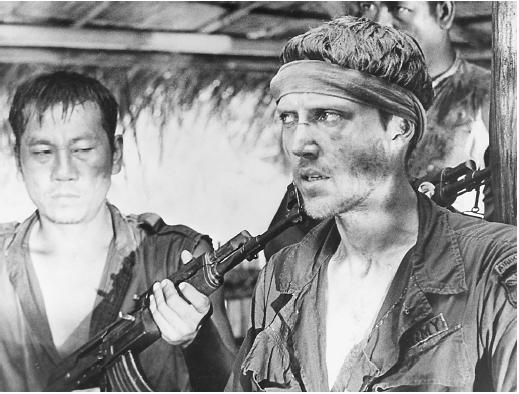
The Deer Hunter was the first big mainstream Hollywood movie to take the subject of the War in Vietnam head on.Up till then, there had been a couple of smaller films,  a few that took on issues encountered on the home front of the controversial war and, of course, The Duke's 60's propaganda piece, The Green Berets. There had been nothing quite like this film. The Deer Hunter features amazing performances from Robert Deniro, Meryl Streep and, in the role that won him his Oscar and introduced him to the world, Christopher Walken. If Francis Ford Coppolla had got his act together and released Apocalypse Now a year earlier, he woulda had Best Picture in the bag. Instead that honour the next year went to...


1979


The SNL parody was titled Kramer vs Godzilla. The Family Guy bit was Kramer vs Predator. My version would be Kramer vs Mad Dog Vachon (it's a 1970's Canadian  wrestling joke, folks, keep up with me here).

Kramer vs Kramer is one of those small character driven dramas that the Academy favours when it's not favouring big scale epics. This Dustin Hoffman-Merly Streep vehicle beat out both Bob Fosse's brilliant semi-biographical musical, All That Jazz and Francis Ford Coppola's colossal masterpiece, Apocalypse Now.  So I ask: is this film now considered a cult classic? Has Kramer vs Kramer seen subsequent re-releases, a making-of film made 15 years after the fact, a re-edited redux version and a best selling commemorative three disc Blu-ray edition?


1980


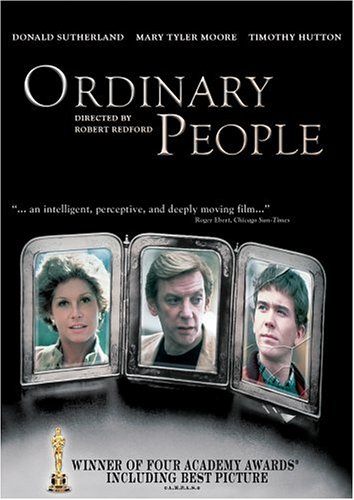
Ordinary People marks the heralding of Robert Redford's directing career.  And it's quite the heralding too. My personal favourite sequences are the emotionally charged therapy scenes between Judd Hirsh and Timothy Hutton. At the time I remember being really annoyed that every other person I knew was saying stuff like, "Mary Tyler Moore is so amazing. She can play comedy and drama too."

Um...yeah...it's called be an actor, there, folks.


1981

Throughout most of the 80's and 90's there were an innumerable amount of parody running bits that always used this music...


Another fave of the Academy is the Dark Horse Horse Underdog Outsider Upstart. These are usually independent or foreign films that are, as is often the case, also British. In this case, Chariots of Fire is both. I remember it being quite the upset back in the day. I don't even want to talk about all the money I lost in my college Oscar Pool.

Chariots of Fire beat out Steven Spielberg's Raiders of the Lost Ark, one of the greatest escapist movies ever made and Warren Beatty's Reds, one of the most underrated films of all time.


1982

To the tune of The Vestibules "Gandhi" (or, if you prefer Windy by The Association): "What movie won the Best Picture? Everyone knows it's Gandhi!"

I remember one of the Montreal morning deejays complaining the day after the Oscars, "So Ghandhi won Best Picture. Geez! Why do the Oscars always like the artsy stuff." 

I'm sorry? Ghandi? Arsty stuff?  K, pal, you might wanna steer clear of Bergman, Goddard and, for that matter, just about anything in the "foreign film" section of your local Blockbuster.


1983


I remember it well. The TV was on the background while I was working under a serious deadline for a major undergraduate paper when Terms of Endearment won Best Picture. Yep. I recall the moment, not the paper.

Jack Nicholson and Shirley Maclaine really made this movie for me.  James L. Brooks has long since lost his shine but Terms of Endearment is still of the best films of its kind ever.


1984


Milos Forman continues to explore his ongoing theme of rebellion against oppressive life circumstances. I remember watching Amadeus for the second time at the old Seville Theatre repertory cinema. There was guy sitting behind me in a Van Halen T-shirt who kept yelling "All right! Yeah! Wooh!" to just about everything Mozart did. Nothing speaks more powerfully about the Forman's ability to engage an audience than that.


1985


Time for the character driven sweeping epic to get some Academy recognition. Out of Africa boasts beautiful aerial cinematography, one of John Barry's best scores and great acting from Meryl Streep and Robert Redford.

Besides that, though, it must say that the rest of it left me cold, which is weird because it's about Africa where it is hot.


1986

Platoon is the other Vietnam War movie to win Best Picture. It was also part of a massive Hollywood trend of movies about the war, many of them quite revisionist. To this day, I never miss a new Oliver Stone movie, despite his frequent hammer-over-the-head approach to directing. Actual 'Nam vets say that Platoon is the most realistic film about the war. True enough. The Deer Hunter and Apocalypse Now both employed a great deal of artistic license with historical events. 

Nonetheless, I do have issues with the use of Adagios over scenes of weary, battle-worn soldiers; Peter Weir did the same thing, to much greater effect, in Gallipoli five years earlier. And, sorry, but no matter how many times I see it, I still do not believe a single of word of Tom Berneger's "Let me tell you about death..." monologue.

1987


Not necessarily Bernardo Betrolucci's best work (Last Tango in Paris anyone?), The Last Emperor is a film that has stayed with me over the years. Two of my personal favorite things about this film are David Byrne, Ruyuichi Sakamoto and Cong Su's worthy-of-owning-the-album score and the fact that Peter O'Toole plays a rare non-drunk role.


1988


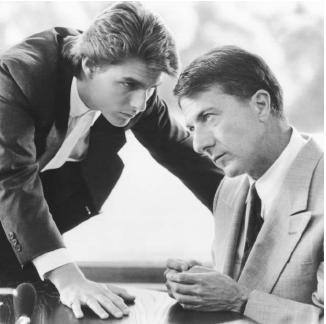
I know it's something of a cliche to point to Dustin Hoffman's performance in Rain Man. But, man, carrying a film with a character that has such limited means of expression is no small feat. Not to mention that he had to play off of Tom Cruise at the same time.


The Vestibules parody sketch at the time was an ad for The Rain Man Pocket Calculator featuring the voice of Hoffman's character, Raymond Babbitt. We kept that one in the live show for years.


1989


Driving Miss Daisy is a quintessential example of those Academy favored small character driven film with social and/or political overtones. Another popular opinion about this movie was voiced by a friend of mine I saw it with, "Nothing happens!".

Personally, I can watch anything with performances this good. Even Dan Ackoryd got a nomination out of Driving Miss Daisy.


1990


I admire where Kevin Costner's heart was but, I remember even back in the day finding Dances With Wolves really simplistic. I also had a hard time understanding why Kostner's supposedly pacifistic character seemed to have absolutely no issues with introducing fire arms to the Native Americans; an act that would surely lead to an escalation of their conflict with the white man and ultimately the massacre of Kostner's adopted people.

Dances With Wolves also smacks of that patriarchal attitude found in films like To Kill a Mockingbird, Lawrence of Arabia and even the Zorro movies. That attitude being that it's up to the good white people to stand up for the oppressed minorities 'cause, after all, they could never possibly do so for themselves.

Nonetheless, for those keeping score it's Westerns with negative Native American portrayals: 20,438, Westerns with positive Native American portrayals: 1.


1991


The Silence of the Lambs was the first horror movie to ever win Best Picture. I remember having many debates with my friends as to whether the end of the film was meant to be scary or funny. Am I allowed to say both?

Hannibal Lector and cannibalistic themes in general saw a brief but large spike in improv show suggestion popularity around this time.

Followed by way too many sequels and prequels.


1992


For me, The Outlaw Josey Wales is Clint Eastwood's best Western as a director. Unforgiven comes in second, Pale Rider third and High Plains Drifter rounds out this very specific category at number four.

I remember many critics had issues with film's alleged endorsement of violence as a means of resolving conflict. I think that's missing the point. Not surprising, though. Existentialism has never really played that well in mainstream popular culture.


1993


The thing that speaks most strongly to the emotional power of Schindler's List is that, though I have thought about it many times, I have never been able to bring myself to go back and watch the film again. The last time I saw Stephen Spielberg's Holocaust epic was during its initial release . It's up there with Saving Private Ryan and Munich as one of Spielberg's very best films.

My favourite stand-up comedy line used by comics when a show isn't going so well: "You people are looking at me like you're watching Schindler's List."

Still used to this day.


1994


Forrest Gump is a classic example the way Best Pictures often work: critically acclaimed, popular, successful and very entertaining at the time of its initial release. However, is it really one of those classic films that people keep coming back to years later?

Life is like the box of chocolates line, you keep hearing jokes about the same scene over and over again.


1995


Braveheart is one of the earliest signs of Mel's Gibson's gradual descent into madness.

Personally, I always preferred this version of the William Wallace story:


BTW, the MTV Movie Awards were doing this shtick a good two years before Billy Crystal started doing it at the Oscars. Just sayin'.

1996


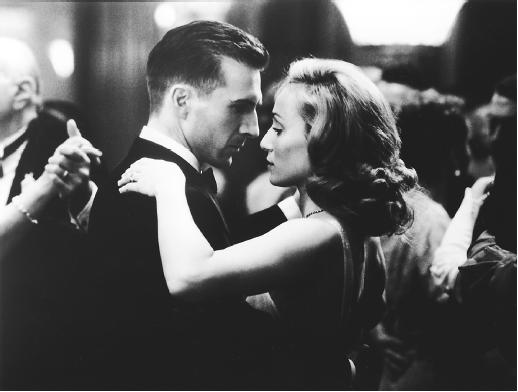
In The English Patient, Willem Dafoe plays an Anglo Montrealer in the 1940's who uses the French pronunciation of "Laurier street". He also says the name of his native city as "MON-treal". I also love that the Nazi interrogator has to say to him, "You're a Canadian spy working for the Allies".  I guess that line is there 'cause American audiences might be unsure about what side a country that shares the same continent with them might have been on during World War II. Despite all those awful horrible glaring mistakes, The English Patient still won Best Picture.


1997


It's fashionable to bash Titanic these days (and even those days, really). I saw it in the first few days of its release. None of the "highest grossing", "greatest movie ever" hype has really kicked in it yet. I had no issues with any of that. I found the whole three hours really emotionally engaging (well, minus the Celine Dion song over the closing credits).

James Cameron is the master of making the most basic simplistic stories come to life with incredibly entertaining results (Hello Avatar!). He is also able to master both the technical and emotional elements of a film with equal aplomb.

Still, Titanic is no True Lies.


1998

So apparently it takes the Queen's guards almost the entire running time of Shakespeare's Romeo and Juliet to get from The Palace of Whitehall to The Globe Theatre (it actually takes roughly half an hour on foot -keep up with me here 16th century London geography geeks!).

According to the film, Shakespeare wrote Twelfth Night as a means of sublimating his lost love for Viola , played by Gwyneth Paltrow. However, there was a 16 year gap between the time when Shakespeare wrote Romeo and Juliet and the time when he wrote Twelfth Night. Man, that Billy dude sure carried the torch for Gwyneth for at long time, huh?

On the surface, those may sound like picky pedantic critiques. It wouldn't be the first time I've heard such a response to my opinions. However, if I'm thinking about those things and not focusing on anything else during the film's crucial third act, then there's definitely a problem there.

But, hey, any behind-the-scenes story about one of the greatest playwrights of all time and I'm there, no matter what.

One of the things I really liked about Shakespeare in Love was Rosencrantz and Guildenstern Are Dead playwright Tom Stoppard's contributions to the screenplay. His distinctive stamp abounds in much of the dialogue.  Ben Affleck's portrayal of a pompous poltroon of an Elizabethan actor kinda started to turn around my opinion of the guy.


1999


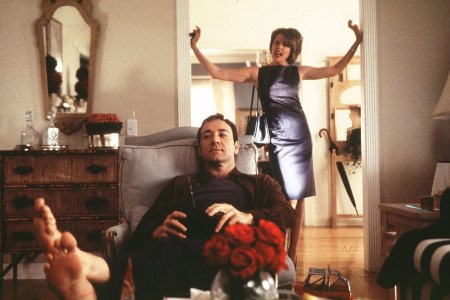
American Beauty is, among other thing, a film of character studies fleshed out by some freakin' amazing actors. There's also beautiful cinematography and that always beguiling plastic bag blowing in the wind stuff.

That being said, I've seen the film a few times now and, I gotta say, I'm still not sure why we're supposed to be sympathetic to Kevin Spacey's character. While his wife, played wonderfully by Annette Bening, certainly has many flaws, really let's face it, the guy is unnecessarily cruel towards her. That and, yeah, yeah, yeah, we get it already: Mena Suvari is hot.


2000


Hollywood returns to the old school historical epic movie making of Ben Hur and Spartacus. This time around, though, they've got CGI effects that Cecil B. DeMille would have considered Divine Intervention.

Gladiator also marks director Ridley Scott's return to greatness. Scott's films, unlike James Cameron's, are often technically and visually incredible but not always emotionally engaging (this does actually work for Mr.Scott in the case of movies like Alien and Blade Runner).  In Gladiator, Scott deftly combines the two elements seamlessly. 

I still use the opening battle scene to show off my 6.1 DTS Dolby Surround Home Theatre System (just not when anyone his home downstairs).


2001


Russel Crowe again. I don't know about you but I saw the twist in A Beautiful Mind coming early on. I mean some of that stuff Ed Harris talks about sounds pretty loony tunes right off the bat.  Notice how if you have not seen the film, none of that is a SPOILER ALERT?


2002

I find it sad that we can no longer see that old school movie musical approach. You know what I mean: movies where the musical numbers are not all just only in fantasy sequences.

Well, okay...there's animated features, the High School Musical movies (if they count) and the recent film version of the Broadway musical Hairspray but, still, you get my point.

I know it speaks more to the Bob Fosse musical on which the movie is based but many of the songs off of the Chicago soundtrack are still on my iPod.


2003

I think it's clear to everyone by now that the Academy wasn't just awarding the Oscar to Peter Jackson for Lord of the Rings: Return of the King but for the whole LOTR Trilogy. I must confess that I've never  been able to stick with the original Tolkien books despite many attempts. As a result, I don't have as many issues with these films as many of my fellow geeky friends do.

I liked all three movies, if that's okay, guys.

The Two Towers was my personal fave (and I'd also like to take this opportunity to give a big shout out to Peter Jackson's underrated King Kong remake). 

If nothing else, you have to hand it to Jackson for breaking the long standing Oscar barrier in the SF/Fantasy genre.


As far as Return of the King goes, I'm with Billy Crystal when he said, "11 Oscar nominations. One of each ending.".


2004


Once again, Clint Eastwood confounds mainstream popular culture with his own brand of existentialism. Hilary Swank won her second Oscar for Million Dollar Baby. Ironically, she was fired from the cast of Beverley Hills 90210 because she "couldn't act."

I've just lost all respect for Beverly Hills 90210.

2005


Crash is The Most Overrated Best Picture Ever. People I know who live in LA tell me that race relations in the city are even worse there than they way they are depicted in this film.

However, a series of ironic coincidences does not a movie make.

I prefer the David Cronenberg version.


2006

Martin Scorcese describes The Departed as the first movie he's ever directed "with a plot". True dat. It's one of the most engaging films of his that I've seen in years.  It's got all the tortured drama of a Taxi Driver or a Raging Bull with great suspense to boot. It's also continues the trend of Scorcese's crowning of Leonardo Decaprio as his New Deniro.

The Departed is a remake of the great Hong Kong movie, Internal Affairs, but there are many many examples of great directors unable to pull the remake feat off.

Jack Nicholson's best performance since The Shining.


2007


The Coen brothers enter Stanley Kubirck territory in their most audaciously perplexing film yet. They pull off that great film ending thing that previously only Kubrick had been able to make work. Which is to say, ending the film in a place when the audience is least expecting it ("What? Huh? Closing credits? Now?") . 

One of the more intriguing theories I've heard is that Javier Bardem is Death; not the character, the actor.


2008


The Independent Foreign Outsider Best Picture strikes again. The screening of Slumdog Millionaire I attended had many people walking out during the now infamous blinding of children scene. Oddly, if all those people would have stuck with it, they would have seen a feel good movie of the year ending that puts most Sandra Bullock vehicles to shame. You really gotta hand it to Danny Boyle and his ability to reinvent himself with almost every film he makes. I remember really liking the film the first time I saw it.  I haven't seen Slumdog Millionaire since it came out so I can't really comment on the fashionable critical backlash it is now enduring. I will say this though: how weird is it that the Indian Police are willing to torture people for allegedly cheating on a TV game show?


2009


Is it just me or was all that coverage in media about how Hurt Locker director Karhyn Biegelow is woman director yet almost always makes films about "male" subjects (like cops, submarines, vampires hunters, bank heists and war) actually kinda sexist?

That aside, Hurt Locker is an interesting film that doesn't really take sides in the pro-Iraq War vs anti-Iraq War debate. It examines the life of one man who, to quote the opening on-screen text of the film, is "addicted to war". As far as its political stance on the war goes, well, you could be Toby Keith or you could be Noam Chomsky and still get a message that supports your viewpoint from The Hurt Locker. That, in and of itself, makes The Hurt Locker great filmmaking.


2010


Well, I predict...anyway. The Social Network that kind of film that the Academy traditionally loves: a small character driven film with topical social/political overtones. Plus, now that we all know Facebook alone was responsible for the recent revolution in Egypt, the movie is oh so much more relevant...


Feel free to call me a dummyhead if it turns out I got that wrong...but only once.

Friday, February 18, 2011

Horatio Hornblower vs James T. Kirk

There is nothing original in popular culture. Virtually every big movie or TV show out there is derivative of some previous movie, book, comic, play, myth, opera or any number of other pre-established cultural archetypes. You may think a movie is fresh and original  but look into it and you'll find that the whole thing is, to some degree or another, a total rip-off.

For example, I remember seeing the Montreal premiere of Star Trek II: The Wrath of Khan. It was a CHOM-FM hosted event held at the old Imperial Theatre way back in 1982. I remember really enjoying it. The whole movie seemed like a fresh and original take on the whole Trek thing (unlike the first Trek film but that's another blog).  About 15 years later, I was killing time watching TV between improv shows in the green room at The Comedyworks. History Television was running some old 50's sea adventure epic. I was half watching it out of the corner of my eye when I noticed there was a naval battle scene. In seconds I was exclaiming, "Holy crap, this is Wrath of Khan!" (Trek fandom runs high in stand-up comedy so most everyone in the room at the time concurred with observation). Turns out that movie they were showing that night was the 1951 film, Captain Horatio Hornblower.

The character of Captain James T. Kirk is often said to be based on C.S. Forester's 19th century navel hero, Captain Horatio Hornblower.  Star Trek creator Gene Roddenberry reportedly used the term "Hornblower in space" to describe Kirk as part of his original network pitch for the first Star Trek TV series. Though he also used the term "Wagon Train to the stars", so you can take that with a grain of salt. Roddenberry later claimed that Star Trek: The Next Generation's Captain Jean-Luc Picard is really the guy who is based on Hornblower. Roddenberry is up there with George Lucas as one of The Greatest Revisionist Bullshitters of All Time so it's hard to be sure of the veracity of any of his statements.

There is much less ambiguity when it comes to the Hornblower connection to the second Trek motion picture, Star Trek II: The Wrath of Khan.  Director Nicolas Meyer openly credits the Hornblower influence on the Trek II DVD director's commentary track.

Captain Horatio Hornblower is the lead character of a series of novels written by C.S. Forester between 1937-67. Hornblower commanded a number of different ships in the British Royal Navy in the 19th century. While a skilled and courageous Captain, Hornblower is described as "unhappy and lonely".  He is a character that is plagued with self doubt and introspection. Hardly the kinda guy you 'd want to bring up in a pitch meeting with TV execs who are already skeptical about your whole "Enterprise".

In Star Trek II, Kirk, now promoted from Captain to Admiral, has to deal with, among other things, the prospect of aging, an estranged son, the kid's mom (one of his ex's from way back, also estranged, natch) and a bad guy he sent up the galactic river many years ago who is now bent on revenge. All that leads Kirk down the road of self doubt and introspection (but only during breaks between the action packed scenes of starship warfare).

The Hornblower influence on the Trek universe can be seen quite clearly in the aforementioned 1951 film adaptation Captain Horatio Hornblower. Starring Gregory Peck in the title role, the movie was co-written by Forester and adapted from three of the original Hornblower novels. With Greg Peck as the illustrious captain you get only to see a token amount of unhappiness, loneliness, self doubt and introspection (but it is there nonetheless).  In fact, you see much more of those characteristics from William Shatner as Admiral Kirk in Star Trek II. However, it's not just the character development that the film version of Hornblower and Trek II have in common.

It's the battle scenes.

Star Trek II has got some of the most exciting space battle scenes this side of the Millennium Falcon. Much of the excitement is owed directly to the naval battle scenes in Captain Horatio Hornblower. Myer was being a bit coy when he sited the Hornblower "movies" as an "influence" on Star Trek II. Hornblower director Raoul Walsh should share the screen credit on the Trek II. Many of the action scenes from Hornblower are recreated almost beat-for-beat in Wrath of Khan.

In Star Trek II Admiral James T. Kirk, along with dealing with personal matters, squares off against crazed warlord Khan who has commandeered a Federation space vessel. In Captain Horatio Hornblower, Captain Hornblower, along with dealing with personal matters, squares of against crazed Spanish warlord El Supremo who has commandeered a Spanish naval vessel.

To use a term coined by my sketch troupe, The Vestibules, nothing makes the similaritoid case more clearly than this little montage I put together.

Enjoy.


There is a scene in Woody Allen's Stardust Memories where Woody, playing a comedian turned serious film director (how does he come up with this stuff?) is attending a film festival retrospective on his work. During a Q&A, a cinephile in the audiences asks him if a horror parody scene from one his "earlier funny movies" was an homage to the 50's horror film, House of Wax. The cinephile winks to his buddy as he asks the question. Woody looks out to the guy in the audience and replies, "A homage? No. We stole it outright."

Mr. Meyer?


Friday, February 11, 2011

Saint Valentine is the Reason for the Season


St. Valentine's Day 
496 A.D.

St.Valentine's Day
2011 A.D.


So just how exactly did we get from a Fifth Century early Christian martyr symbolizing romance to a  21st century shapeshifting robot symbolizing romance?

Let's begin by pointing out that Valentine's Day is actually St.Valentines Day. I say that not to be pedantic (okay, well maybe a little) but because I find myself running into an increasingly large amount of people who are not aware of the holiday's religious origins. It's kinda like what the Christian right fears that Christmas will become one day . Interestingly, most of the War-on-Christmas commentators seem to have given up completely on the overly commercialized and secularized Feast of St.Valentine.  It may have something do with the fact that Saints and their feasts are primarily an obsession of the Catholics. Catholicism is only just a notch above Satanism, after all.

Just like Christmas, Easter, Halloween, St. Patrick's Day and anything else that was supposed to be fun, the nuns teaching religion in my Catholic elementary school tried to steer it all back to Catholicism. They told us about a Saint Valentine who was locked up by bad Roman people. From prison, the persecuted saint would write messages to his friends and family singed "your Valentine".  They were the first ever Valentine's Day cards. Yes. That is how they explained it to us. And, oh yeah, later the bad Roman people cut St.Valentine's heart out just because he was Christian and they were bad people.
Chocolate hearts, yum!

Either the nuns were a little off or I'm just not remembering what they taught us very well (those of you who know me well are more likely to accept the first explanation over the second). Turns out that there at least three different "official" Christian stories about St.Valentine. Each story involves a different version of St.Valentine living in the early days of Christianity.

The first St.Valentine was a priest in Rome circa the Fifth century A.D.  This particular St.Valentine secretly married couples at a time when the Roman Empire had outlawed marriage. The Romans enacted this completely reasonable piece of legislation because too many young men were using marriage as a means of avoiding military service. Married men were exempt from being drafted at that time so getting married had suddenly become very popular, particularly among young men.  Holy Vietnam War era!

Now I ain't no Roman emperor or nuthin' but wouldn't it make a lot more sense to just change the law exempting married men from military service? Isn't outlawing marriage altogether kind of a complicated way to go? And what did the powerful bridal industry lobby have to say about this draconian legislation?

Anyhoo...the bad Romans locked Valentine up for marrying people in secret. I'm not really sure what the plan was with the secret marriages. Such marriages couldn't possibly ever be legally recognized. So the guys would just end up the army anyway.  Well, I guess i ain't no Christian martyr neither.

The second version places St.Valentine as a bishop in Turni in roughly the same era. He got locked up for "helping Christians" and then fell in love with his jailer's daughter. It was that last part that this St.Valentine ended up getting executed for.  That version of the story makes slightly more sense. Well, at least it does until you start thinking about what the jailer's daughter was doing hanging out with dad at work so often...or that a Christian bishop at that time would most certainly have to had taken a vow of chastity.

Some accounts of the story combine the first two into one big epic story of St.Valentine. The combination of the two accounts doubles the amount of plot holes.

In the third version of St.Valentine was martyred in the then Roman province of Africa. That story is a little light on the details, thus making it much harder to pick apart.

In every version, St.Valentine was martyred on February 14th. What are the chances? And, oh yeah, no version features the Romans cutting Valentine's heart out. Ahem. Sister Nancy?

Here is a news story on the history of St.Valentine that nicely encapsulates the whole deal:


Well, that's one take there anyway, folks.

There are other less reverential versions. Just like Christmas, Easter and Halloween, St.Valentine's Day is thought to go back to an ancient pagan ritual.

On February 14th, the Romans had this thing called Juno Februata. The ritual was named for the Queen of the Roman goddesses who also doubled as the goddess of marriage. It involved women putting their name in a box and then men drawing the names out of the box. The two randomly selected people would then be a couple for the rest of the celebration. And, really, who hasn't been to one of those parties?

After a short break, the festivities would pick up once again on February 15th. That ritual was known a Luperaclia. This time around, the men went down into a sacred grotto, killed a goat, donned its skin and then would proceed to run around hitting the woman with small whips. And, really, who hasn't been to one of those parties?

Both of these rituals were meant to celebrate life, marriage and fertility. Ya think?

They are, of course, are just the Roman variations; it is believed that earlier versions or similar rituals date back even further than the Romans or even the Greeks.

Doing a Google image search for this kinda stuff is..um...really interesting.


Not surprisingly, the church had issues with Juno Februata and Luperaclia. So like Christmas, Easter and Halloween, they attempted to smooth it all over it a nice and devout Christian holiday.

It was not until the 14th century that anyone put the sex...er...romance back into St.Valentine's Day. It was all thanks to Geoffrey Chaucer of Canterbury Tales fame. In the 14th century and earlier it was believed that birds mated on February 14 (how weird is it that all this stuff happens on the same day?).  Chaucer made reference to the avian mating connection in his 1832 book, Parlement of Foules, writing "For this was Saint Valentine's Day, when every bird cometh there to choose his mate."

The book also featured an illustration of two birds, um  "mating", I guess. Hence the expression "love birds" was born (now if only I could figure out where the hell The Cure got "Love Cats" from).

Written "Valentines" (as they became known) start turning up around 1400. Exchanging paper Valentines as gifts becomes particularly popular in England, where everyone at the time was, apparently, pretty cheap. By the 1800's, factories started churning out Valentine's Day cards. It was the beginning of the end for the good saint.  In the early 20th century, capitalism had got its mitts on the whole Valentine thing and there was no going back.

It is unclear where and when the tradition of children exchanging Valentine's Day cards originated. According to my mom's memories, it dates back at least to the 1930's.  This card, circa 1940, also serves to back that up:

I don't get this joke.


In the wake of widespread secularization and commercialism, there are, apparently, an increasing number of people who who know little or nothing about the origins (religious or otherwise) of Valentine's Day. Even the church and most religious leaders have pretty much completed abandoned St.Valentine.

St.Valentine's Day has not been an official religious holiday for almost 40 years now.  The Catholic Church dropped the feast of St.Valentine from the Catholic Calendar of Saints in 1969. Quite possibly, they did so after they saw this:


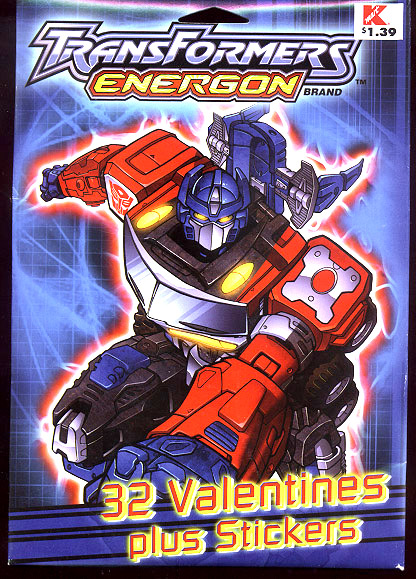
So there you have it kids. How Valentine's Day made its way from ancient sexual ritual to arcane Christian martyr to Optimus Prime and Peter Parker.

There are still many unanswered questions:

What about the candy?

The chocolate hearts?

The flowers?

The naked flying baby archer?

Check back with me next Valentine's Day.